

Japan Already Tried Decisive Action on the Yen. It Didn’t Work, And the Math Explains Why
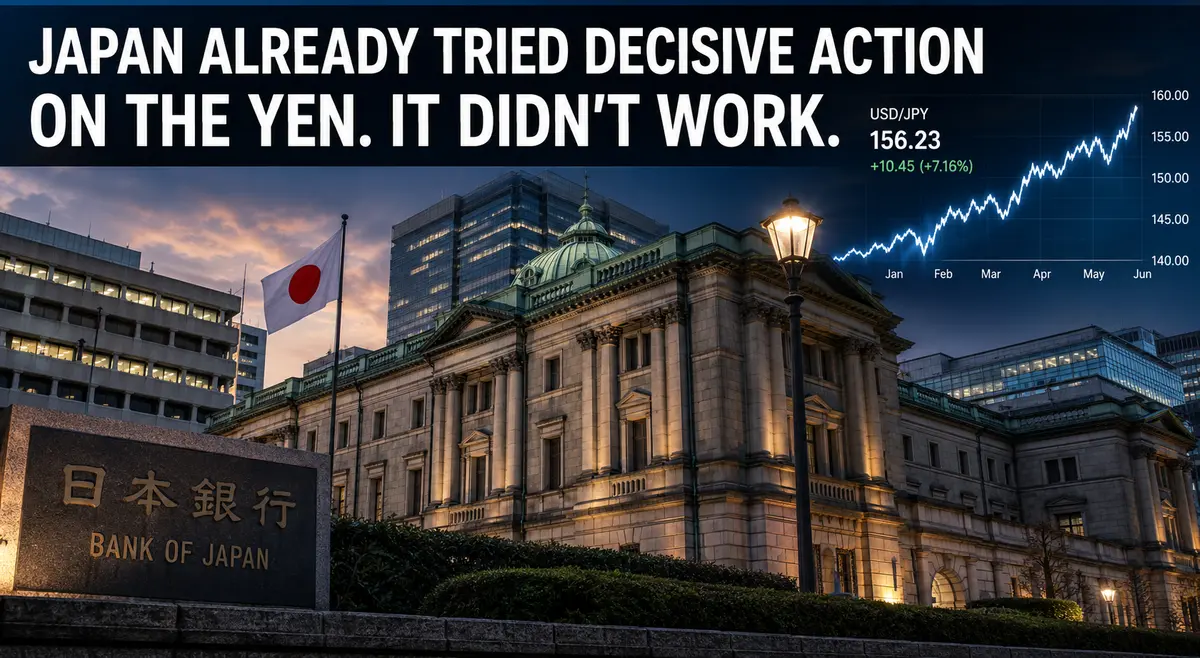
Japan’s Finance Minister Satsuki Katayama said today that authorities are “prepared to take decisive steps” on the yen, pointing to language in the US Treasury’s own currency report and confirming that Tokyo and Washington remain in round-the-clock communication. If that sounds familiar, it should. This is roughly the fifth version of this exact statement since late June.
I don’t think anyone should be reassured by it. Not because Katayama isn’t serious, I think she is. It’s because Japan already ran this experiment for real, not just verbally, and the result tells you almost everything you need to know about what happens next.
The Same Warning, One More Time
Here’s the pattern: Katayama and Treasury Secretary Bessent held talks in late June, agreeing to take “bold” steps if needed. Early July, another round: “our stance has not changed at all.” Mid-July, her “strongest language in weeks,” according to Bloomberg’s own characterization at the time. And now today, tying the warning directly to the Treasury’s semi-annual currency report.
The yen has weakened through every single one of these statements. That’s not a coincidence, and it’s not because Tokyo lacks resolve. It’s because the actual mechanism behind the yen’s slide doesn’t respond to press conferences.
This Isn’t Untested, Japan Already Tried It
April and May: The Real-World Test
This is the part I think gets lost in the coverage. Japan didn’t just talk about intervention this year, it acted. When the yen broke below 160 per dollar in April and May, Japanese authorities stepped in directly. The documented outcome: limited impact, attributed specifically to broad dollar strength and still-low domestic interest rates.
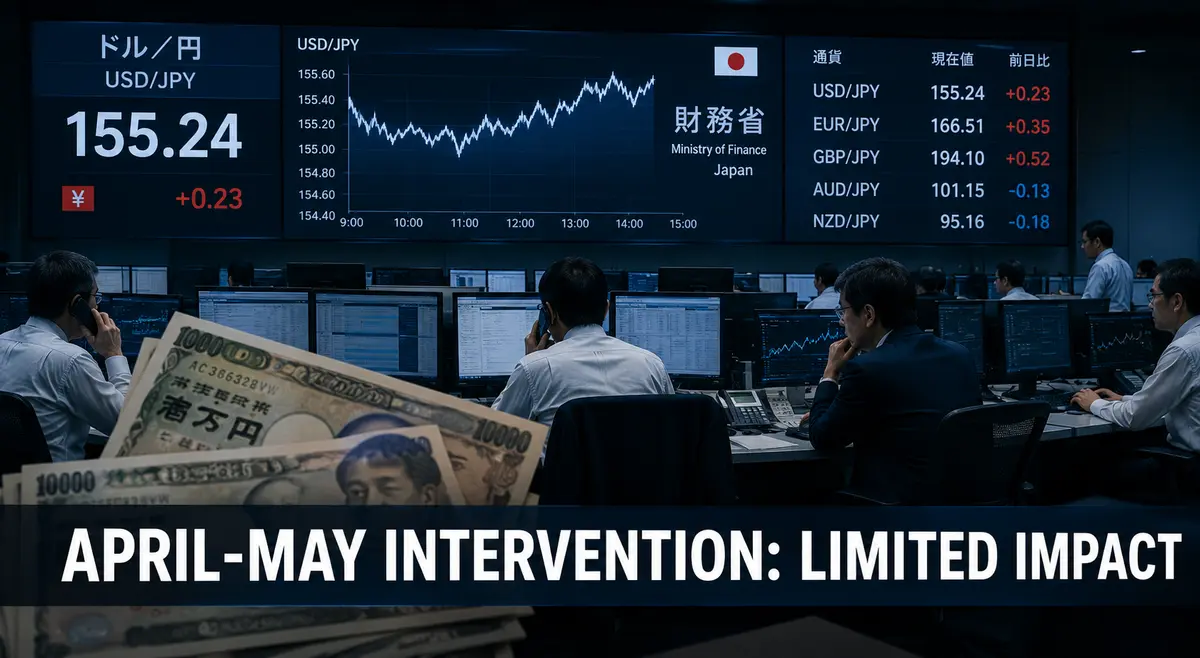
That’s not my interpretation. That’s the actual post-mortem on real intervention, from earlier this year, at a weaker starting point than where we are now.
Where the Yen Sits Now
Today, USDJPY ... is trading around 164, a fresh 39-year high, and meaningfully weaker than the 160 level that triggered actual Ministry of Finance intervention back in the spring. The test already happened. The currency is worse off than it was before the test.
If real intervention at 160 only bought limited, temporary relief, I don’t see a clear reason verbal intervention at 164 should do more.
The Real Constraint Is the Math, Not the Message
The Yield Gap
Here’s the number that actually explains this, and it’s not complicated. Japan’s 10-year government bond yield sits around 2.76%. The US 10-year is at roughly 4.71%. That’s close to a two-percentage-point gap.
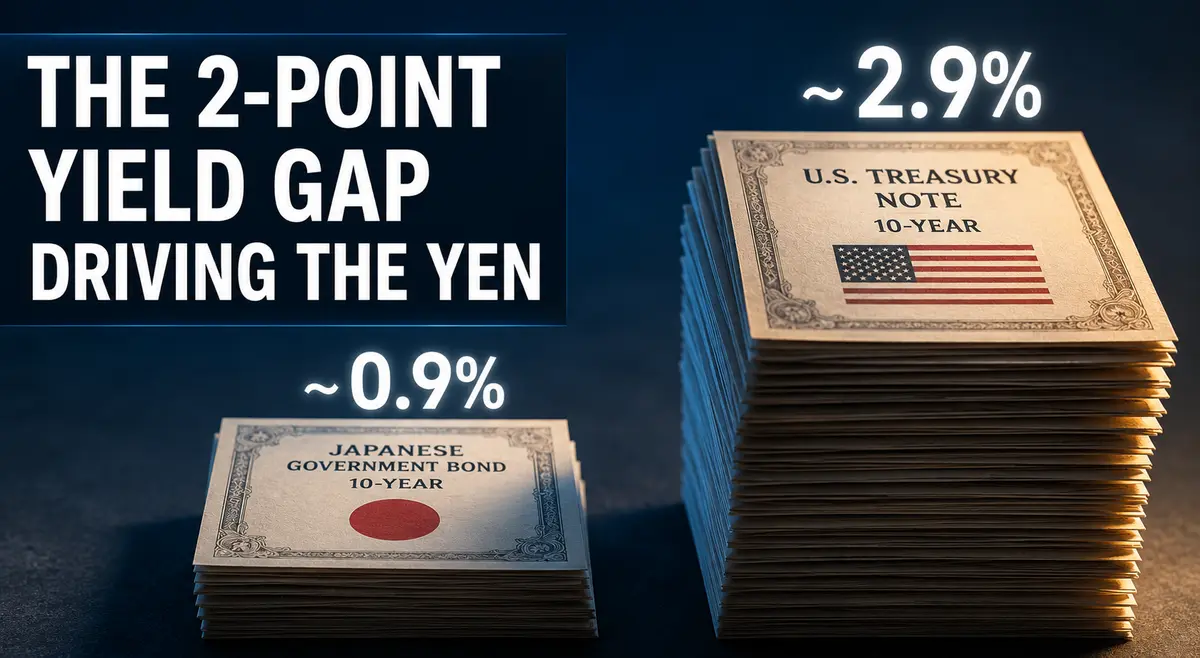
Money follows yield. As long as holding dollars pays nearly two points more per year than holding yen, capital keeps flowing toward the dollar regardless of what any finance minister says at a podium. Currency intervention can absorb some of that flow temporarily by having the government directly buy yen and sell dollars. It cannot change the underlying incentive that’s driving the flow in the first place. That’s the entire lesson of April and May, in one sentence.
The Gap Is Widening, Not Closing
What makes this worse for Tokyo right now: the gap isn’t stable, it’s moving in the wrong direction. Markets are currently pricing in real odds of a FEDF.L ... rate hike, over 30% for the next meeting, close to 80% by September, driven by oil prices climbing on the back of the ongoing Iran conflict pushing inflation expectations higher. The BOJ is also hiking, gradually, but nowhere near that pace.
Both central banks are moving the same direction. It’s the difference in speed that actually decides where USDJPY ... goes, and right now the US is moving faster.
So What Is “Decisive Action” Actually For?
This is where my actual opinion lands: I don’t think today’s statement, or the next one, is designed to reverse the trend. I think it’s designed to shake out overextended short-yen positioning and buy a few weeks of relief, the same way the April/May intervention did before the drift resumed.
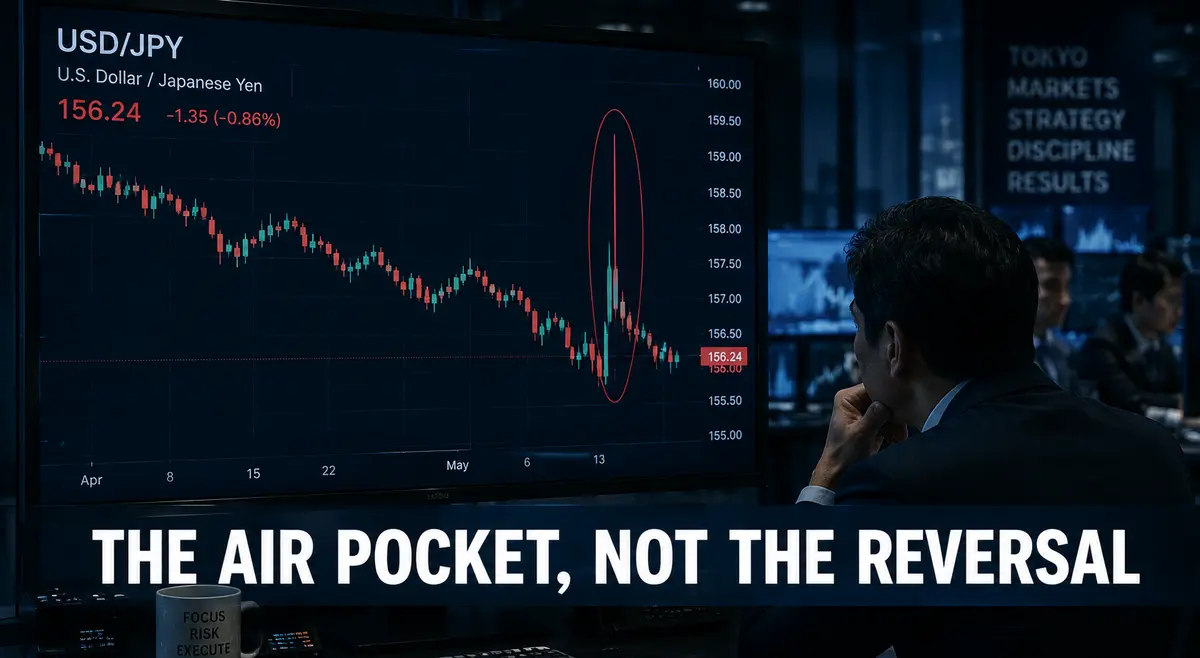
Bloomberg put it plainly a week ago: Japan’s “decisive action” threats have done little to scare yen bears. The market has effectively already priced this in as noise. But I’d push back on the idea that this makes it irrelevant for traders. An actual intervention, even one that ultimately fails to reverse the trend, can still move USDJPY ... three to five yen in a matter of hours. That’s a real, tradeable air pocket. It just isn’t a turning point.
What Would Actually Change This
There are exactly two paths to a genuine yen turnaround, and I don’t think either is close. The Fed would need to start cutting, unlikely in the near term while oil-driven inflation is pushing hike odds higher, not lower. Or the BOJ would need to hike meaningfully faster than its current gradual pace, which runs into its own political and economic constraints around a fragile domestic recovery.

Until one of those actually happens, intervention, verbal or real, is playing defense against a current it can slow but not stop.
What This Means for Traders
My take: don’t treat any single “decisive steps” headline as a reason to short yen strength outright. The track record this year says these statements alone don’t hold. But don’t dismiss the risk entirely either, round numbers like 164 and 165 are exactly the kind of levels where an actual, coordinated intervention becomes more likely, and those episodes create real short-term volatility even within a longer weakening trend. Position for the air pocket, not for a reversal.
Risk Disclaimer
Currency markets are highly volatile and subject to intervention risk from central banks and government authorities, which can cause sharp, unpredictable price moves. Nothing in this article constitutes financial advice or a recommendation to take any specific position. Always size positions according to your own risk tolerance and consider consulting a licensed financial advisor.


Comments
No comments yet. Be the first to share your thoughts!
Authentication Required
You must be logged in to post a comment.