

Pound Holds Firm, Euro Strengthens: Currency Markets Pause Ahead of Inflation Data
Introduction: The Calm Before the Storm
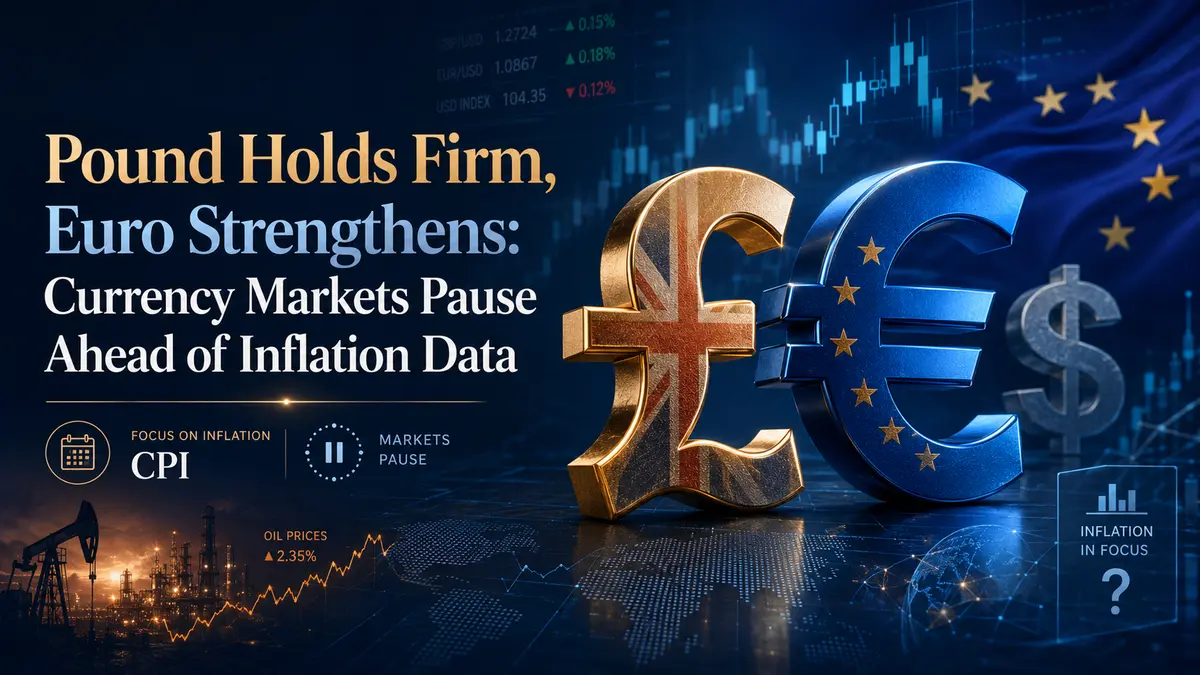
Tuesday was a day of cautious optimism for the British pound EURGBP ... and the euro. Both currencies posted modest gains as markets paused to reassess the pace of the US dollar’s appreciation. Geopolitical tensions in the Persian Gulf continue to support demand for the American currency, but investors are reluctant to make sharp moves ahead of key US inflation data.
The pound sterling rose to $1.3375, gaining 0.20%. The euro strengthened to $1.1395, adding 0.13%. These are modest moves, but they reflect an important shift in market sentiment: the dollar, which has dominated the markets in recent weeks, is beginning to lose momentum.
However, pressure from the dollar remains the dominant force. The renewed blockade of the Strait of Hormuz pushed Brent crude oil to $84 per barrel, providing additional support for the US currency. In this article, we will examine all the factors affecting the pound and the euro, assess their prospects, and attempt to determine where these currencies may move in the coming days.
The Pound: Modest Growth Driven by Broader Dollar Dynamics
A 0.20% Increase
The pound sterling rose to $1.3375, gaining 0.20%. This was a relatively small increase, but it occurred against the backdrop of a broader weakening of the dollar ahead of the release of inflation data.
The pound’s advance was driven by general US dollar dynamics rather than any factors specific to the United Kingdom. British political and economic developments had almost no impact on Tuesday’s trading.
Lack of Domestic Drivers
No significant UK economic data were published on Tuesday, and there were no notable comments from Bank of England officials. The pound moved primarily in line with broader US dollar trends.
This means that any movements in the pound over the coming days will depend on external factors, including US inflation data and geopolitical developments.
Risks for the Pound
Pressure from the dollar remains the dominant force. The renewed blockade of the Strait of Hormuz pushed Brent crude oil to $84 per barrel, providing additional support for the US currency.
Should the conflict in the Middle East continue to escalate, the dollar could strengthen further, placing pressure on the pound and other currencies.
The Euro: Strengthening on the Back of the Interest Rate Differential
A Rise to $1.1395
The euro strengthened to $1.1395, gaining 0.13%. This was a small but meaningful move, reflecting improving sentiment toward the single currency.
The short-term EUR/USD interest rate differential is providing support for the euro. The gap between two-year swap rates has narrowed by approximately 15 basis points since the beginning of July, giving the euro an advantage.
Reasons for the Strengthening
The recovery in oil prices coincided with fading expectations of an ECB interest rate increase, giving short-term euro rates room to recover. Markets are pricing in approximately 46 basis points of ECB policy tightening by the end of the year.
This creates more favorable conditions for the euro compared with the dollar, which is facing uncertainty surrounding Federal Reserve policy.
Risks for the Euro
Despite its current strengthening, the euro continues to face risks. Should energy prices continue to rise, they would place additional pressure on the European economy and limit the euro’s potential for further appreciation.
ING analysts are not convinced that the interest rate differential can provide sustainable support for EUR/USD if energy prices continue to rise.
The Dollar: Rally Slows Ahead of CPI Data
The USD Index at 101.0
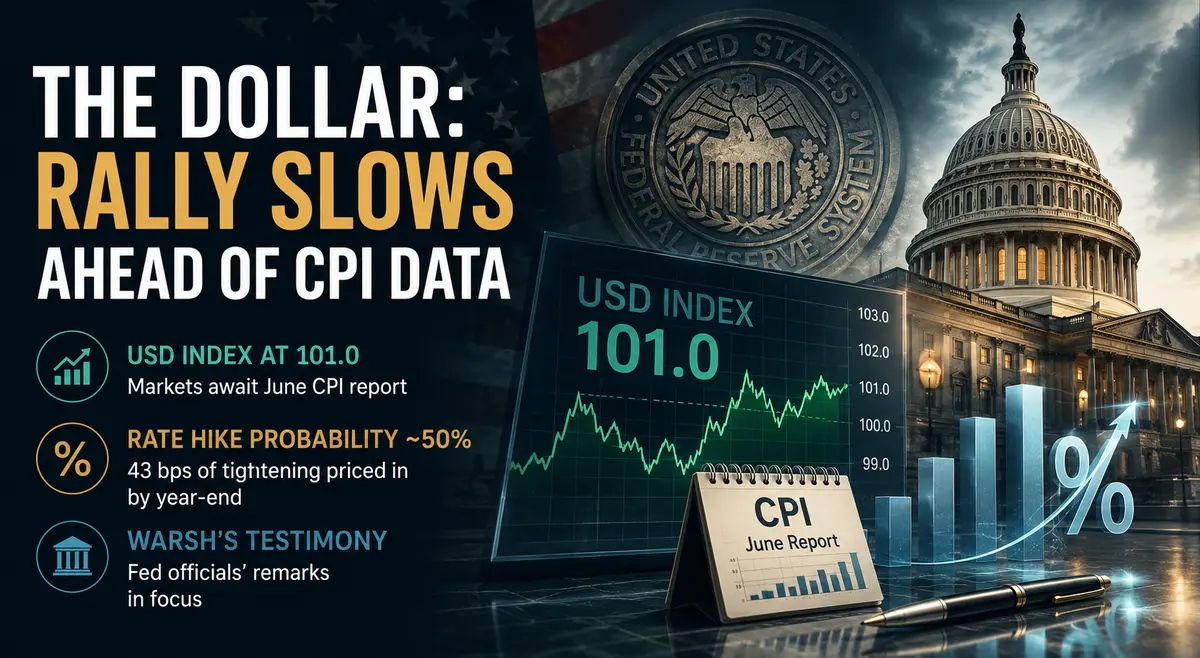
The dollar’s rally slowed ahead of the publication of US inflation data. The USD Index is trading at around 101.0, reflecting uncertainty surrounding Federal Reserve policy.
Markets are awaiting the June Consumer Price Index report, which is expected to show a decline in headline inflation on a month-over-month basis due to lower energy prices. However, a core inflation reading of 0.2% month over month is unlikely to eliminate expectations of further Federal Reserve tightening.
Probability of an Interest Rate Increase
Markets estimate the probability of an interest rate increase at the July FOMC meeting at approximately 50%, while around 43 basis points of additional tightening are priced in by the end of the year.
Federal Reserve Governor Christopher Waller warned on Monday that an interest rate increase might be necessary if core inflation remains elevated. This creates downside risks for the dollar should the inflation figures disappoint expectations.
Warsh’s Testimony
Chair Kevin Warsh is beginning his first appearance before the House of Representatives. His communication style is widely expected to be restrained, which could limit volatility in the dollar.
Speeches from Governors Barr, Goolsbee, Cook, and Bowman are also expected. Markets will closely monitor their comments for new policy signals.
The Geopolitical Factor: The Blockade of the Strait of Hormuz
Renewed Blockade and Rising Oil Prices
The United States reinstated the blockade of the Strait of Hormuz, pushing Brent crude oil to $84 per barrel. This is providing additional support for the dollar, as higher oil prices strengthen inflation expectations.
However, as ING’s Francesco Pesole noted, both oil and the dollar appear reluctant to fully price in another supply shock. Total US crude oil inventories stood at 730.8 million barrels as of July 3, their lowest level since 1984.
Impact on Currencies
Rising energy prices support the dollar, but they also create risks for economies that depend on energy imports, including Europe and the United Kingdom.
Should Brent crude return to the $90–$100 per barrel range, it could place pressure on the pound and the euro, limiting their potential for further appreciation.
Forecasts and Scenarios
ING’s Base-Case Scenario
ING’s base-case scenario assumes that the dollar will weaken by the end of 2026, provided that tensions in the Persian Gulf ease and the Federal Reserve makes a more dovish policy shift.
This scenario assumes that the geopolitical situation will stabilize and that the Federal Reserve will begin cutting interest rates, weakening the dollar and supporting emerging-market currencies.
Risks to the Scenario
The key risk to this scenario is another surge in energy prices. Should Brent crude return to the $90–$100 per barrel range and natural gas at the Dutch TTF hub rise to €55–€60 per megawatt-hour, a move in EURUSD ... toward 1.10 would become a significant risk.
The DXY Index could quickly approach the 102.0 level if the blockade of the Strait of Hormuz remains in place.
What This Means for Investors
Opportunities in the Pound and the Euro
The current strengthening of the pound and the euro creates potential opportunities for investors. These currencies may be considered as a means of portfolio diversification and a way to benefit from a weaker dollar.
However, it is important to consider the associated risks, including geopolitical uncertainty and possible surges in energy prices.
Risks for the Dollar
The dollar faces several risks, including uncertainty surrounding Federal Reserve policy and the geopolitical situation. Should inflation data come in below expectations, the dollar may continue to decline.
Investors should closely monitor inflation figures and statements from Federal Reserve officials when assessing the dollar’s outlook.
Conclusion: Currencies Await New Signals
Tuesday was a day of cautious optimism for the pound and the euro. Both currencies posted modest gains as markets reassessed the pace of the dollar’s advance ahead of key US inflation data.
Pressure from the dollar remains dominant, particularly against the backdrop of geopolitical tensions and rising energy prices. However, investors are reluctant to make aggressive moves, preferring to wait for the CPI data and comments from Federal Reserve officials.
The pound is rising in response to broader dollar dynamics, while the euro is receiving support from the narrowing interest rate differential. Nevertheless, risks remain elevated, especially if energy prices continue to climb.
For investors, this is a time for caution and patience. This week’s key events will determine the next direction of the currency markets. Accurately assessing the risks and opportunities will be essential for making successful investment decisions.

Comments
No comments yet. Be the first to share your thoughts!
Authentication Required
You must be logged in to post a comment.