

WTI Oil Rises in Asian Trading: Geopolitics Returns
Introduction: A Tuesday When Oil Woke Up
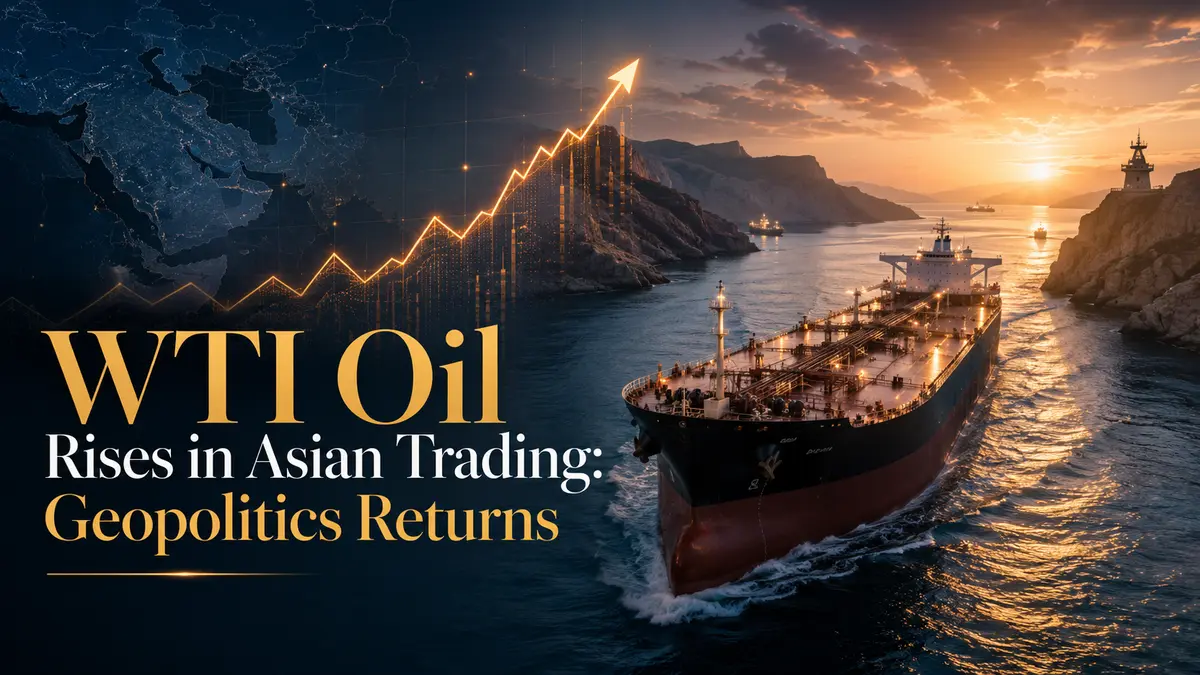
Tuesday, the Asian trading session. Traders in Singapore, Tokyo, and Shanghai open their terminals and see that WTI oil is back in the green. August futures rise to $69.02 per barrel, gaining 0.69% compared with the previous close. This is not a record-breaking increase, but it is happening against the backdrop of events that could change the dynamics of the entire oil market.
What is behind this move? Geopolitics. Iran attacked vessels in the Strait of Hormuz, immediately bringing fears of supply disruptions back to the markets. Oil prices rose, and although the increase is still modest — just under 1% — it could mark the beginning of a more serious rally if the situation escalates.
Technically, WTI oil found support at $67.04 and resistance at $69.31. The current price of $69.02 is approaching the upper boundary of this range. If oil manages to break through resistance at $69.31, it could open the way toward $70 and higher. If it pulls back, support at $67.04 will be tested again.
The dollar index remained virtually unchanged — 0.00% at 100.62 points. This means the move in oil is not related to the currency factor but is driven by other reasons. The main one is geopolitical tension.
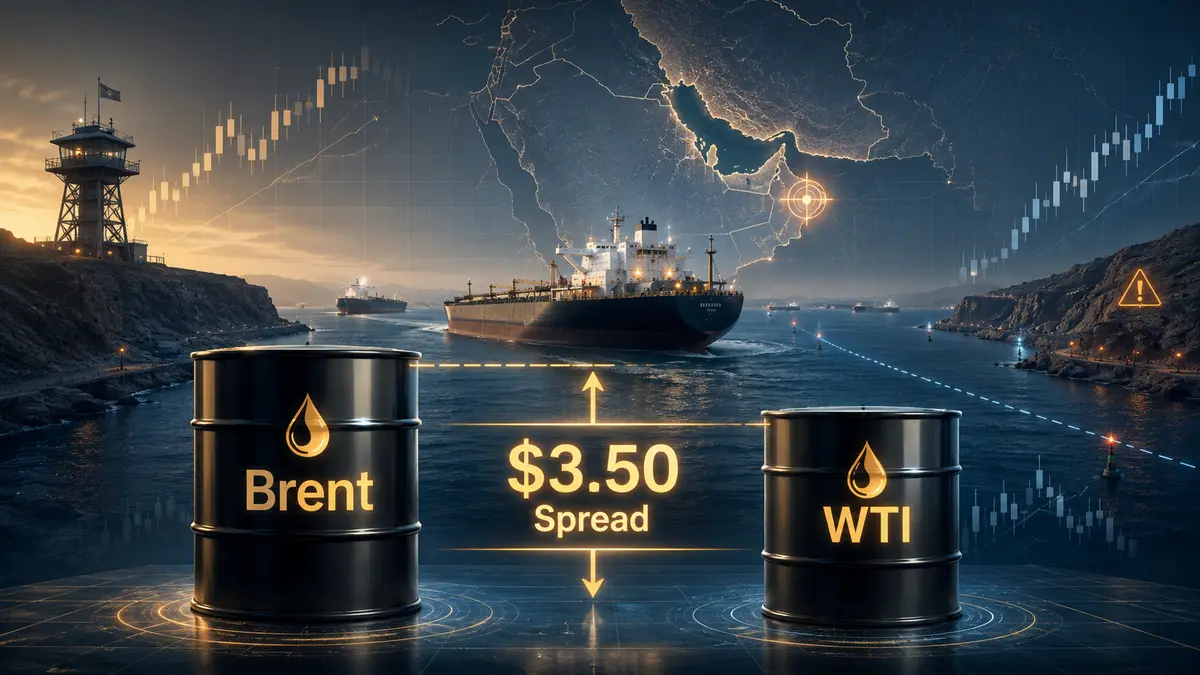
Brent oil also rose by 0.74% to $72.52 per barrel. The spread between Brent and WTI is $3.50, which is within the normal range. Markets are moving in sync, indicating the global nature of the growth factors.
Let’s take a closer look at what is really happening in the Strait of Hormuz, why it matters for oil prices, and where the market is heading.
Geopolitical Factor: The Strait of Hormuz Back in Focus
Attack on Vessels: The Return of Fear
The main news on Tuesday was reports that Iran had attacked vessels in the Strait of Hormuz. This narrow maritime corridor, through which about 20% of the world’s oil passes, has once again become a point of tension.
What exactly happened? For now, the details remain unclear. Attacks on commercial vessels have been reported, but who exactly is behind them and how large-scale they were remains to be determined. However, the very fact that Iran is once again threatening shipping in this critical region triggered an immediate reaction in oil markets.
For the oil market, this is a return to an old fear. Last year, at the height of the conflict, threats to close the Strait of Hormuz pushed oil prices above $100 per barrel. Now, when the peace agreement between the United States and Iran seemed stable, these threats had moved into the background. But the attack on vessels reminds markets that geopolitical risks have not disappeared.
Market Reaction: Why the Rise Is Still Modest
Interestingly, the market reaction to the attacks has so far been rather restrained. WTI oil rose by 0.69%, while Brent gained 0.74%. This is not panic, but rather a cautious reaction.
Why is the increase not more significant? Possibly because markets still doubt the scale of the threat. Without details, it is difficult to assess the real risks to supply. If the attacks turn out to be isolated and do not lead to disruptions, their impact on prices will be limited.
In addition, markets remember that OPEC+ has the ability to increase production if necessary. Last week, the alliance increased quotas by 188,000 barrels per day, and these volumes could be used to compensate for any disruptions.
Escalation Prospects
The main question for markets is whether the escalation will continue. If Iran intensifies its attacks or if the United States responds with military action, oil prices could surge. If the situation is resolved diplomatically, the rise may prove short-lived.
For now, the parties appear to be trying to avoid escalation. The United States has called for restraint, while Iran has stated that its actions were a response to previous provocations. This leaves room for diplomacy.
But even if escalation does not occur, the very fact of the attacks has brought a geopolitical premium back into oil prices. This premium may remain as long as risks do not decline.
Technical Analysis: Levels and Outlook
Support at $67.04 and Resistance at $69.31
The technical picture for WTI oil remains relatively clear. Support is located at $67.04, while resistance stands at $69.31. The current price of $69.02 is approaching the upper boundary of this range.
If oil manages to break through resistance at $69.31, it could open the way toward $70 and $71. A breakout above $71 could become a signal for more sustainable growth, especially if geopolitical risks persist.
If oil fails to break above $69.31, it may pull back toward $67.04. A break below this level could lead to a decline toward $65 and lower.
Volumes and Indicators
Trading volumes remain average for now, indicating that investors are not rushing to open large positions. They are waiting for additional signals — both geopolitical and economic.
Indicators such as the RSI are at neutral levels, showing neither overbought nor oversold conditions. This leaves room for movement in either direction.
Brent vs WTI: What the Spread Says
Spread of $3.50 per Barrel
The price difference between Brent and WTI is $3.50 per barrel. This is within the normal range and indicates that markets are balanced.
Brent usually trades at a premium to WTI due to its higher quality and broader supply geography. A premium of $3–4 per barrel is considered normal. If the premium widens to $5 or more, this could point to local supply issues.
In the current situation, the spread does not raise concerns. It reflects a normal market condition.
What Awaits Oil in the Coming Weeks
Geopolitics Remains the Main Factor
In the coming weeks, geopolitics will remain the main factor for the oil market. If the situation in the Strait of Hormuz continues to escalate, prices could rise significantly. If it is resolved, the increase may prove short-lived.
Investors will closely monitor news from the region. Any report of new attacks or military action could trigger a sharp move in prices.
The Role of OPEC+
OPEC+ remains an important factor. The alliance increased quotas by 188,000 barrels per day for August, and these volumes could be used to compensate for disruptions. If OPEC+ decides to increase production more than planned, this would limit price growth.
However, there are disagreements within OPEC+ that may limit its ability to act. The UAE’s exit from the alliance and Iraq’s threats to leave create uncertainty.
Economic Factors
Long-term economic factors remain bearish for oil. Weak demand in China and Europe, excess supply, and analysts’ forecasts that Brent may fall to $60–65 per barrel by the end of the year are putting pressure on prices.
However, in the short term, geopolitics may outweigh economic factors. If risks in the Strait of Hormuz persist, prices may remain above $70 even amid weak demand.
Conclusion: Oil Between Geopolitics and Fundamentals
WTI oil rose during Asian trading on Tuesday amid geopolitical tension in the Strait of Hormuz. Futures climbed to $69.02 per barrel, gaining 0.69%.
Support is located at $67.04, while resistance stands at $69.31. If oil manages to break through resistance, it could open the way toward $70 and higher.
Brent also rose by 0.74% to $72.52 per barrel, while the spread between the two benchmarks is $3.50.
Geopolitics remains the main factor for the oil market. If the situation in the Strait of Hormuz continues to escalate, prices could rise significantly. If it is resolved, the increase may prove short-lived.
OPEC+ has the ability to increase production, but internal disagreements limit its ability to act.
Economic factors remain bearish, but geopolitics may outweigh them in the short term.
For now, oil remains within a range, but this range could be broken in either direction depending on developments in the Strait of Hormuz.

Comments
No comments yet. Be the first to share your thoughts!
Authentication Required
You must be logged in to post a comment.