

Oil in Free Fall: WTI Slides Toward $81 as Markets Reassess the Geopolitical Risk Premium
Tuesday Morning: WTI Loses Another 1.7% and Heads Toward Support
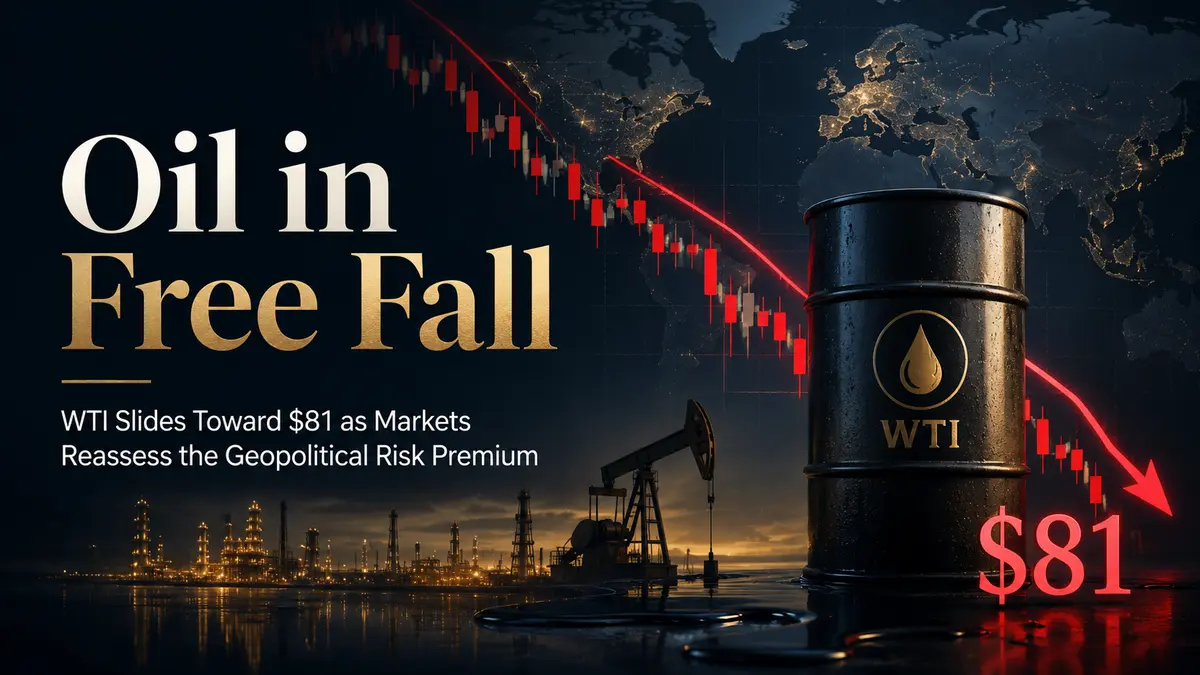
Tuesday’s 28.07.2026 Asian trading session began with the oil market extending the sharp decline that started the previous week. September WTI crude oil futures on the New York Mercantile Exchange fell to $81.19 per barrel, losing another 1.72% during the session.
This is no longer merely a correction but a full-scale plunge that is wiping out the geopolitical premium accumulated over recent months. The session low has yet to be established, but the key technical levels are already clear: support awaits at $79.64, while resistance has moved up to $88.07. The nearly $9 gap between these levels points to elevated volatility and significant market uncertainty.
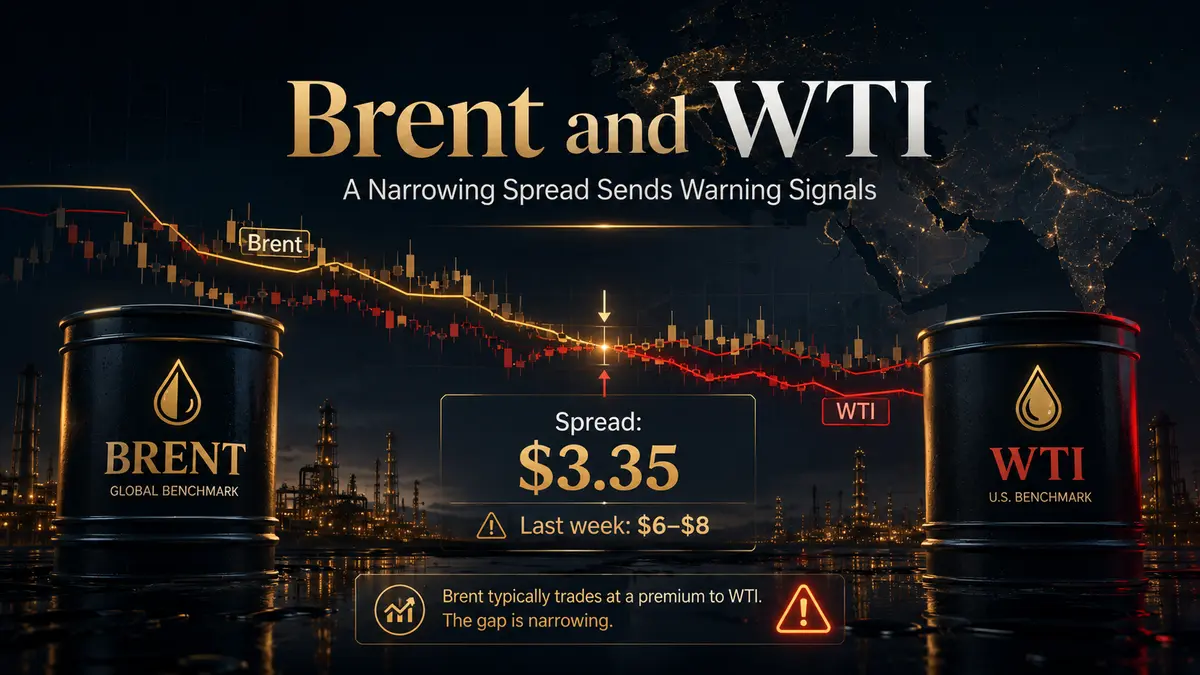
Brent, the global benchmark, is following its American counterpart lower. The October futures contract declined by 1.55% to $84.54 per barrel. The spread between the two benchmarks narrowed to $3.35—a significant signal that the market is becoming less concerned about the difference between risks to European and US supplies. The geopolitical premium that had strongly supported Brent in recent weeks has almost completely disappeared.
The US Dollar Index, which usually affects oil prices, declined by 0.08% to 101.31. A weaker dollar would normally support oil, but in the current environment, this effect has been overwhelmed by much stronger factors: easing geopolitical risks and expectations surrounding this week’s Federal Reserve meeting.
Diplomatic Breakthrough: How Hopes for Peace Sent Oil Prices Tumbling
The primary reason for the decline in oil prices has been the rapid transformation of the geopolitical landscape. The conflict between the United States and Iran, which had kept markets on edge for the past two weeks, unexpectedly began to ease.
Over the weekend, President Donald Trump said that he saw a “good chance” of reaching an agreement with Iran and suspended the daily bombing of Iranian targets. Iran, in turn, halted its retaliatory operations and began negotiations through Oman regarding the resumption of shipping through the Strait of Hormuz.
Markets interpreted these developments as the beginning of a diplomatic process that could lead to a long-term settlement. This means that the threat of the Strait of Hormuz being blocked—a route through which approximately 20% of the world’s oil passes—has declined significantly. The geopolitical premium that had driven oil prices more than 50% higher this year began to disappear rapidly.
It is important to understand that this decline is not related to fundamental changes in the balance between supply and demand. Instead, it represents a reassessment of risk. Investors who had priced the probability of a large-scale war in the Middle East into the cost of a barrel are now revising their forecasts. They increasingly believe that diplomacy may prevail and are therefore reducing the geopolitical risk premium embedded in oil prices.
However, analysts note that the ceasefire remains fragile. Both sides are maintaining military readiness, and any careless statement or action could push the situation back toward open conflict. For now, however, the market prefers to believe in a positive outcome.
Technical Levels: Where Could Oil Move Next?
At the time of writing, WTI ... had found support at $79.64. This is a critical threshold. If the price breaks below it, the next target could be around $77, where stronger technical support levels are located. If the current support holds, the market could rebound toward resistance at $88.07.
Trading volumes are above average today, indicating that major institutional players are actively repositioning their portfolios. Many are closing long positions opened during the geopolitical rally and establishing short positions in anticipation of further declines.
Technical indicators suggest that the market is oversold in the short term. This means a rebound is possible, although its scale will depend on the news flow. If further signs of progress emerge in negotiations between the United States and Iran, the decline may continue. If the talks reach a deadlock, however, prices could recover rapidly.
Brent and WTI: A Narrowing Spread Sends Warning Signals
The price difference between BZUSD ... and WTI has narrowed to $3.35. This represents a significant reduction from the $6–$8 levels observed last week. The narrowing spread indicates that the market is no longer pricing in such a substantial risk of supply disruptions affecting Europe and Asia.
Brent normally trades at a premium to WTI because it is more sensitive to geopolitical developments in the Middle East. When that premium narrows, it suggests that the market views the risks facing both benchmarks as broadly similar. This may indicate that investors expect global supply chains to recover and regional risks to decline.
However, there is another possible interpretation. The narrowing spread may also reflect concerns about global demand. When economic growth slows, oil demand declines, and the price difference between various crude benchmarks tends to shrink. This adds another layer of uncertainty to the current situation.
The Federal Reserve and the Macroeconomic Outlook: What Comes Next?
Additional pressure on oil prices is coming from expectations surrounding the Federal Reserve meeting scheduled for Wednesday. Markets currently estimate the probability of a 25-basis-point interest-rate increase at approximately 38%. Higher interest rates generally support a stronger dollar and restrain economic activity, both of which negatively affect oil demand.
Investors will closely follow comments from Federal Reserve Chair Kevin Warsh. If he signals that rate cuts could begin in the near future, oil prices may receive support. If he maintains a hawkish stance, the decline could continue.
US GDP and core PCE inflation data scheduled for release this week may also influence market expectations. If the data point to a strong economy and persistently high inflation, the Federal Reserve may be forced to maintain restrictive monetary policy for longer, placing further pressure on oil.
If the figures are weaker than expected, they could strengthen expectations of monetary easing and provide support to prices.
What Lies Ahead for the Oil Market in the Coming Days?
The next several days will be decisive for the oil market. Three main factors are likely to drive prices: geopolitical developments, Federal Reserve decisions, and US crude inventory data.
If negotiations between the United States and Iran continue to progress, WTI could fall toward $75–$77 per barrel. If tensions escalate again, prices could quickly return to the $85–$90 range.
The Federal Reserve’s decisions will also be highly significant. If interest rates remain unchanged but Warsh delivers optimistic signals, risk assets, including oil, may receive support. If rates are increased or the Fed’s rhetoric remains hawkish, prices could continue to decline.
Weekly US inventory data, scheduled for release on Wednesday, may also become an important catalyst. If inventories come in below expectations, prices could receive support. If they exceed forecasts, selling pressure may intensify.
Conclusion: Oil Enters a Zone of Turbulence
The decline in oil prices toward $81 per barrel is not merely a correction. It represents a reassessment of the entire market paradigm that has dominated in recent months. The geopolitical premium that previously drove prices higher is disappearing, giving way to fundamental factors and macroeconomic expectations.
The market is now operating in an environment of extreme uncertainty. The diplomatic process between the United States and Iran is only beginning, and its outcome remains unpredictable. Federal Reserve decisions could either support prices or trigger another sharp decline. Meanwhile, technical levels indicate the possibility of both further losses and a significant recovery.
Traders should prepare for elevated volatility. The decline may continue, but any rebound could be rapid and aggressive. Key support and resistance levels, together with the broader news environment, will determine price dynamics over the coming days.
The oil market remains one of the most exciting and unpredictable markets in the world, and this week provides a vivid demonstration of that reality.


Comments
No comments yet. Be the first to share your thoughts!
Authentication Required
You must be logged in to post a comment.