

Bar Pipa
We pay for a post of 10$

Trades

NorthRay

Trader’s Journal: My Black Notebook Where I Keep My Mistakes (and Wins)
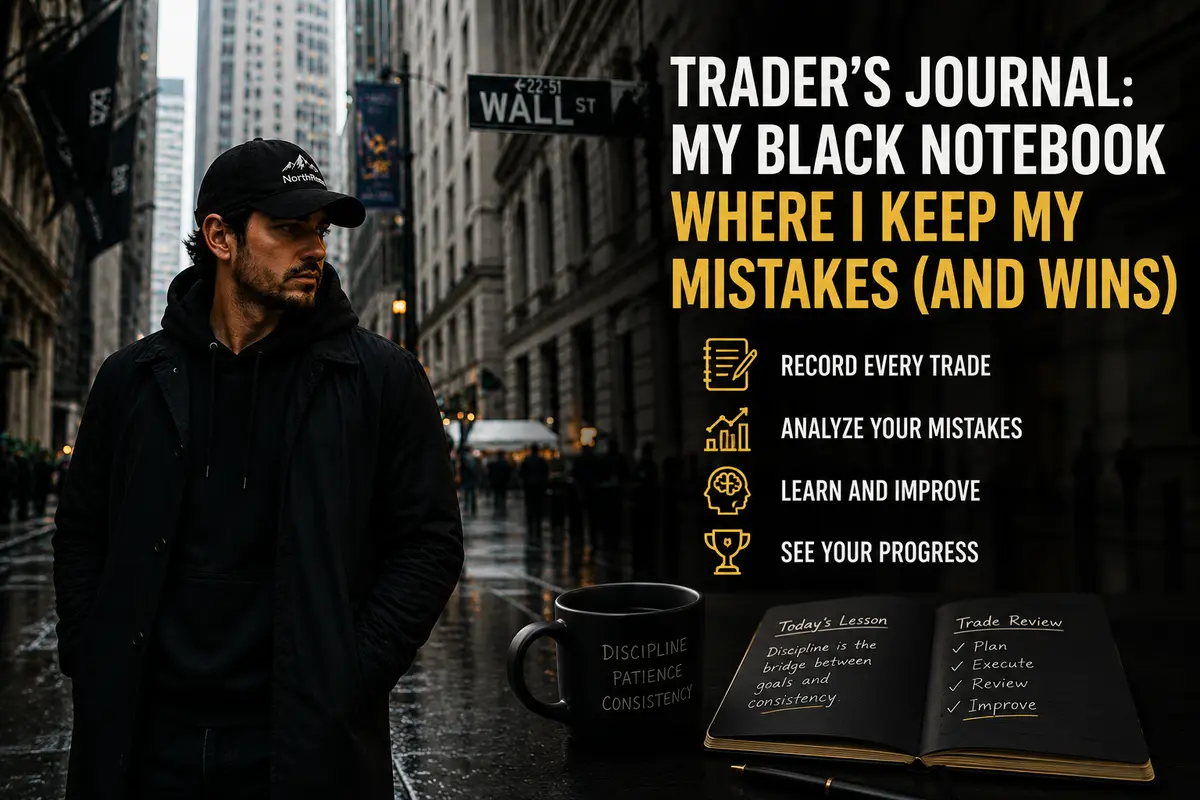
Trader’s Journal: My Black Notebook Where I Keep My Mistakes (and Wins)

Hi, this is NorthRay.💰

You know what saved me from repeating the same stupid mistakes over and over again?

Not some super strategy.
Not a smart mentor.
Not even a stop-loss (though that helps too).

It was something simple that I ignored at first.

A trader’s journal.

When I first heard about it, I thought:
“Seriously? I have to write too? I came here to trade, not write essays.”

For the first two weeks, I wrote nothing down.
I opened trades randomly. Closed them. Forgot about them.

And you know what happened?

I kept making the same mistakes. Again and again. Like a broken record.

Then I read a quote from an experienced trader:

“If you don’t record your trades, you’re not a trader. You’re a casino gambler who doesn’t even remember what he bet on.”

So I started a journal.

And now I can’t imagine trading without it.🔔

What Is a Trader’s Journal (In Simple Words)

A trader’s journal is a place where you record every trade you make.

Not just: “Bought, sold, made money.”

But in detail:

— What you bought/sold (EUR/USD, gold, Apple).
— Why you entered (saw a signal, breakout, news release).
— Position size.
— Where you placed your stop-loss and take-profit.
— The outcome (profit/loss and how much).
— What you felt (fear, greed, confidence, panic).
— What you did wrong (or right).

It’s like a pilot’s flight log. Pilots record everything so that if something goes wrong, they can understand why.

And avoid repeating the mistake.🛠️

Why It Matters (Honestly, No Fluff)

When someone first recommended a journal to me, I asked:

“What’s the point? I already remember my trades.”

Spoiler: I didn’t.

Three days later, I had already forgotten why I opened certain trades and how I felt at the time.

Here’s...

Continue reading...
0
0
NorthRay

Buy and Sell: Two Buttons That Control the World (and My Nerves)

Buy and Sell: Two Buttons That Control the World (and My Nerves)

Hi, this is NorthRay.

Remember how in my first post I was afraid to press “New Order”?

I sat there staring at the terminal thinking:
“Should I buy or sell? What if I click the wrong thing? What if I choose incorrectly and get arrested?”

Spoiler: you won’t get arrested.

But back then, those two buttons — Buy and Sell — felt like magic to me. I didn’t understand what they did. I was just clicking randomly.

Then I figured it out.

And now I’ll explain it so simply that even my grandma would understand (she still doesn’t get why I stare at charts all day, but at least now she knows what the buttons mean).

What Buy Means in Simple Terms

Buy means buying. You’re betting that the price will go UP.

Simple example:

Imagine you’re at an apple market.

Today, an apple costs $1.

You think:
“Tomorrow apples will cost $2.”

So you buy an apple now for $1.

Tomorrow the price becomes $2.

You sell the apple. Your profit is $1.

That’s Buy.
You bought cheap and sold expensive.

Trading works the same way:

— You open a Buy trade.
— The price goes up.
— You close the trade and keep the difference.

When to press Buy:
When you think the price will rise.

What Sell Means in Simple Terms

Sell means selling. But not the usual kind. Here, you sell something you don’t actually own yet.

Sounds weird? Let me explain.

Simple example:

You’re at the same apple market.

Today, an apple costs $2.

You think:
“Tomorrow apples will drop to $1.”

You don’t have any apples. But the broker says:
“I’ll lend you an apple. Sell it now for $2. Tomorrow, buy a cheaper apple for $1 and return it to me.”

So you...

Continue reading...
0
0
Navigation menu
