

Gold’s Rebound: How a Pause in the War and a Weaker Dollar Put the Precious Metal Back on the Growth Path
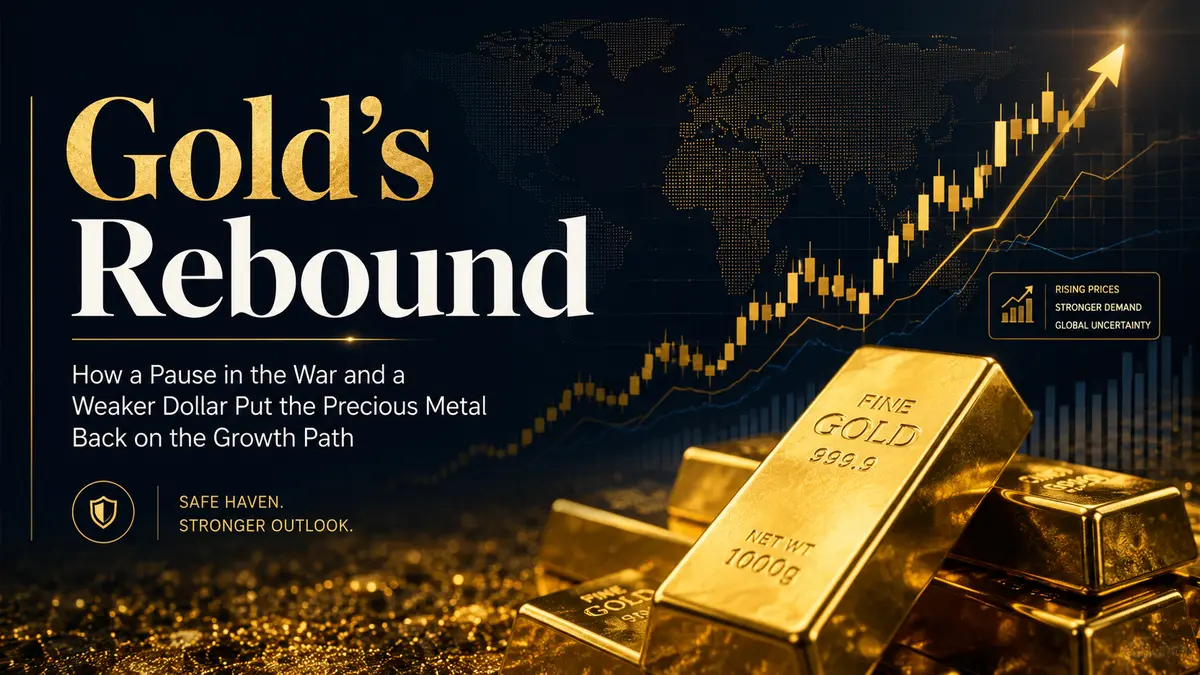
Monday Morning: Gold Rises on a Wave of Geopolitical Calm
Asian trading began on Monday with gold, exhausted by the nervous fluctuations of the previous week, reminding investors of its true nature: serving as a reliable safe haven in a world of chaos. Spot gold gained 1%, reaching $4,094.50 per troy ounce, while August futures rose 0.6% to $4,096.60. Although modest, this increase came as a breath of fresh air for those who had watched gold swing sharply up and down in previous weeks while struggling to find equilibrium.
What drove prices this time? As always, the answer lies in a combination of several powerful factors. First and foremost was the weakening of the US dollar, whose index fell by 0.3%, making gold more affordable for holders of other currencies. Geopolitics also played an equally important role. The pause in the conflict between the United States and Iran, which followed 13 consecutive nights of strikes, became the catalyst that prompted investors to reconsider their positions.
Logically, an easing of geopolitical tensions should have put pressure on gold by reducing demand for defensive assets. However, that did not happen. Instead, gold moved higher. This apparent contradiction can be explained by the fact that the pause in the conflict triggered a sharp decline in oil prices, which in turn weakened the dollar. A weaker dollar is almost always good news for precious metals.
Moreover, investors are in no hurry to sell their gold because they understand that a pause is not the same as peace. It is merely a temporary period of calm, while the underlying risks remain elevated.
XAUUSD ... gained almost 1% over the previous week despite volatile trading. This suggests that its fundamental growth drivers remain strong. Even amid sharp movements in other markets, investors continue to view gold as an asset capable of protecting capital under almost any conditions.
The Oil Price Collapse and Its Indirect Impact on Gold
When BZUSD ... crude oil plunged by 5.5% on Monday and WTI ... fell by 3.1%, the development might initially have appeared negative for gold. Lower energy prices are often interpreted as a sign of weakening inflationary pressure, which may delay monetary policy tightening and reduce demand for defensive assets. In this case, however, a different mechanism came into play.
The decline in oil prices was caused by the suspension of military operations between the United States and Iran, which reduced the geopolitical risk premium built into commodity prices. This, in turn, weakened the dollar as investors began reallocating capital from the US currency into other assets. When the dollar weakens, gold generally becomes more expensive. As a result, oil’s indirect effect on gold proved positive.
In addition, the market does not appear to believe that the ceasefire will be sustainable. The decline in oil prices was rapid, but many analysts have described it as an overreaction. Investors are reducing their positions while remaining cautious. With uncertainty still high, gold continues to be an attractive asset.
A Diplomatic Pause: A Fragile Hope
The main news over the weekend, which affected markets across the board, was US President Donald Trump’s decision to suspend the bombing campaign against Iranian targets after 13 consecutive nights of strikes. The decision was intended to give diplomatic efforts a chance. Iran, for its part, also refrained from launching retaliatory attacks on US military bases in neighbouring countries over the weekend.
This fragile ceasefire gave markets hope that the conflict could move into the diplomatic arena. However, no one is under any illusions. Both sides remain militarily prepared, and any careless statement or action could return the situation to a state of war. This is why investors are reluctant to remove the geopolitical risk premium from gold prices entirely.
IG senior market analyst Tony Sycamore noted that improving diplomatic prospects, including the possibility of returning to a previously agreed memorandum governing shipping through the Strait of Hormuz, encouraged traders to remove part of the risk premium from oil prices. For gold, however, this merely meant a temporary weakening of the dollar rather than the loss of its safe-haven status.
The Federal Reserve and Inflation Expectations: The Week’s Main Intrigue
Investors are now turning their attention to the US Federal Reserve, which will hold its monetary policy meeting on Wednesday. The central bank is expected to keep interest rates unchanged, but all eyes will be on comments from Chair Kevin Warsh. Any indication regarding the timing of future rate cuts or the Fed’s assessment of inflation risks could trigger significant market movements.
For gold, the Federal Reserve meeting has a dual significance. On the one hand, maintaining high interest rates makes the dollar more attractive, which could put pressure on precious metal prices. On the other hand, if Warsh signals that rate cuts may be introduced soon because of economic risks, gold could receive additional support. Investors will analyse every word closely.
Important US inflation and labour market data will also be released this week. These indicators may provide further clues about how the Federal Reserve evaluates the current state of the economy.
If inflation comes in above expectations, monetary easing could be delayed, which would be negative for gold. However, if the data point to weakening economic activity, the precious metal could receive further support.
Other Precious Metals: A Synchronous Rise
Gold was not the only metal to rise on Monday. XAGUSD ... gained 2%, reaching $59.37 per ounce, while platinum advanced by 1.6% to $1,618.83 per ounce. This simultaneous increase confirms that the broader factors of a weaker dollar and geopolitical uncertainty are affecting the entire precious metals sector.
Silver, often described as gold’s “poor relative,” has recently demonstrated even greater volatility, making it attractive to short-term traders. Platinum, meanwhile, continues to benefit from industrial demand, particularly from manufacturers of automotive catalytic converters.
The rise in all three metals suggests that investors are still seeking protection from inflation and geopolitical risks.
What Investors Should Expect in the Coming Days
The current week promises to be eventful. The pause in the Middle East conflict and the weakening dollar have created a favourable environment for gold, but its longer-term direction will depend on Federal Reserve decisions and macroeconomic data.
If the central bank confirms its hawkish stance, gold may experience a downward correction. However, if Warsh takes a cautious approach and signals that interest rates could be reduced in the near future, this may trigger another upward move.
Geopolitical risks have not disappeared either. The ceasefire between the United States and Iran may prove short-lived, and any resumption of hostilities would quickly restore gold’s geopolitical risk premium.
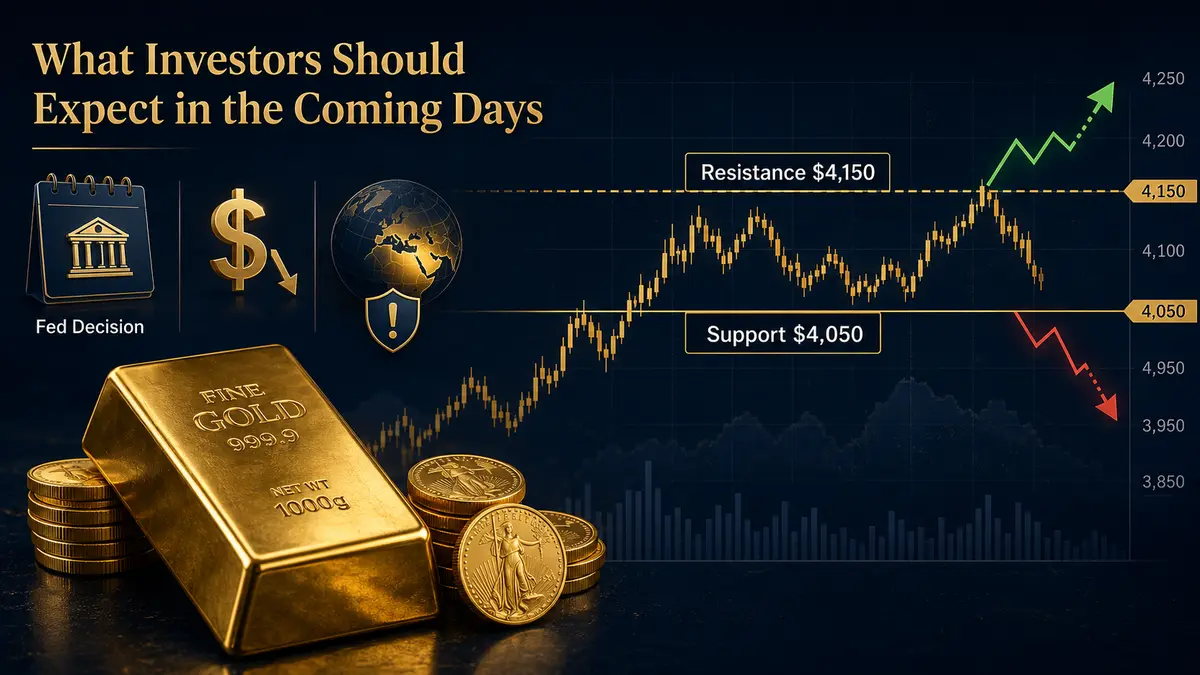
Analysts also recommend paying attention to technical levels. Gold’s current support level is around $4,050, while resistance stands at approximately $4,150. A breakout above this resistance could open the way to new all-time highs, whereas a decline below support could signal the beginning of a correction.
Conclusion: Gold Remains King in a World of Uncertainty
Monday’s rise in gold is another reminder that, in a world filled with uncertainty, the precious metal remains one of the few reliable assets. The pause in the conflict between the United States and Iran has created an illusion of calm, but no one knows how long it will last. Until the situation becomes clearer, investors are likely to continue holding gold in their portfolios as insurance against unexpected developments.
The Federal Reserve and its decisions will also play an important role. However, even if the central bank maintains its restrictive rhetoric, geopolitical risks are likely to continue supporting prices.
Gold currently finds itself in a unique situation, receiving support from both the weakening dollar and persistent uncertainty. This makes it one of the most attractive assets under current market conditions.
In the coming days, we will see whether gold can consolidate above $4,100 and move towards new highs, or whether it will retreat to lower levels as geopolitical risks begin to subside.
One thing is certain: the gold market will not be boring, and investors can expect plenty of dramatic developments.


Comments
No comments yet. Be the first to share your thoughts!
Authentication Required
You must be logged in to post a comment.