
Gold Under Pressure: Why XAU/USD Is Falling and What’s Next
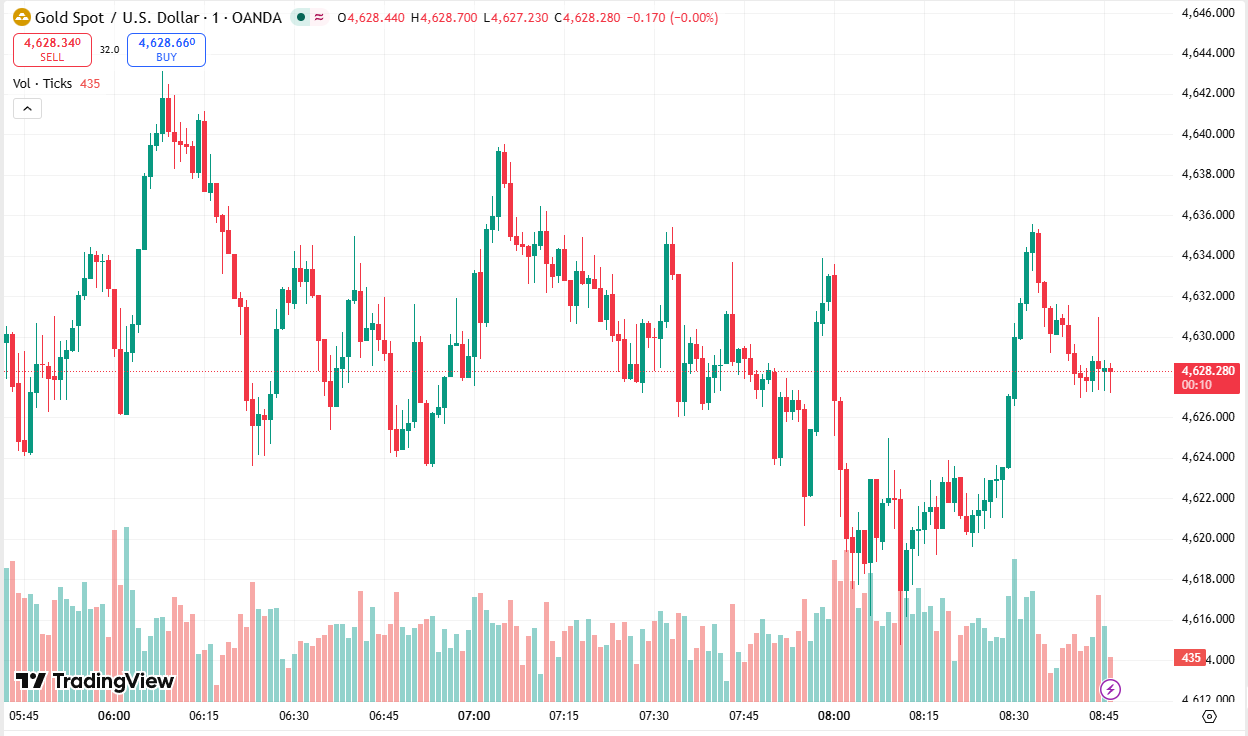
On the morning of April 28, 2026, Forex investors are witnessing another round of decline in gold prices (XAU/USD). The precious metal, which just recently was storming the psychological $5,000 per ounce mark amid an acute geopolitical crisis, has now retreated below $4,650, hitting two-week lows. Traders’ attention is focused on several powerful factors, ranging from the nuclear standoff in the Strait of Hormuz to the verdict from the U.S. Federal Reserve.
Fundamental Analysis: Geopolitics and Central Banks
The main driver of gold’s current dynamics is the unstable situation surrounding U.S.-Iran negotiations. Yesterday, reports emerged that Tehran proposed to Washington that shipping through the Strait of Hormuz be resumed, but attached a counter-condition — to postpone the resolution of the nuclear issue until the end of hostilities. Expectations of de-escalation triggered a temporary rise in risk appetite and weakened demand for safe-haven assets. However, by Tuesday morning, it became clear: U.S. President Donald Trump is unhappy with the Iranian initiative, and direct dialogue in Pakistan has collapsed.
While politicians exchange ultimatums, the U.S. dollar is strengthening its role as the primary safe haven, putting pressure on gold, which is denominated in it. Additional nervousness stems from central bank meetings: the Bank of Japan today and the Federal Reserve on Wednesday will announce their monetary policy decisions. The U.S. regulator is expected to keep its key interest rate unchanged, but the tone of the statements from outgoing Chairman Jerome Powell will be crucial for the medium-term trend. Markets are also pricing in a 35% probability of at least one monetary policy easing in the U.S. by the end of the year, which theoretically limits the dollar’s upside potential and supports gold.
The factor of oil prices should not be dismissed. Escalation in the Middle East has pushed the price of a Brent barrel above $111, stoking inflation fears worldwide — a classic bullish argument for a precious metal often used to hedge against inflation.
Technical Analysis: Bearish Trend Gains Strength
From a technical perspective, the situation for XAU/USD looks alarming for buyers. On the 4-hour chart, the price has firmly settled below the key moving averages (20, 100, and 200 SMA), which have formed a strong resistance zone in the $4,700–$4,750 area. The Relative Strength Index (RSI) has dropped into oversold territory but is not yet showing clear reversal signals.
The intraday structure shows a steady downward channel. On Tuesday morning, quotes bounced off the $4,640 level, but momentum remains weak. Judging by the bearish flag pattern on the hourly timeframe, sellers are targeting the $4,625 area with an intermediate target at $4,601. An alternative scenario (temporary rebound) is only possible if the price quickly returns above $4,700 and closes above $4,710 with an hourly candle, which would open the path to $4,750.
Oscillator signals are also not in favor of the bulls: the Stochastic Oscillator has formed a bearish crossover and continues to decline from the resistance line, confirming the potential for further decline down to the $4,545 area. A break below that would open the door to a deeper correction toward $4,335.
Forecast for April 28: Pressure Remains with Rebound Chances
Summing up fundamental and technical data, the most likely scenario for April 28, 2026, remains the continuation of the bearish movement. The main reason is geopolitical uncertainty, fueling demand for the USD as a safe-haven asset. Until there is clarity on the Iranian dossier (especially the Strait of Hormuz issue), gold will remain under pressure.
However, the fall will not be limitless. Here are three reasons why:
-
Inflation expectations. Rising oil prices due to supply disruptions increase gold’s attractiveness as a hedge against currency devaluation.
-
Dovish expectations for the Fed. The market allows for a rate cut in the U.S. before year-end, which reduces the dollar’s appeal and supports the precious metal.
-
Potential reversal. Oversold conditions (RSI around 23 on H4) could trigger short covering and a technical rebound to the nearest resistance at $4,665–$4,700.
The most likely trading range for today is $4,600–$4,700. A break below support at $4,600 would intensify bearish momentum, making $4,545 the next target. For a trend reversal to the upside, a firm close above $4,710 is necessary, which is unlikely before the Fed meeting.
Brief summary — why this will happen:
-
Fundamentally: Uncertainty in U.S.-Iran negotiations supports the dollar as a safe-haven asset and pressures gold. Additional pressure comes from expectations of hawkish rhetoric from the Fed.
-
Technically: The price has broken key moving averages and is moving within a descending channel. Bearish oscillator signals confirm a continued downward trend, at least to $4,625, and under a negative scenario, to $4,545.
However, the factor of oil-driven inflation and potential dovish surprises from the Fed could trigger a local rebound in gold. Traders should closely monitor the news flow and be prepared for sharp reversals during the day.
Comments
No comments yet. Be the first to share your thoughts!
Comments only for logged-in users.