

Nvidia Tightens the Screws: How the American Chip Giant Is Fighting Sanctions Evasion
Introduction: A Whitelist Instead of Gray-Market Schemes
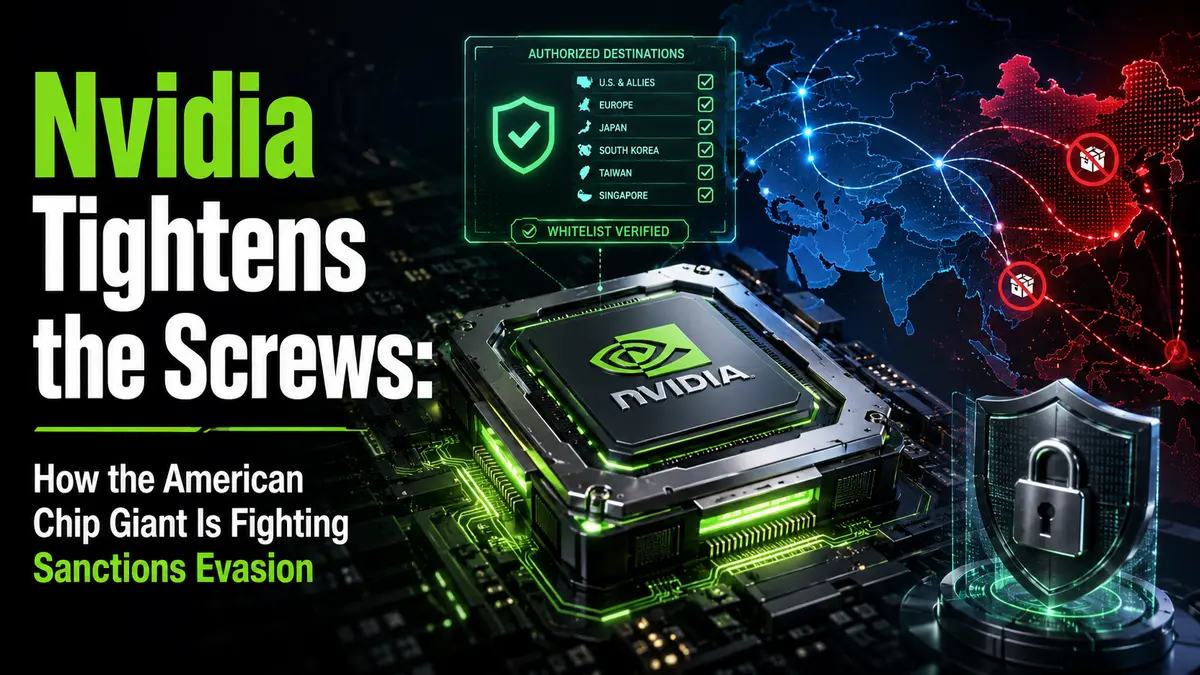
In the world of advanced technology, where artificial intelligence chips have become a strategic resource, the struggle to control their distribution is entering a new phase. Nvidia ( NVDA ... ) , the leading manufacturer of graphics processors used for AI, has reduced by more than half the number of Asian customers authorized to purchase its products. The decision is part of stricter compliance procedures designed to prevent the circumvention of export restrictions.
The company has created a new whitelist of approved Asian buyers and strengthened its customer due diligence procedures in Singapore, Malaysia, and Japan. According to the Financial Times, the new screening process excluded more than half of Nvidia’s previous customers. However, companies may reapply after addressing the identified compliance issues.
These measures come amid broader US efforts to close loopholes that allow Chinese companies to gain access to Nvidia’s advanced chips despite strict export restrictions. This article examines the reasons behind the tighter rules, assesses their impact on the market, and considers what may lie ahead for the industry.
Reasons for the Crackdown: Pressure from Washington and the Fight Against Smuggling
Export Restrictions on AI Chips
Washington has imposed strict export restrictions on the sale of AI chips to China since at least 2021. These measures are intended to prevent China from gaining access to advanced technologies that could be used for military purposes and to strengthen the country’s economic capabilities.
As a key manufacturer of AI chips, Nvidia is under close scrutiny from US authorities. The company must balance compliance with US legislation against its desire to retain access to the profitable Chinese market.
Allegations of $2.5 Billion in Chip Smuggling
In March, US prosecutors charged one of Supermicro’s co-founders and two company employees with allegedly organizing the smuggling of $2.5 billion worth of Nvidia chips into China. The US Department of Justice stated that the group used a Southeast Asian company as an intermediary to ship Nvidia chips from Taiwan to China.
The case sent a clear warning to the entire industry. Washington demonstrated its willingness to prosecute violators, forcing Nvidia to strengthen its controls in order to avoid legal consequences.
Pressure from Washington
Nvidia tightened its compliance procedures under pressure from Washington. The US administration is demanding guarantees that the company’s products are not reaching China through schemes designed to circumvent sanctions.
This pressure is affecting Nvidia’s business. The company is losing some customers, but the risks of legal consequences outweigh the potential financial losses.
The New Screening Process: How the Whitelist Works
Reduction in the Number of Approved Customers
Nvidia has created a new whitelist of Asian buyers authorized to purchase its products. The new screening procedure excluded more than half of the company’s previous customers.
This means that many companies that were previously able to purchase Nvidia chips have now lost that opportunity. They will either have to reapply or look for alternative suppliers.
Stricter Regional Checks
Nvidia has strengthened its customer due diligence procedures in Singapore, Malaysia, and Japan. These countries are considered key transit points for chip shipments to China.
The stricter procedures include more thorough verification of end users, analysis of supply chains, and monitoring of potential sanctions-evasion schemes.
Opportunity to Reapply
Companies excluded from the whitelist may reapply after addressing the identified violations. This gives customers an opportunity to regain approved status if they can demonstrate their reliability and compliance.
However, the process may be lengthy and complicated, and not every company will be able to pass it successfully.
Market Impact: Winners and Losers
Losses for Customers
The exclusion of more than half of Nvidia’s previous customers has dealt a serious blow to many Asian companies. They have lost access to advanced AI chips, which could slow their technological development.
Companies that depend on Nvidia chips will be forced to seek alternatives, including products from competing manufacturers or internally developed solutions.
Benefits for Competitors
The reduction in Nvidia’s customer list creates opportunities for its competitors. Companies such as AMD, Intel, and Chinese chip manufacturers may be able to occupy the newly available market space.
This could lead to a redistribution of market share and stronger competition in the AI chip segment.
Impact on Nvidia
For Nvidia, the reduction in its customer base means losing part of its revenue. However, the company believes that the risks of legal consequences outweigh the financial losses.
Nvidia will continue working with its remaining customers but will conduct more thorough checks on new buyers.
China’s Response: Blocking H200 Sales
Beijing’s Reaction
China reacted negatively to the US decision to allow Nvidia to sell its older H200 chip. Beijing blocked domestic sales of the H200, partly in an effort to support the development of China’s domestic semiconductor industry.
This retaliatory measure is intended to protect Chinese chip manufacturers and reduce the country’s dependence on imports.
Development of the Domestic Industry
China is actively investing in the development of its own semiconductor industry. Companies such as Huawei, SMIC, and others are developing their own AI chips to reduce their dependence on foreign suppliers.
The blocking of H200 sales is expected to stimulate the development of domestic alternatives.
Future Outlook
Stricter Controls
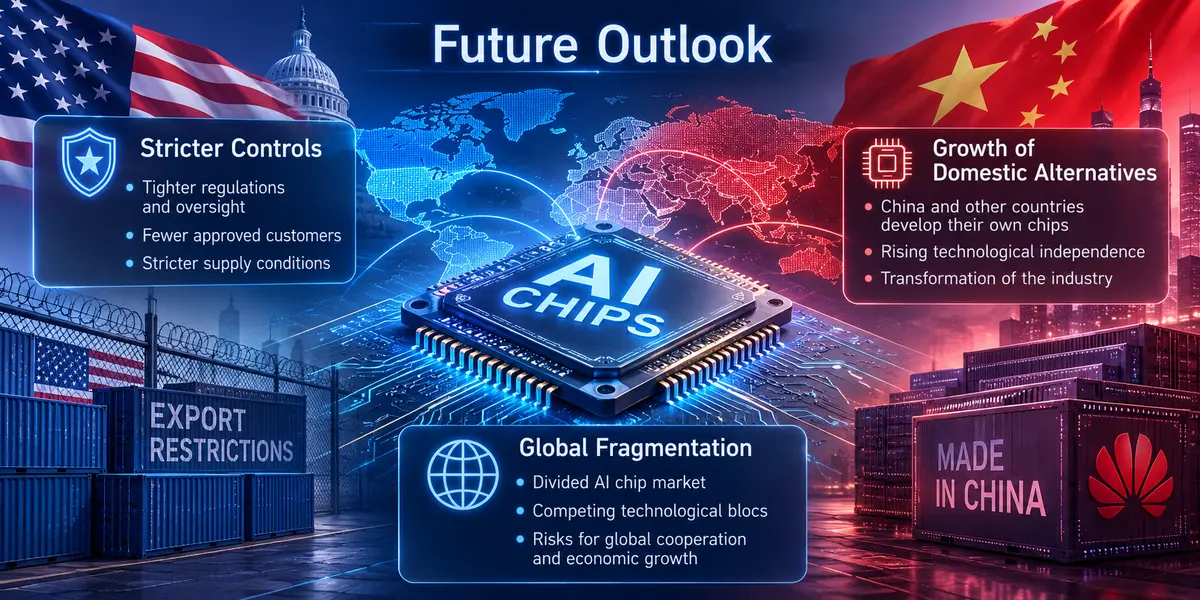
Nvidia and the US authorities are likely to continue strengthening their controls. AI chips are becoming an increasingly important strategic resource, and oversight of their distribution will continue to intensify.
This may lead to a further reduction in the number of approved customers and stricter supply conditions.
Growth of Domestic Alternatives
China and other countries facing restrictions on access to advanced chips are likely to accelerate the development of their own technologies. This could transform the global semiconductor industry.
Chinese companies such as Huawei are already demonstrating progress in developing their own AI chips.
Global Fragmentation
The global AI chip market is becoming increasingly fragmented. The United States and its allies are seeking to maintain control over advanced technologies, while China and other countries are attempting to develop their own alternatives.
This creates risks for global technological cooperation and economic growth.
What This Means for Investors
Risks for Nvidia
Stricter controls and a shrinking customer base create risks for Nvidia’s business. The company is losing part of its revenue and may also face reputational risks.
Investors should take these factors into account when evaluating the company.
Opportunities for Competitors
The reduction in Nvidia’s approved customer list creates opportunities for competitors such as AMD ( AMD ... ) and Intel ( INTC ... ) . These companies may be able to occupy the newly available market space and increase their market share.
Investors may consider potential investment opportunities in these companies.
Long-Term Trends
In the long term, the global semiconductor industry will continue to develop despite geopolitical risks. Demand for AI chips remains high, and companies that successfully adapt to the new environment will be well positioned to benefit.
Investors should pay attention to companies that are actively developing their own technologies and reducing their dependence on imported components.
Conclusion: A New Era for AI Chips
Nvidia has reduced by half the number of Asian customers authorized to purchase its AI chips. The decision is part of stricter compliance procedures introduced under pressure from Washington. The company is seeking to prevent the circumvention of export restrictions and avoid potential legal consequences.
The exclusion of more than half of Nvidia’s previous customers creates risks for the company’s business but also opens new opportunities for its competitors. China has responded to tighter controls by blocking sales of the H200 chip and supporting the development of its domestic semiconductor industry.
The global AI chip market is becoming increasingly fragmented. The United States and its allies are seeking to retain control over advanced technologies, while China and other countries are attempting to develop their own alternatives.
For investors, this situation creates both risks and opportunities. Companies that successfully adapt to the new conditions will be positioned to benefit, while those that fail to do so risk losing their market positions.
The coming months will show how the situation develops. Stricter controls, the growth of domestic alternatives, and increasing global fragmentation will shape the future of the semiconductor industry.




Comments
No comments yet. Be the first to share your thoughts!
Authentication Required
You must be logged in to post a comment.