

China’s Smartphone Market: A Battle of Giants in an Era of Expensive Components
Introduction: The Market Is Declining, but the Leaders Are Growing
The second quarter of 2026 was a period of sharp contrasts for China’s smartphone market. Total shipments fell by 4.3% to 66 million units. This decline was driven by rising prices for memory chips and other components, which forced many manufacturers to increase the prices of their finished products. Under these conditions, consumers became more cautious, choosing either to postpone purchases or switch to cheaper alternatives.
However, there were two bright spots in this otherwise gloomy picture. Apple and Huawei were the only manufacturers that managed to increase their shipments. Huawei’s sales rose by 20%, while Apple’s increased by 25%. Both companies maintained strong positions in the upper end of the market, while their competitors struggled with weakening demand.
In this article, we will examine the reasons behind Huawei’s and Apple’s success, assess the impact of rising component prices, and explore what may lie ahead for China’s smartphone market in the second half of 2026.
The Overall Picture: The Market Declines by 4.3%
Reasons for the Downturn
The main reason for the market decline was the rising cost of memory chips and other components. Demand from the artificial intelligence industry led to supply shortages and higher component prices. This, in turn, increased production costs, which manufacturers passed on to consumers.
Higher smartphone prices, particularly in the mid-range and budget segments, discouraged some buyers. Amid economic uncertainty, consumers became more price-sensitive and began postponing purchases.
Regional Characteristics
China’s smartphone market is the largest in the world, and its performance influences global trends. A decline in shipments in China may signal a broader slowdown in the global smartphone market.
Nevertheless, China remains a critical market for every major manufacturer, and success or failure there has a significant impact on their global positions.
Huawei: Strengthening Its Leadership
Market Share Rises to 22.6%
Huawei maintained its position as China’s largest smartphone manufacturer by market share. In the second quarter, its share increased to 22.6%, up from 18.1% a year earlier. A 20% increase in shipments allowed the company to strengthen its leadership.
This is an important achievement for Huawei, particularly against the backdrop of the sanctions and restrictions the company continues to face in global markets. The Chinese market remains its primary source of revenue.
Pricing Strategy
IDC analysts note that Huawei, like Apple, kept its prices unchanged while competitors increased theirs. This became a key factor behind the company’s growth. Consumers who wanted to buy a smartphone but were unwilling to pay higher prices increasingly chose Huawei.
In addition, Huawei offers a broad product range, from budget devices to premium models, allowing the company to reach different market segments.
Brand Loyalty
Huawei enjoys strong brand loyalty in China. Many consumers prefer products made by a domestic manufacturer, especially amid geopolitical tensions and US sanctions.
This gives Huawei an advantage over competitors that are perceived as foreign brands.
Apple: Regaining Its Position
Shipments Increase by 25%
Apple recorded even more impressive growth, with shipments increasing by 25%. Its market share rose to 18.1%, compared with 13.9% a year earlier. This represents a significant strengthening of the US company’s position in the Chinese market.
For Apple, this is an important success, given the intense competition and increasing pressure from domestic manufacturers.
Pricing Strategy
Like Huawei , Apple kept its prices unchanged despite rising costs. An advance announcement of an upcoming price increase encouraged consumers to accelerate their planned iPhone purchases.
Apple’s strong brand value allowed the company to remain attractive to consumers despite the relatively high cost of its products.
Brand and Ecosystem
Apple( AAPL ... ) has one of the strongest technology ecosystems in the world. iPhone owners often remain within this ecosystem by purchasing additional Apple products. This creates customer loyalty that helps the company maintain its market position.
Despite geopolitical tensions, the iPhone remains one of the most desirable smartphones in China.
Other Players: OPPO, Vivo, and Xiaomi in the Shadows
OPPO and Vivo Share Third Place
OPPO and Vivo shared third place in China by market share. Both companies remain major players, but their growth was limited by price increases and weakening demand.
These companies have traditionally been strong in the mid-range price segment, which has been affected most severely by rising component costs.
Xiaomi Ranks Fifth
Xiaomi ( XIACY ... ) took fifth place. The company is known for its affordable prices, but its position has weakened under current market conditions. Rising costs and higher retail prices have discouraged some buyers.
Xiaomi is attempting to compensate by expanding its product range and entering new markets, but its position in China remains under pressure.
The Impact of Rising Component Prices
Memory Shortages and Higher Prices
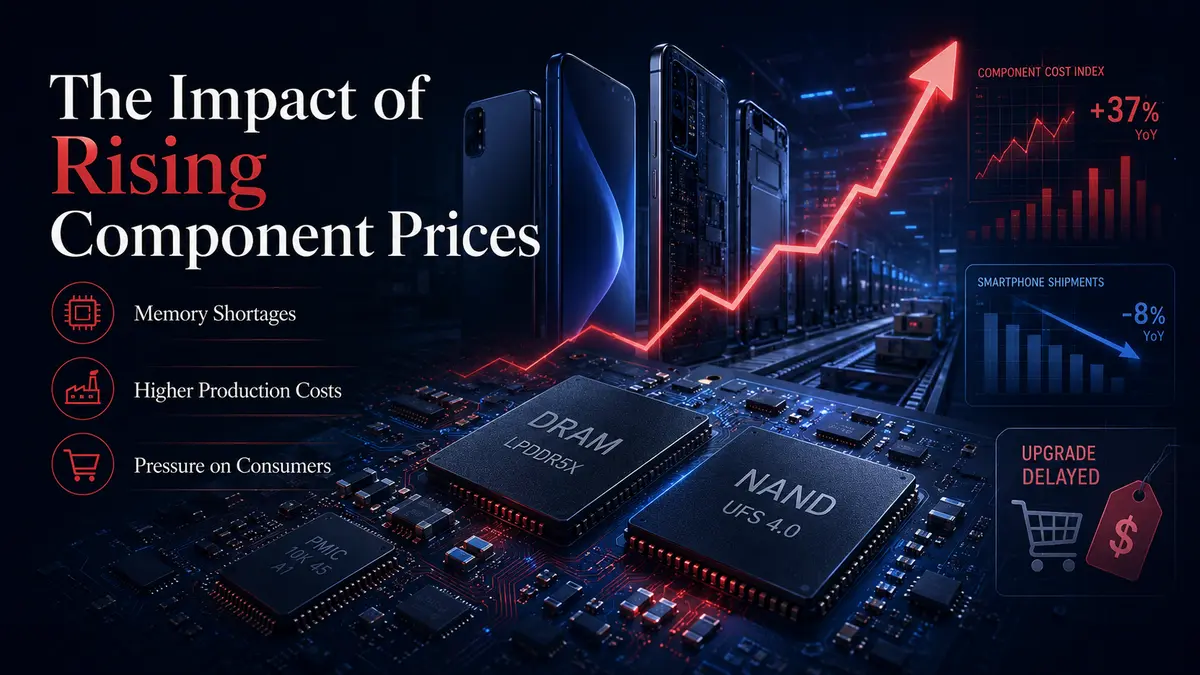
The cost of components, especially memory chips, has risen sharply this year. Increased demand from the artificial intelligence industry has created supply shortages and pushed prices higher.
Smartphone manufacturers have been forced to raise the prices of finished products to preserve their profit margins. This, in turn, has discouraged some consumers.
Higher Production Costs
Rising prices for memory chips and other components have increased production costs. Manufacturers, particularly those operating in the mid-range and budget segments, have faced a difficult choice: raise prices and lose customers, or maintain prices and sacrifice profitability.
Some companies, including Huawei and Apple, have been able to keep prices unchanged because of their higher margins and more efficient supply chain management.
Impact on Consumers
For consumers, higher smartphone prices have become an important factor forcing them to reconsider their purchasing plans. Many have decided to postpone upgrading their smartphones or switch to cheaper models.
This has placed additional pressure on the market and contributed to the decline in shipments.
Outlook for the Second Half of 2026
Cost Pressures Will Intensify
Research company IDC expects rising costs to affect manufacturers more severely in the second half of 2026. Inventories of lower-cost components, which had previously helped soften the impact of price increases, are expected to run out.
This means manufacturers will either have to raise prices further or find alternative ways to reduce costs.
Survival Strategies
Manufacturers will have to adapt to the new market conditions. This may include optimizing supply chains, reducing production and marketing expenses, and focusing on higher-margin market segments.
Companies that manage to keep prices stable while remaining attractive to consumers will have a competitive advantage.
Possible Scenarios
There are two main possible scenarios. In the first, prices continue to rise and the market continues to decline, leading to consolidation and stronger positions for the largest companies. In the second, manufacturers find ways to reduce costs and the market stabilizes.
Which scenario ultimately unfolds will depend on macroeconomic factors, including inflation, interest rates, and consumer confidence.
What This Means for Investors
Strong Positions of Huawei and Apple
For investors, the current situation confirms the strong positions of Huawei and Apple in the Chinese market. Both companies demonstrated resilience to rising costs and managed to increase shipments during a broader market downturn.
This may make them attractive from a long-term investment perspective.
Risks for Other Manufacturers
OPPO, Vivo ( VIVO ... ) , and Xiaomi have encountered difficulties, and their positions may weaken further. Rising prices and declining demand create significant risks for their businesses.
Investors should take these risks into account when evaluating these companies.
Long-Term Trends
In the long term, China’s smartphone market will remain strategically important. Population growth, urbanization, and an expanding middle class continue to support demand for smartphones.
However, short-term volatility is likely to persist.
Conclusion: A Time for Strong Players
The second quarter of 2026 became a major test of resilience for China’s smartphone market. Total shipments declined by 4.3%, and many manufacturers faced weakening demand. However, Huawei and Apple were the only companies that managed to increase their shipments.
Rising prices for memory chips and other components became the industry’s main challenge. Manufacturers that succeeded in keeping prices stable and preserving their appeal to consumers emerged as the winners. Huawei and Apple used their stronger margins and efficient supply chain management to avoid raising prices.
At the same time, OPPO, Vivo, and Xiaomi faced considerable difficulties. Rising component costs and weakening demand placed pressure on their businesses. These companies will have to adapt to the new conditions in order to survive.
Cost pressures are expected to intensify in the second half of 2026, forcing manufacturers to look for new ways to reduce expenses. This may lead to further market consolidation and strengthen the positions of the largest players.
For investors, the current situation confirms the strong positions of Huawei and Apple. These companies have demonstrated resilience and the ability to grow even during a market downturn. However, the risks facing other manufacturers remain substantial.
China’s smartphone market continues to evolve, and its performance will shape global




Comments
No comments yet. Be the first to share your thoughts!
Authentication Required
You must be logged in to post a comment.