

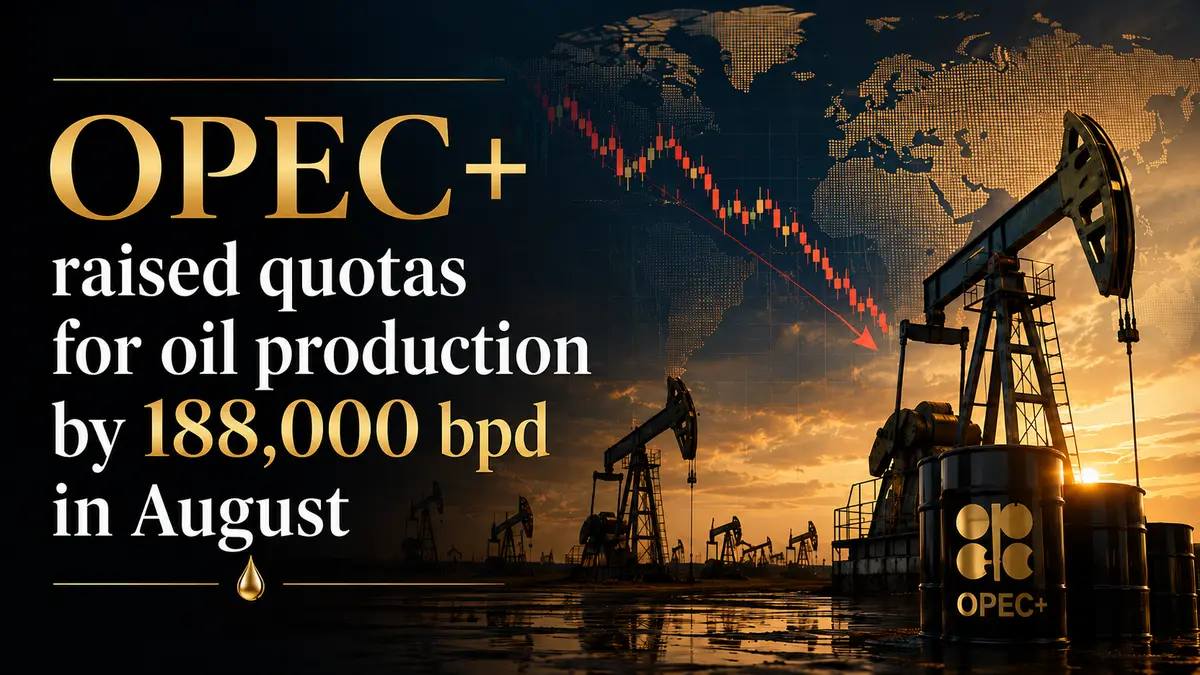
OPEC+ Increased Oil Production Quotas by 188,000 bpd in August
Introduction: The Oil Alliance Takes a Step Forward, but Prices Have Already Collapsed
Sunday. A video conference that changes the balance of power in the global oil market. Seven key OPEC+ participants, led by Saudi Arabia and Russia, agree on another increase in combined production quotas. In August, they will add another 188,000 barrels per day, continuing the gradual reversal of restrictions that have held back production in recent years.
At first glance, this is the kind of news that should have sent prices crashing. More oil on the market means lower prices. But oil futures have already fallen by 43% from their wartime peak, to around $72 per barrel in London. An additional 188,000 barrels per day is only 0.2% of global demand. It is not a drop in the ocean, but it is not a tsunami either.
What really matters in this decision is not so much the number itself, but the signal. OPEC+ is demonstrating that it does not intend to panic because of falling prices. It continues to follow its plan, even if the market is already oversupplied. And this creates a new context for the oil industry — a context in which the old rules of the game no longer work.
Let’s examine what really stands behind this decision, why OPEC+ continues to increase production despite falling prices, and what this means for the future of the oil market.
Figures and Context: What an Increase of 188,000 bpd Means
The Plan to Complete the Reversal of Restrictions
The decision to increase quotas by 188,000 barrels per day is not spontaneous. It is part of a plan that was developed even before the war and that OPEC+ has been consistently implementing. Since the beginning of the conflict, the alliance has increased quotas by 940,000 barrels per day — almost 1% of global demand.
The August increase will be the penultimate step in this plan. One final tranche of restrictions remains, which is supposed to stay in place until the end of the year. However, some delegates have already allowed for the possibility of launching it earlier, which points to disagreements within the organization.
The plan was designed to gradually return production to normal levels after restrictions were introduced in 2023. At that time, the market was overheated, prices had surged above $100 per barrel, and OPEC+ decided to act cautiously. Now the market is completely different — prices have fallen, demand is weak, and geopolitical risks have eased. But the plan remains in force.
Why 188,000 Is Not That Much
188,000 barrels per day is an insignificant figure for the global oil market. For comparison, global demand is around 102 million barrels per day. An increase of 188,000 is only 0.18% of global consumption.
In theory, such an increase should not have a serious impact on prices. But markets work on expectations, not only on real numbers. If OPEC+ signals that it will continue to increase production regardless of prices, this creates a bearish backdrop for oil futures.
It is also important to note that these increases long remained theoretical. The war blocked the Strait of Hormuz and prevented Gulf participants from increasing exports. Now, after the temporary peace between Tehran and Washington, Saudi Arabia and its neighbors have begun restoring supplies.
The real increase in supply that we have already started to see is putting more pressure on prices than the quota increase itself. OPEC+ is simply formalizing what is already happening in the market.
Falling Prices: From the Wartime Peak to $72 per Barrel
A 43% Loss in Several Months
The 43% fall in oil futures from their wartime peak is one of the sharpest declines in recent years. At the height of the conflict, oil prices rose above $120 per barrel, and it seemed they would remain high for a long time. But the peace agreement between the United States and Iran, signed last month, completely changed the situation.
Markets began pricing in the return of Iranian oil and the normalization of supplies through the Strait of Hormuz. This triggered a collapse that even traditional bullish factors, such as rising summer demand in Asia, could not stop.
Brent is now trading around $72 per barrel. These are not levels that satisfy most OPEC+ members. Saudi Arabia needs prices around $80–85 to balance its budget. Russia is also interested in higher prices, although its budget is less dependent on oil because of other sources of revenue.
Falling prices are creating tension within the alliance. The longer prices remain low, the greater the pressure on OPEC+ members to cut production will become. But for now, the alliance is sticking to its plan, hoping that demand will recover in the second half of the year.
Oversupply in Asian Markets
One sign that the market is oversupplied is the surplus of oil in key Asian markets. China, the largest oil importer, has reduced purchases because of an economic slowdown and the transition to alternative energy sources.
India, the second-largest importer, is also reducing purchases as its oil needs decline amid growing electric vehicle production.
Saudi Arabia and the UAE have restored exports almost to prewar levels, and these volumes have begun to weigh on the market. In conditions of weak demand, any increase in supply leads to lower prices.
Forecasts of a return to a global surplus are becoming increasingly realistic. Citi analysts predict Brent could fall to $60–65 per barrel by the end of the year, and OPEC+ cannot ignore this. The question is whether the alliance will be ready to change its plan in order to prevent such a decline.
Internal Disagreements: Cracks in the Alliance
Iraq: Threats to Leave
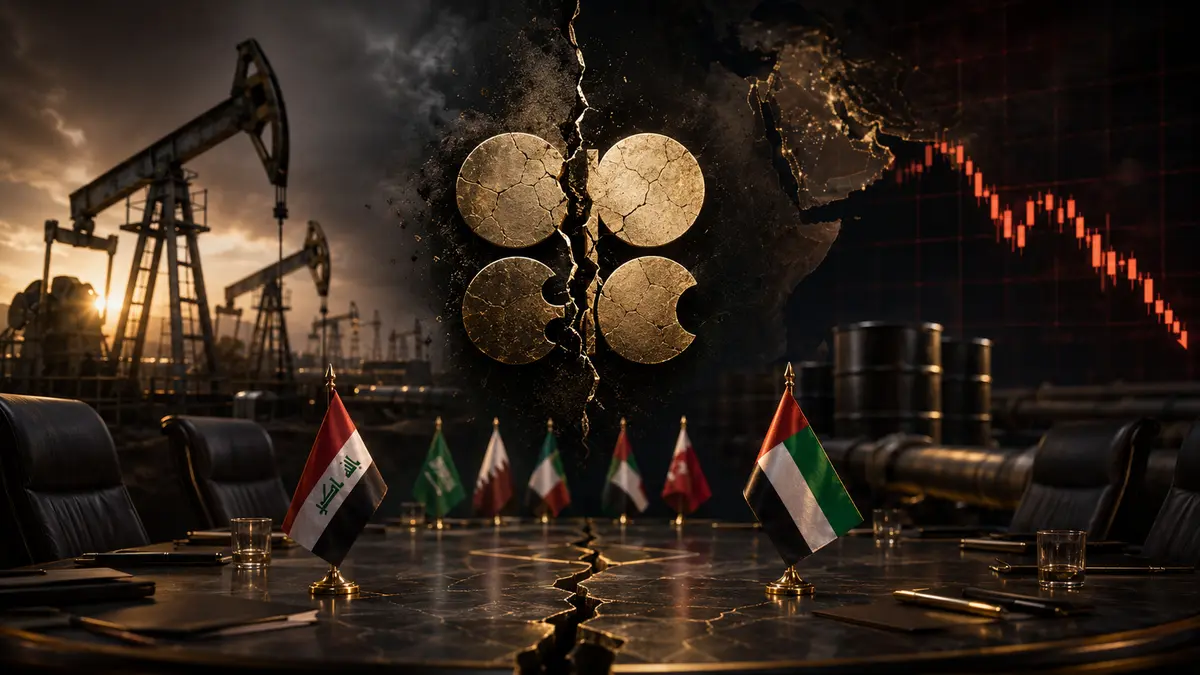
OPEC+ is not a monolithic bloc. There are serious disagreements within the alliance that could threaten its existence. Last month, Iraq made it clear that it could leave OPEC if it is denied a higher production limit.
Iraq is the second-largest producer in OPEC, and its dissatisfaction with restrictions is understandable. The country needs oil revenues to rebuild its economy after decades of conflict. Production restrictions mean Iraq is losing billions of dollars it could have earned from selling oil.
If Iraq leaves the alliance, it could mark the beginning of the end for OPEC+. Other countries dissatisfied with quotas may follow its example, and then the alliance would lose control over the market. This would mean a return to the era of price wars, which in the past cost the industry trillions of dollars.
The UAE: Leaving the Alliance
An even more serious signal was the UAE’s withdrawal from OPEC+ in May. Abu Dhabi, which has significant idle capacity ready to be restarted, is dissatisfied with the restrictions holding back its production.
The UAE has invested billions in expanding production capacity and now wants to use it. OPEC+ restrictions are preventing this, and the UAE has decided to leave the alliance in order to gain freedom of action.
This decision could have far-reaching consequences. The UAE is one of the largest producers in the region, and its withdrawal from the alliance increases pressure on prices. If Abu Dhabi begins ramping up production at full capacity, it will add hundreds of thousands of barrels per day to the market, pushing prices even lower.
OPEC+ may face a choice: restrain production or fight for market share. If the alliance chooses the latter, it could lead to a price war that would drive prices down to levels not seen since 2020.
Russia: Its Own Problems
Russia, which co-leads OPEC+ together with Saudi Arabia, is also facing its own problems. Russian oil exports have risen to record levels, but this has happened against the backdrop of drone strikes on refineries. Some of the oil that was previously refined domestically is now being exported.
This creates additional supply in the market, putting pressure on prices. Russia is, of course, interested in high prices, but its ability to influence the market is limited by sanctions and logistical problems.
Strikes on refineries also create risks for the domestic market. If refining declines, Russia will have to export even more crude oil, which will increase pressure on prices. This is a vicious circle that is difficult to escape.
The Future of OPEC+: A Choice Between Quotas and Price
The Plan Until September
OPEC+ has a plan to continue quota increases until September, completing the restoration of two layers of production that were suspended in 2023. The August increase will be the penultimate step.
But will this plan remain in place if prices continue to fall? The next meeting will take place on August 2, and it will be a key moment for the alliance. If oil prices fall below $70 per barrel, Saudi Arabia and other alliance leaders may be forced to reconsider their plan.
One option is to stop increasing quotas until September. This would send the market a signal that OPEC+ is ready to defend prices and could halt the decline. But this requires support from all participants, and that is becoming increasingly difficult.
A Potential Price War
The most dangerous scenario for the oil market is a price war. If OPEC+ loses control of the market and member countries begin increasing production in the fight for market share, prices could collapse to $40–50 per barrel.
This already happened in 2020, when OPEC+ failed to agree on cuts and oil prices fell into negative territory. Although a repeat of that scenario is unlikely, the risk of a price war cannot be ruled out.
Saudi Arabia and Russia, the leaders of the alliance, are interested in preserving unity. But if their partners, such as the UAE and Iraq, continue to leave the alliance, maintaining unity will become impossible.
Conclusion: The Oil Market at a Crossroads
OPEC+ increased oil production quotas by 188,000 bpd in August, continuing the gradual reversal of restrictions that have held back production in recent years. This decision is part of a plan developed even before the war, but it is being implemented in conditions where the market is already oversupplied.
The 43% fall in prices from their wartime peak, oversupply in Asian markets, and forecasts of a return to a global surplus are creating a bearish backdrop for oil futures. OPEC+ cannot ignore this, but for now, the alliance is sticking to its course.
Internal disagreements, especially the UAE’s withdrawal and Iraq’s threats, are putting the organization’s unity at risk. OPEC+ may face a choice: restrain production and support prices, or fight for market share and risk a price war.
The next meeting on August 2 will be key. If prices continue to fall, Saudi Arabia and other leaders may be forced to revise the plan. But for now, OPEC+ is showing that it does not intend to panic.
The oil market is at a crossroads. The end of summer and the beginning of autumn will show whether OPEC+ can maintain control over the market or whether a new era of instability awaits. In any case, 2026 will go down in history as the year when the old rules of the oil game stopped working.

Comments
No comments yet. Be the first to share your thoughts!
Authentication Required
You must be logged in to post a comment.