

USD/MXN – Nearshoring Flows, Banxico Policy, and Pemex Risk Signals
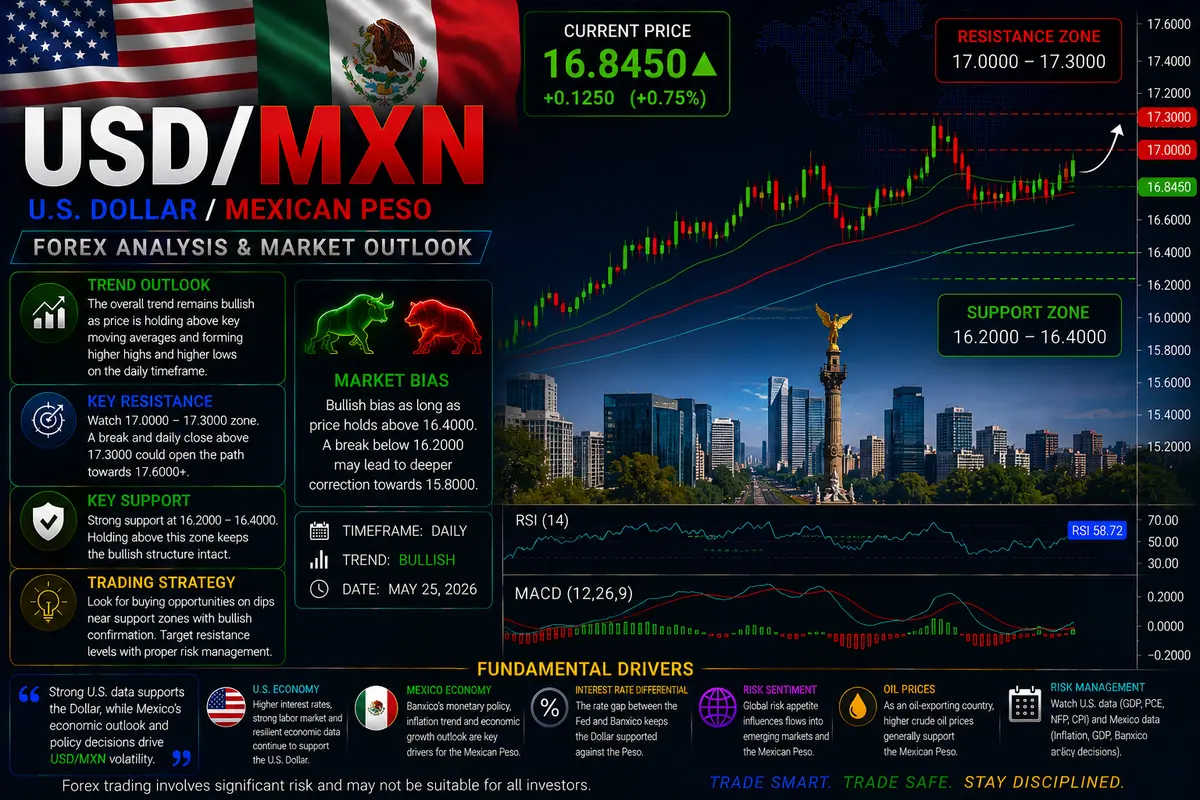
Ask any spot trader in Chicago or London about the Mexican Peso and they’ll tell you the same thing: it’s the undisputed king of Latin American liquidity. But calling USD/MXN just an “emerging market currency” misses the entire point.
On institutional desks, the Peso isn’t just traded for direct exposure to Mexico. It’s used as a giant, macro sponge. Whenever risk sentiment breaks across South America—or when a global fund needs to quickly hedge a messy basket of illiquid Brazilian real or Colombian peso positions—they don’t mess around with local order books that freeze up the moment headline risk hits. They hit the bid on USDMXN ... .
That constant volume creates a weird paradox. On normal days, spreads during North American trading hours are tight—sometimes tight enough to rival minor G10 pairs like AUD or
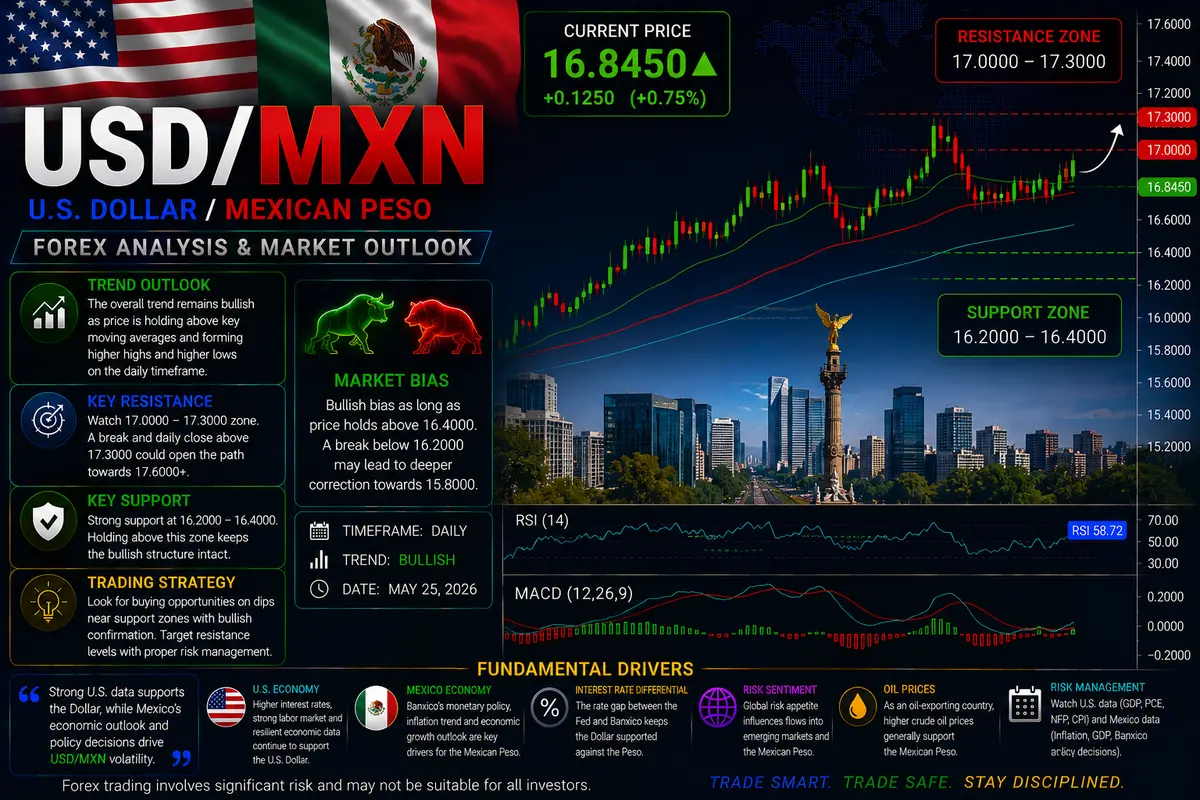
. Execution feels smooth. Slippage is minimal. But the moment global macro turns ugly, that clean order book can evaporate instantly.
If you want to trade this pair consistently without getting liquidated during random liquidity gaps, you have to track three specific engines: real-economy trade flows, Banxico’s interest rate cushion, and the fiscal bomb ticking inside Pemex.
1. The Real Economy: Physical Trucks and Nearshoring Capital
Forget pure technical analysis for a second. At its core, USD/MXN is anchored by physical goods moving across border crossings like Laredo and El Paso.
Mexico’s manufacturing sector is directly hooked into North American supply chains under USMCA. Those thousands of assembly plants—the maquiladoras—produce everything from pickup trucks to medical equipment destined for US store shelves. When American consumer demand is solid, those factories run non-stop. To cover local payrolls, electricity, taxes, and domestic suppliers, these companies constantly dump Dollars and buy Pesos. That’s a persistent, real-money bid beneath MXN.
Then you have nearshoring.
When global shipping lines ground to a halt a few years back, corporate executives realized that sourcing everything from ten thousand miles away was a nightmare waiting to happen. Billions in direct investment started shifting toward northern Mexican industrial centers. When a multinational breaks ground on a massive new factory in Monterrey, they don’t wire Pesos from overseas. They wire Greenbacks, convert them on spot or forward desks, and build out physical infrastructure. That structural capital keeps long-term rallies in USD/MXN heavily capped.
Throw in secondary flows like monthly worker remittances—tens of billions arriving every year straight to retail households—and you get an economic floor that prevents the Peso from behaving like a typical fragile EM currency.
2. Banxico and the Carry Trade Trap
While cross-border trade creates the slow, underlying backdrop, rate differentials drive the explosive medium-term trends.
Banco de México (Banxico) has earned a reputation for being aggressively hawkish. They rarely play games with inflation. Historically, Banxico maintains a wide interest rate buffer over the Federal Reserve’s target rate to keep capital from fleeing the country.
When that spread is wide, money pours into the carry trade. Institutional macro funds borrow USD cheaply, swap into Pesos, and buy short-term Mexican treasury bills called Cetes. If price action stays flat, traders harvest juicy net positive rollover credit day after day.
It works brilliantly. Until it doesn’t.
Carry trades go up by the stairs and down by the elevator. The second global equity markets crash or a sudden geopolitical shock triggers a global rush for Dollar cash, carry traders unwind all at once. They dump their Cetes, scramble back into Greenbacks, and send USD/MXN vertical. You can literally watch six months of slow downward grinding get erased in three violent trading sessions.
3. Pemex: The Fiscal Shadow
The wildcard every experienced Peso trader monitors is Petróleos Mexicanos (Pemex).
Pemex is state-owned and happens to be the most indebted oil company in the world. It’s a massive fiscal drag. Because the Mexican government repeatedly steps in to bail out Pemex—offering direct cash injections, tax breaks, and sovereign debt backstops—the credit rating of the entire nation is tied to Pemex’s balance sheet.
If oil prices slump or Pemex mismanages its debt maturities, rating agencies start issuing downgrade warnings for Mexico’s sovereign debt. Bond markets react quickly. If international investors feel the government is blowing through fiscal reserves to keep a failing state oil company alive, they price that country risk straight into the exchange rate. USD/MXN pops instantly on those headlines.
How to Play It on the Desk
-
Focus on the overlap: Stick to 12:30 to 18:00 UTC. That’s when liquidity from New York desks and Mexico City commercial banks collides, giving you the best fill quality and minimal spreads.
-
Position size for range, not leverage: USD/MXN doesn’t move like EUR/USD. Daily moves of 150 to 300 pips are standard when volatility wakes up. Cut your standard lot size in half and give your stops room to breathe.
-
Watch Banxico rate releases: Banxico policy announcements usually drop on Thursday afternoons. Pay attention to their forward guidance regarding the Fed. If Banxico hints at cutting faster than the Fed, the carry trade buffer shrinks and USD/MXN usually finds a fast bid.

Comments
No comments yet. Be the first to share your thoughts!
Authentication Required
You must be logged in to post a comment.