


USD/NOK – North Sea Crude Dynamics, Norges Bank Policy, and Sovereign Wealth Capital Flows
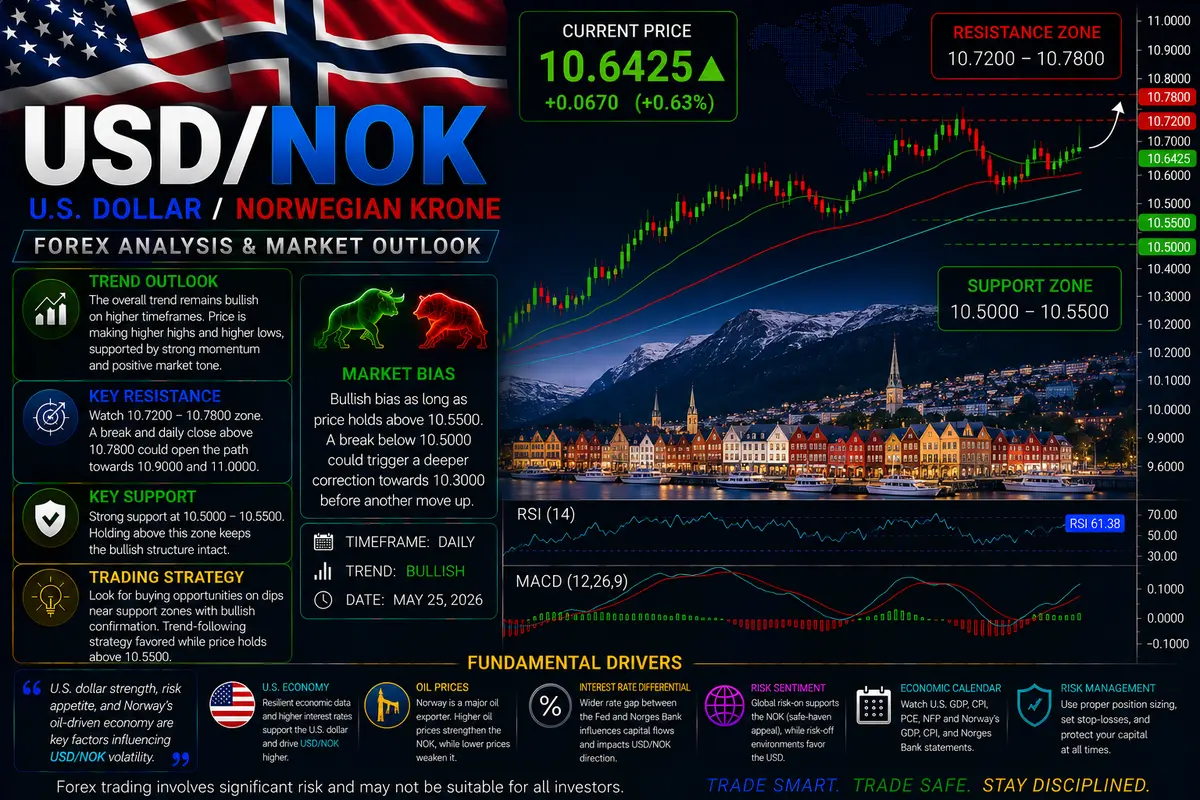
Among energy-linked currency pairs in developed markets, USDNOK ... (US Dollar vs. Norwegian Krone) holds a unique position. While major commodity crosses like USDCAD ... or AUDUSD ... feature heavy retail participation, USD/NOK trades primarily as an institutional vehicle for energy supercycles, Western European macro health, and active central bank liquidity management.
The Norwegian Krone represents a G10 economy with an enviable sovereign balance sheet. Backed by Western Europe’s largest oil and natural gas producer and anchored by the multi-trillion-dollar Government Pension Fund Global (GPFG), the Krone combines rock-solid fiscal backing with extreme sensitivity to global energy benchmarks. For institutional trading desks, USD/NOK is the ultimate liquid proxy for European energy sentiment and global risk appetite.
1. The Core Engine: North Sea Energy Markets and Crude Correlations
To understand the macro forces driving USD/NOK over multi-month horizons, you must start with energy markets—specifically Brent Crude and European natural gas benchmarks (TTF).
Norway’s current account surplus and export revenues are tied directly to offshore oil and gas production in the North Sea. When global energy demand surges or supply disruptions push Brent crude prices higher, Norwegian energy giants generate massive hard-currency windfalls.
This revenue cycle creates a distinct mechanical flow on spot FX dealing desks:
Energy Boom Phase: Rising crude and natural gas prices boost Norway’s trade surplus. Energy producers sell foreign currency (USD and EUR) on spot desks to buy Krone in order to settle local tax obligations, fund offshore capital expenditures, and pay domestic suppliers. This ongoing commercial conversion builds a persistent, real-money floor beneath the Krone, driving USD/NOK into sustained downward trends.
Energy Slump Phase: When global energy prices drop due to oversupply or global recession fears, Norway’s trade revenues contract. Commercial demand for the Krone weakens significantly, and institutional investors reallocate capital into US Dollar cash, sending USD/NOK climbing rapidly.
...
