

Corn Futures Fell From a One-Month High
Introduction: The Wednesday When the Grain Rally Ended
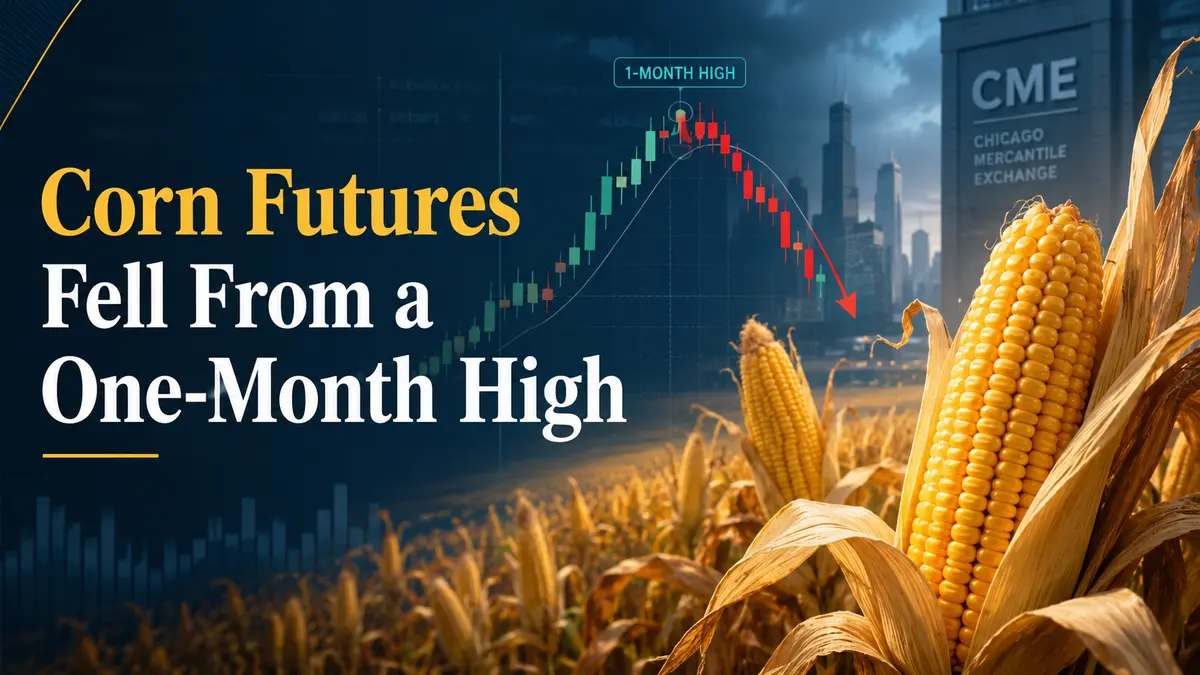
Wednesday, Chicago Board of Trade. Traders who were watching corn prices climb to one-month highs in the morning were forced to acknowledge a reversal by the end of the session. The September contract closed down 8-3/4 cents at $4.35 per bushel, after reaching $4.44-3/4 during the session. The December contract ended trading down 8 cents at $4.56-1/4 per bushel, retreating from $4.65-3/4, its highest level since June 3.
What happened? The corn market experienced a classic reversal: first, a rally driven by expectations of weather risks, followed by profit-taking and a correction. Traders who had bought at lower levels decided to lock in gains, creating pressure on prices.
But the weather — or more precisely, its improvement — became the main factor behind the decline. New forecasts reduced the expected intensity of heat in the U.S. Midwest in mid-July. This eased concerns about heat stress for corn crops during the pollination period. Less heat means lower crop risks, and lower crop risks mean lower prices.
The strengthening dollar also weighed on grain futures, reducing the competitiveness of U.S. grain on global markets. When the dollar rises, American corn becomes more expensive for foreign buyers, which reduces demand and puts pressure on prices.
Grain futures on the Chicago Board of Trade reacted weakly to an approximately 5% rise in oil futures, which followed a statement by U.S. President Donald Trump that an interim deal to settle the war with Iran had been “completed.” The corn market appears to be more concerned about weather and the dollar than Middle East geopolitics.
The U.S. Energy Information Administration reported that corn-based ethanol production for the week ended July 3 totaled 1.093 million barrels per day, down 24,000 barrels per day from the previous week. U.S. ethanol...
