Bar Pipa
We pay for a post of 10$

Commodities

Crying Wolf on Iran Cost Oil Traders the Best Setup of the Year

Crying Wolf on Iran Cost Oil Traders the Best Setup of the Year

Monday morning, the number hit the tape: 43 days of crude supply left in the United States, the lowest since the early 1980s. That's not a typo and it's not some fringe blogger's math —it's Bank of America Global Research, built off Bloomberg data, using the same days-of supply methodology the EIA has run for decades.

Inventory divided by expected refinery demand. Forty-three days against a long-term average of roughly 65.

And the market shrugged. OIL ... sat around $81 a barrel, well off the $112 highs from the last

time Iran headlines sent traders scrambling. For a few hours, one of the tightest supply

cushions in 45 years traded like a non-event.

I don't think that was calm. I think it was fatigue.

A 45-Year-Low Number Nobody Reacted To — At First

Here's the setup: fresh U.S. airstrikes on Iran, renewed chatter about the Strait of Hormuz, and a supply cushion thinner than at almost any point since the Reagan administration. On paper, that's the kind of combination that should send crude vertical within minutes.

Instead, WTI ... opened the session basically flat. Traders who'd normally jump at "Iran" in a headline just... didn't. If you'd shown me that setup a year ago without telling me the date, I'd have guessed a 5%+ pop by lunch. It didn't happen. Not immediately, anyway.

That gap between what the data said and how price actually moved is the whole story.

Why the Market Was Asleep at the Wheel

The Iran Headline Cycle Has Cried Wolf Too Many Times

This isn't the first Iran scare this year, and it won't be the last. BZUSD ... spiked to over $112 a barrel during the previous flare-up, then spent weeks grinding back down as the disruption everyone feared never fully materialized.

Traders who bought that spike and...

Continue reading...
0
0
joy

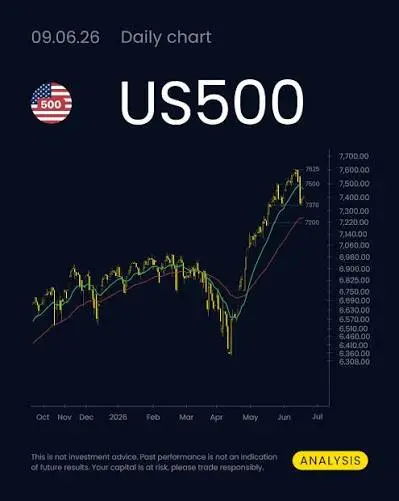
S&P 500 (US500): The Uptrend Is Intact, but the Market Is Reaching a Point Where Patience May Be Rewarded

S&P 500 (US500): The Uptrend Is Intact, but the Market Is Reaching a Point Where Patience May Be Rewarded

The S&P 500 has continued to demonstrate remarkable resilience over the past several trading sessions. Despite periods of profit-taking and brief waves of selling pressure, buyers have repeatedly stepped back into the market before any meaningful damage could be done to the broader trend. That alone tells me something important—the bulls are still present, but they are becoming more selective about where they commit fresh capital.

Looking at the current chart, I don't think the market is weak.

I also don't think it's as strong as it was a few weeks ago.

Instead, I believe the index has entered a phase where momentum is being tested rather than abandoned.

This distinction matters because many traders make the mistake of confusing consolidation with reversal. Financial markets rarely move in a straight line. After a sustained rally, they often pause, allowing traders to reassess their positions before deciding whether another leg higher is justified.

That appears to be exactly what PLUS.L ... US500 is doing today.

The first thing that caught my attention was the way recent pullbacks have behaved. Every correction has remained relatively controlled. Sellers have managed to interrupt bullish momentum for short periods, but they haven't succeeded in breaking the sequence of higher lows that continues to define the broader uptrend.

That structure is extremely important.

As long as higher lows remain intact, buyers continue holding the technical advantage.

What has changed is the pace.

Earlier in the rally, bullish candles closed with confidence and resistance offered very little opposition. Recently, however, price has begun spending more time near previous highs without producing immediate breakouts. The market is still advancing, but every step forward now requires more effort than before.

That doesn't automatically concern me.

Healthy trends often slow before they continue.

Without these pauses, markets become overextended and vulnerable...

Continue reading...
0
0
joy

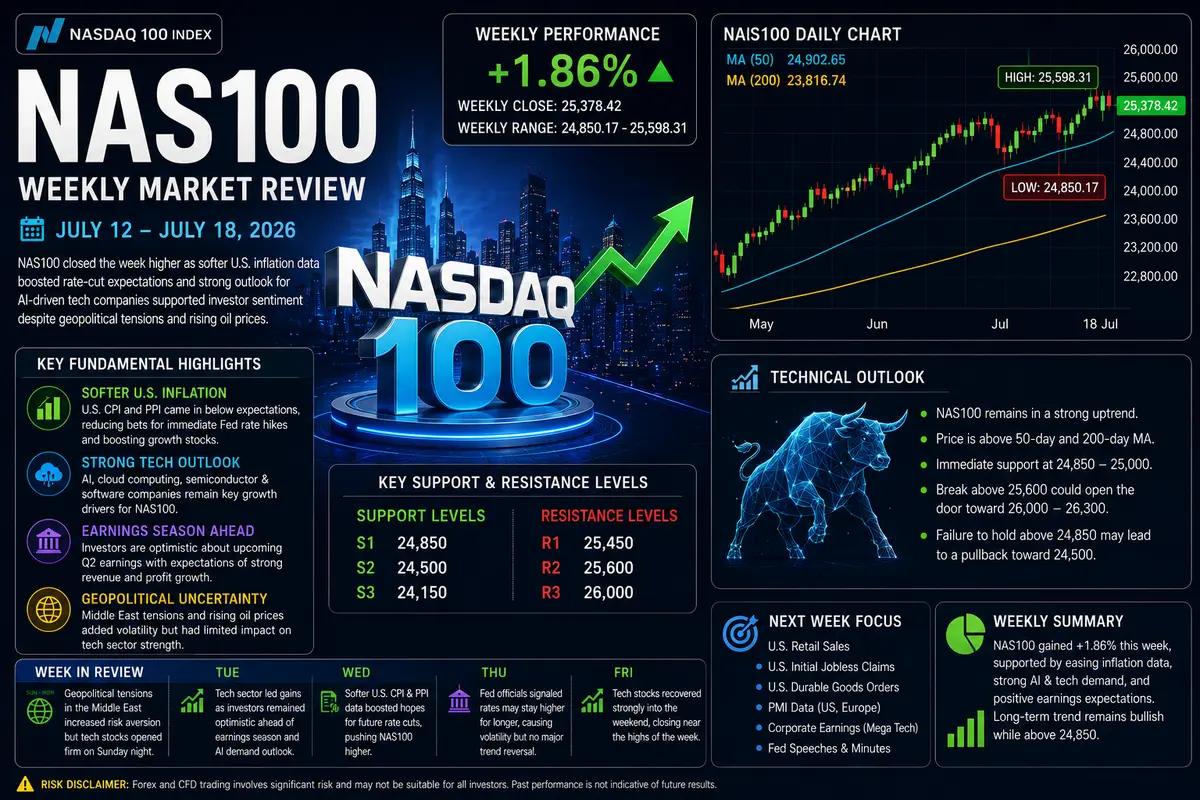
NAS100: Momentum Has Slowed, but the Trend Still Belongs to the Buyers

NAS100: Momentum Has Slowed, but the Trend Still Belongs to the Buyers

NAS100 has spent the last several sessions showing exactly why patience is one of the most valuable qualities a trader can have. After an impressive rally, many expected the index to continue printing new highs without much resistance. Instead, the market has entered a period of consolidation, moving sideways while buyers and sellers compete for control. Some traders see this as the beginning of a reversal. Personally, I think it's too early to reach that conclusion.

When a market trends strongly, it eventually needs time to rest.

That doesn't mean the trend has ended.

It simply means buyers are taking a moment to evaluate whether current prices still represent value before committing more capital. At the same time, sellers begin testing the strength of the rally, hoping that profit-taking will eventually develop into a larger correction.

US10.L ... Looking at NAS100 today, I believe we are witnessing exactly that battle.

One feature that immediately stands out is the quality of the recent pullbacks. Every decline has remained relatively shallow, with buyers stepping in before the previous market structure was damaged. Higher lows continue holding, and that is one of the strongest characteristics of a healthy bullish trend.

If buyers were losing confidence, I would expect something different.

I would expect deeper corrections.

I would expect consecutive lower highs.

I would expect support zones to fail much more easily.

Instead, the market continues respecting key technical levels.

That doesn't guarantee another rally, but it certainly suggests that buyers haven't abandoned the trend.

Resistance has now become the most important level on the chart.

Every time price approaches previous highs, traders naturally become more cautious. Investors holding profitable positions begin considering whether to secure gains, while traders waiting for a reversal finally see an area where risk appears more attractive.

That combination slows...

Continue reading...
0
0
GFATHER

WTI Crude Oil (USOIL): The Pullback Has Slowed, but the Bigger Trend Hasn’t Given Its Final Answer Yet

WTI Crude Oil (USOIL): The Pullback Has Slowed, but the Bigger Trend Hasn’t Given Its Final Answer Yet

WTID.L ... WTI Crude Oil (USOIL): The Pullback Has Slowed, but the Bigger Trend Hasn't Given Its Final Answer Yet

Crude oil has entered one of those phases where the chart appears straightforward at first glance, but a closer inspection tells a much more interesting story. After experiencing a noticeable pullback, the market is now trading around an important technical area where buyers and sellers are beginning to challenge each other with greater conviction. The sharp selling pressure that dominated earlier sessions has started losing momentum, yet buyers have not completely taken control either.

That combination usually creates some of the most important trading opportunities.

Many traders automatically assume that once a market stops falling, it must immediately start rising. In reality, financial markets rarely change direction that quickly. Before a genuine reversal develops, there is usually a period where price moves sideways, testing both buyers and sellers while the market decides which side deserves control.

Looking at WTI crude oil today, I believe we are entering exactly that stage.

The recent decline was strong enough to attract attention across the market. Sellers controlled the momentum for several sessions, pushing prices lower while breaking through short-term support levels. During that period, buyers struggled to generate meaningful recoveries, and every attempt to bounce was quickly met with fresh selling pressure.

Recently, however, something has changed.

The selling has become less aggressive.

Instead of large bearish candles closing near their lows, price has begun producing smaller daily ranges with more balanced trading activity. That doesn't confirm a bullish reversal, but it does suggest that sellers are becoming less comfortable than they were only a few days ago.

Support is beginning to play an important role.

Every market has price zones where buyers previously considered value attractive. Those areas often attract renewed attention because...

Continue reading...
0
0
GFATHER

US100: A Market That Refuses to Break Down Often Deserves More Respect Than One That Breaks Out

US100: A Market That Refuses to Break Down Often Deserves More Respect Than One That Breaks Out

US10.L ...

US100 has spent the past several trading sessions proving that strength isn't always measured by massive bullish candles. Sometimes, the clearest sign of a healthy market is its ability to absorb selling pressure without allowing the overall trend to collapse. That is exactly the impression I get when looking at the current structure.

Many traders are waiting for a dramatic breakout above resistance, while others are convinced that the rally has already gone too far and a deeper correction is inevitable. Personally, I think the market is sending a more balanced message.

The trend is still positive.

The momentum has slowed.

Neither of those statements cancels the other.

When a market enjoys a sustained advance, there comes a point where buyers naturally become more selective. Traders who entered earlier are protecting profits, while those who missed the move become reluctant to buy at higher prices. This transition often creates a slower rhythm without necessarily changing the underlying trend.

That seems to be happening on US100 today.

Looking back over the recent sessions, every meaningful decline has attracted buyers before the structure was damaged. Sellers have certainly created moments of pressure, but they haven't managed to produce consecutive lower lows capable of changing the larger picture. Every time bearish momentum appears to increase, buying interest quietly returns and stabilises the market.

That behaviour deserves attention.

Healthy markets rarely move in a straight line.

Instead, they advance, pause, test confidence and then decide whether another leg higher is justified. Those pauses are often frustrating because they create uncertainty, but they are also what allows longer-term trends to survive.

Without periods of consolidation, rallies usually become too extended and eventually collapse under their own weight.

One aspect I find encouraging is where the current consolidation is taking place.

Price isn't drifting near...

Continue reading...
0
0
GFATHER

NAS100: Momentum Is Still Bullish, but the Real Test Begins When Everyone Expects Higher Prices

NAS100: Momentum Is Still Bullish, but the Real Test Begins When Everyone Expects Higher Prices

Technology stocks have once again become the centre of attention, and NAS100 continues reflecting that optimism. Over the last several sessions, buyers have controlled the direction of the market with impressive consistency. Every meaningful dip has found support, and every attempt by sellers to force a larger correction has struggled to gain momentum. Looking at the bigger picture, the trend remains firmly constructive.

However, I don't think the most important question today is whether NAS100 has been bullish.

The more important question is whether buyers still have enough confidence to continue paying higher prices after such a strong run.

That is where I believe the market has reached an interesting stage.

The first thing I noticed while studying the chart was not the strength of the rally but the change in its rhythm. Earlier in the trend, bullish candles appeared with very little hesitation. Buyers seemed comfortable stepping into the market almost immediately after every pullback. Recently, the movement has become more controlled. The index is still respecting higher lows, but it has also started spending longer periods moving sideways beneath important resistance.

Many traders see that as a warning.

Personally, I don't think it's that simple.

Markets often slow down before making their biggest moves. A period of consolidation allows traders to reassess positions, institutions to build exposure and momentum indicators to cool after an extended rally. Without those pauses, strong trends usually become unstable because prices rise too quickly without developing healthy support underneath.

That's why I don't immediately interpret slower movement as bearish.

What matters is how the market behaves during the consolidation.

If buyers continue defending every small pullback while refusing to allow sellers much control, the pause often becomes the foundation for another breakout. If the opposite happens and every attempt to move higher is...

Continue reading...
0
0
BCR

Daily Analysis 21 July 2026 | US-Iran Tensions Shake Markets, Sending Oil Higher and Currencies into Focus

Daily Analysis 21 July 2026 | US-Iran Tensions Shake Markets, Sending Oil Higher and Currencies into Focus

Currency & Commodity Analysis:


US Dollar Index


The US dollar index traded near 100.90 on Monday, supported by escalating tensions in the Middle East, which boosted oil prices and exacerbated concerns about inflation and the prospect of higher interest rates. The US military said it conducted new airstrikes against Iran on Sunday after three US service members were killed, while Tehran declared that the ceasefire with the US had effectively collapsed and said it intercepted four ships passing through the Strait of Hormuz over the weekend. Meanwhile, Cleveland Federal Reserve President Beth Hammark joined a growing number of Fed officials on Friday in warning of persistent inflation. The market currently estimates a 53% probability of a Federal Reserve rate hike in September, up from 47% the previous day, although the general expectation is that the central bank will keep rates unchanged at its meeting this month. The dollar index was essentially flat on Friday, closing at 100.76, supported by safe-haven demand triggered by renewed escalation of US-Iran tensions, but traders reduced their bets on a near-term Fed rate hike due to moderate US inflation data.


From a technical perspective, the dollar index is currently trading at 100.90, closely below the 9-day moving average of 100.91. The MACD histogram shows a moderate increase in bearish momentum, indicating weak short-term momentum, but limited downside potential. Technically, the index has been declining from its previous high of 101.80, reaching a low of 95.36 before gradually stabilizing and rebounding, and is currently in a consolidation phase. Market assessments of the US economic fundamentals are also mixed. Regarding inflation, June data showed some easing, enough to raise the probability of the Fed keeping rates unchanged at its July meeting to 86%. The market's pricing in further interest rate hikes may still be...

Continue reading...
0
0
GFATHER

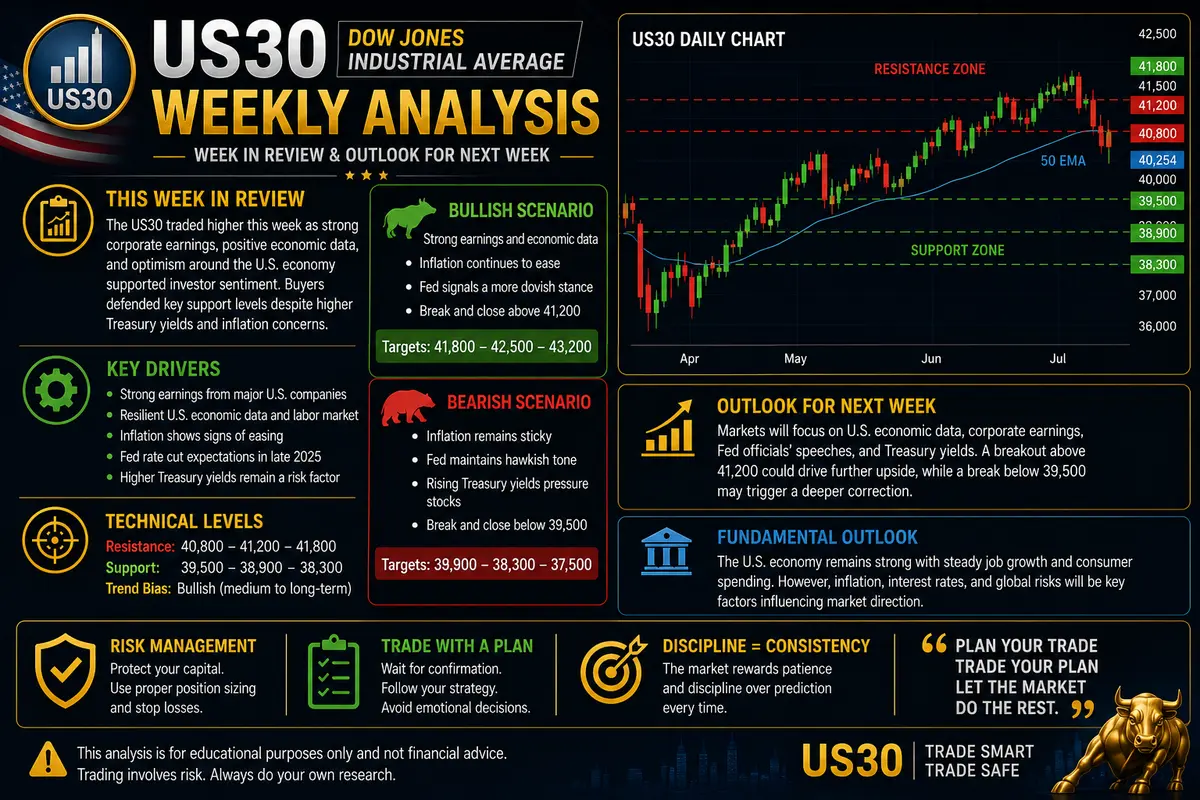
US30: The Trend Still Looks Healthy, but This Is Where Bulls Have to Prove They’re Serious

US30: The Trend Still Looks Healthy, but This Is Where Bulls Have to Prove They’re Serious

US30: The Trend Still Looks Healthy, but This Is Where Bulls Have to Prove They're Serious

US30 has spent the last several weeks rewarding traders who stayed patient. Every meaningful pullback has eventually attracted buyers, and every fresh push higher has reminded the market that confidence in U.S. equities hasn't disappeared. Looking at the bigger picture, it's difficult to argue that the trend has turned bearish. The structure is still pointing higher, and buyers continue defending important support zones whenever the index begins to lose momentum.

That being said, the market is no longer trading in the easy part of the trend.

The higher an index climbs, the more difficult it becomes to convince investors to keep paying higher prices. Early buyers are already sitting on comfortable profits, while traders who missed the move are beginning to wonder whether they're arriving too late. That combination often creates slower price action, even when the overall direction remains positive.

When I opened the chart today, the first thing that caught my attention wasn't the trend itself. It was the way price has started behaving around the current resistance area. Instead of seeing aggressive buying similar to what we witnessed earlier in the rally, the candles have become smaller. The market is still holding near its highs, but it isn't moving with the same confidence.

That doesn't automatically make me bearish.

In fact, I think this kind of behaviour is quite normal after a sustained advance.

Markets need time to breathe. They don't climb forever without stopping. Sometimes the strongest trends spend several sessions moving sideways before continuing. During those quiet periods, impatient traders often believe the rally is over, while experienced traders understand that consolidation can simply be the market preparing for its next move.

The important question is whether this consolidation...

Continue reading...
0
0
BCR

Daily Analysis 20 July 2026 | Dollar Weakens as Inflation Cools, Oil Rally Fueled by Middle East Tensions

Daily Analysis 20 July 2026 | Dollar Weakens as Inflation Cools, Oil Rally Fueled by Middle East Tensions

Currency & Commodity Analysis:


US Dollar Index


The US dollar index fell sharply last week, hitting a low of 100.36, as easing inflationary pressures reduced expectations for a near-term Federal Reserve rate hike. Data released last week showed that the Producer Price Index (PPI) unexpectedly declined in June, the first time in nearly a year, mainly due to lower energy costs, following Tuesday's lower-than-expected CPI inflation report. The market lowered its expectations for a September rate hike by the Federal Reserve, with the implied probability falling from 50% the previous day to about 44%. Meanwhile, investors continued to focus on escalating attacks in the Middle East following additional US strikes against Iranian targets. Renewed conflict caused a sharp rise in oil prices this week, raising renewed concerns about the inflation and interest rate outlook. Despite this, President Trump stated last week that Tehran had indicated a willingness to resume negotiations.


The US dollar index exhibited a clear downward consolidation trend last week. Amidst fluctuating expectations regarding the Federal Reserve's monetary policy and the interplay of geopolitical risks, market participants showed significant divergence in their views on the future trajectory of the dollar, and the technical battle between bulls and bears intensified. This week, the market is driven by multiple macroeconomic factors, with expectations regarding the Federal Reserve's interest rate path becoming the dominant factor. A comprehensive assessment of candlestick patterns, moving averages, and the Relative Strength Index (RSI) reveals that the US dollar index is currently in a critical phase of a battle between bulls and bears. Looking back at last week's market performance, the US dollar index entered a technical correction period after falling from its previous high. At the beginning of the week, the dollar saw a short-term rebound due to a reassessment of US...

Continue reading...
0
0
GFATHER

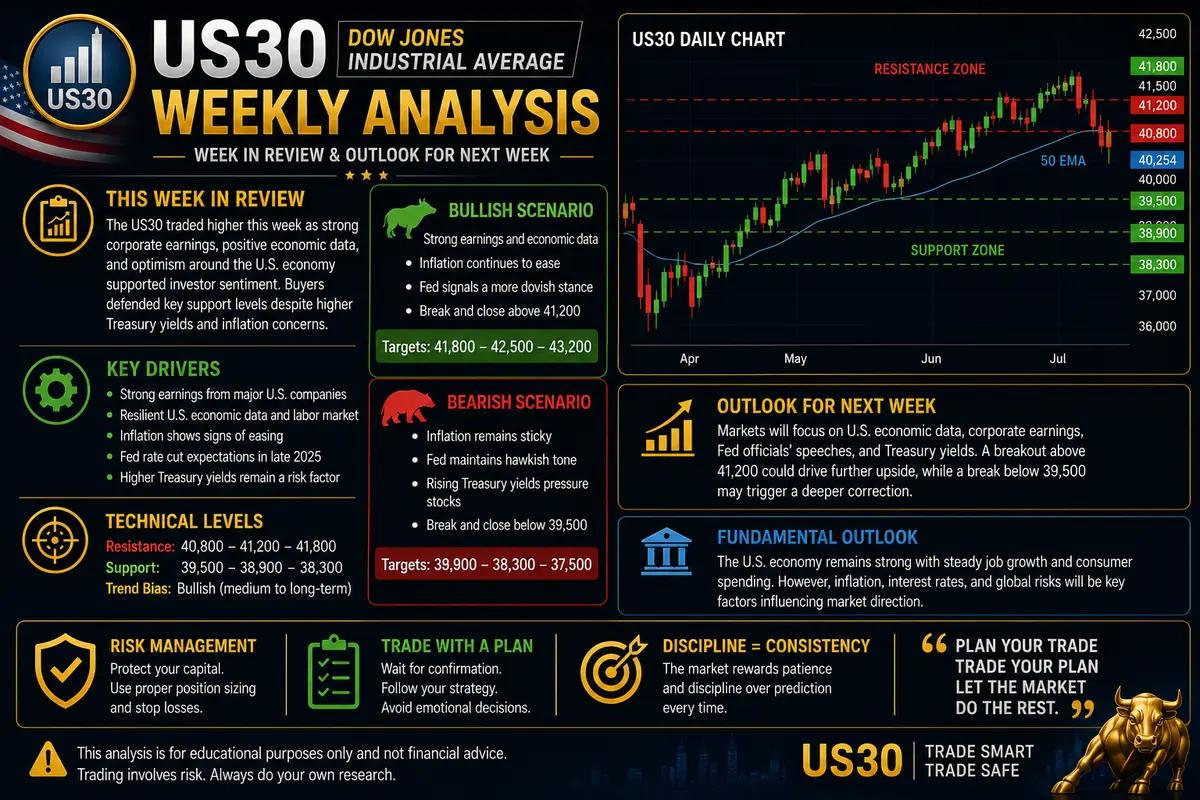
US30 Weekly Outlook: What Smart Money Could Be Planning Before Wall Street Opens

US30 Weekly Outlook: What Smart Money Could Be Planning Before Wall Street Opens

US30 Weekly Outlook: What Smart Money Could Be Planning Before Wall Street Opens

As Wall Street prepares for Monday's opening bell, traders are approaching the US30 (Dow Jones Industrial Average)with a mixture of confidence and caution. While the index has continued demonstrating resilience over recent weeks, experienced investors understand that every new trading week presents a fresh set of challenges. Rather than focusing solely on whether prices will rise or fall, institutional traders are asking a more important question: Where is capital most likely to flow, and what will motivate those decisions? Understanding this dynamic may prove far more valuable than attempting to predict every short-term movement.

Unlike technology-heavy indices that often react aggressively to developments surrounding artificial intelligence or software companies, the US30 reflects the performance of thirty of America's most established corporations across industries including finance, healthcare, industrial manufacturing, energy, consumer products, and transportation. This diversification often allows the index to remain relatively stable during periods when individual sectors experience heightened volatility. As a result, traders should pay close attention not only to price action but also to the sectors leading or lagging during Monday's session.

One of the most important themes likely to influence the market is investor confidence in the U.S. economy. Over recent months, economic reports have painted a mixed but encouraging picture. Inflation has gradually eased from previous highs, unemployment has remained relatively low, and consumer spending continues supporting overall economic activity. Although concerns surrounding borrowing costs have not disappeared completely, many investors now believe that the economy has a realistic chance of achieving slower inflation without entering a significant recession. This growing confidence has encouraged long-term investors to maintain exposure to high-quality American companies despite occasional periods of market volatility.

Corporate earnings expectations will also remain firmly under the spotlight. Investors no...

Continue reading...
0
0
Navigation menu
instaforex banner