

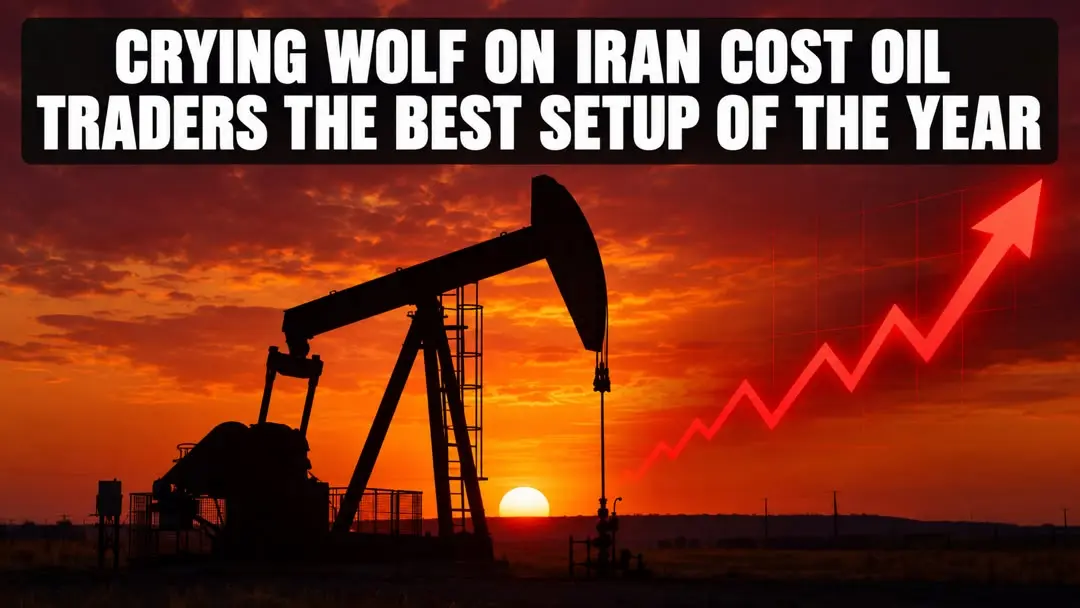
Crying Wolf on Iran Cost Oil Traders the Best Setup of the Year
Monday morning, the number hit the tape: 43 days of crude supply left in the United States, the lowest since the early 1980s. That’s not a typo and it’s not some fringe blogger’s math —it’s Bank of America Global Research, built off Bloomberg data, using the same days-of supply methodology the EIA has run for decades.
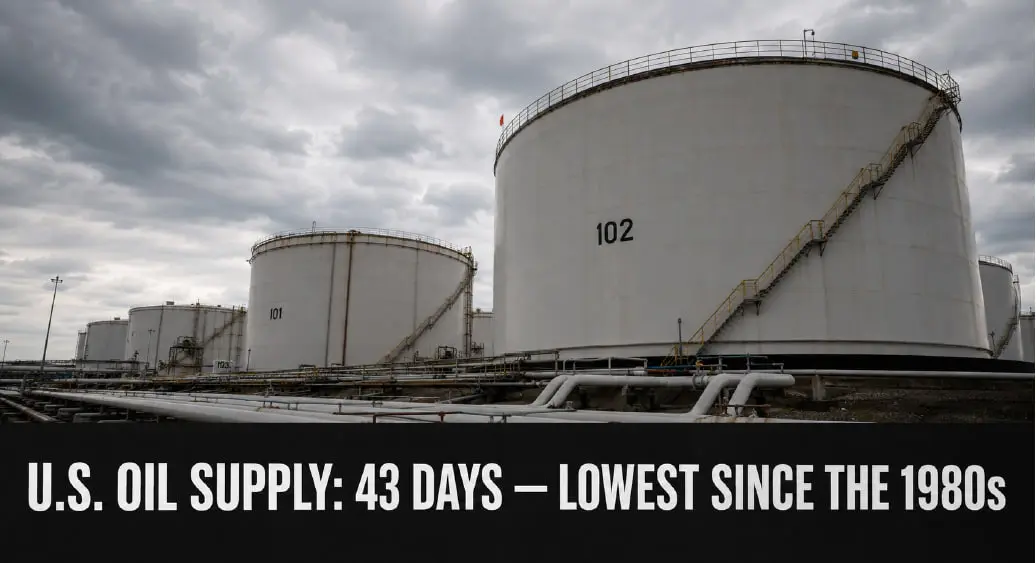
Inventory divided by expected refinery demand. Forty-three days against a long-term average of roughly 65.
And the market shrugged. OIL ... sat around $81 a barrel, well off the $112 highs from the last
time Iran headlines sent traders scrambling. For a few hours, one of the tightest supply
cushions in 45 years traded like a non-event.
I don’t think that was calm. I think it was fatigue.
A 45-Year-Low Number Nobody Reacted To — At First
Here’s the setup: fresh U.S. airstrikes on Iran, renewed chatter about the Strait of Hormuz, and a supply cushion thinner than at almost any point since the Reagan administration. On paper, that’s the kind of combination that should send crude vertical within minutes.
Instead, WTI ... opened the session basically flat. Traders who’d normally jump at “Iran” in a headline just… didn’t. If you’d shown me that setup a year ago without telling me the date, I’d have guessed a 5%+ pop by lunch. It didn’t happen. Not immediately, anyway.
That gap between what the data said and how price actually moved is the whole story.
Why the Market Was Asleep at the Wheel
The Iran Headline Cycle Has Cried Wolf Too Many Times
This isn’t the first Iran scare this year, and it won’t be the last. BZUSD ... spiked to over $112 a barrel during the previous flare-up, then spent weeks grinding back down as the disruption everyone feared never fully materialized.
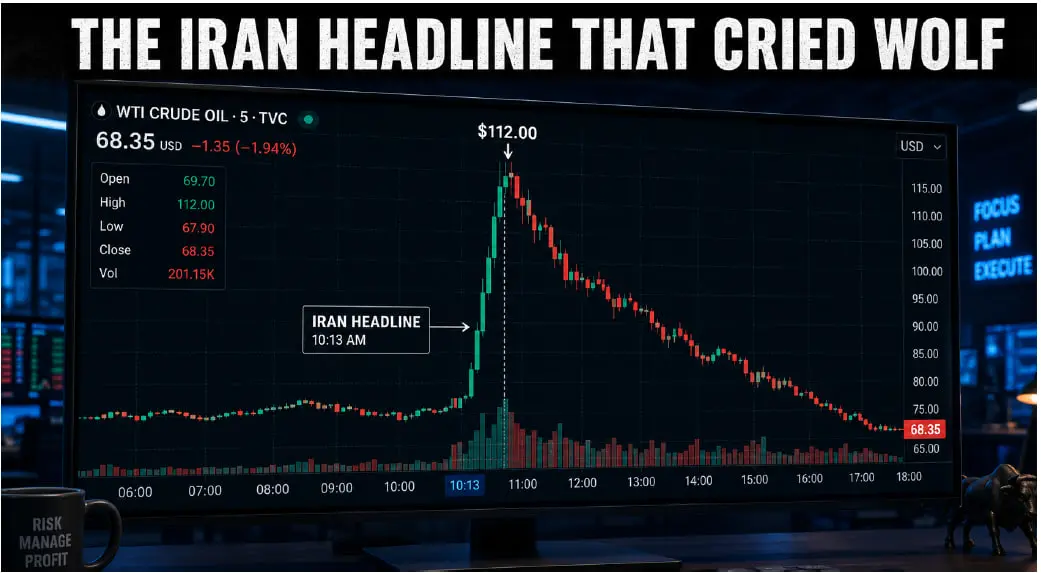
Traders who bought that spike and held got hurt. Traders who faded it got paid.
Run that pattern enough times and you train an entire market to discount the headline itself.
“U.S. strikes Iran” used to be an instant buy signal for crude. Now it’s closer to background noise until something harder to dismiss shows up. That’s not irrational — it’s the market pricing in its own recent history of false alarms. But it also means real signals get buried in the same pile as the fake ones, at least for a while.
The Inventory Number Was the Part That Couldn’t Be Faked
Headlines can be walked back. Airstrikes can turn out to be limited and contained. But 43 days of supply is a hard number pulled from actual barrels sitting in actual storage, crosschecked against actual refinery throughput. It doesn’t care how many times CNBC has run an Iran chyron this year.
My read: this is what actually broke the fatigue. Not the airstrikes alone, not the inventory data alone — the combination. Geopolitical risk with a real headline is background noise at this point. Geopolitical risk with a 45-year-low supply cushion sitting underneath it is a different animal, and eventually the tape had to acknowledge that.
What Happened When the Market Woke Up
It didn’t take long. By the afternoon session, BZUSD ... surged past $90 a barrel, up more than 2%, and WTI ... climbed to $84.48, up 2.4% and its highest print since June 12.
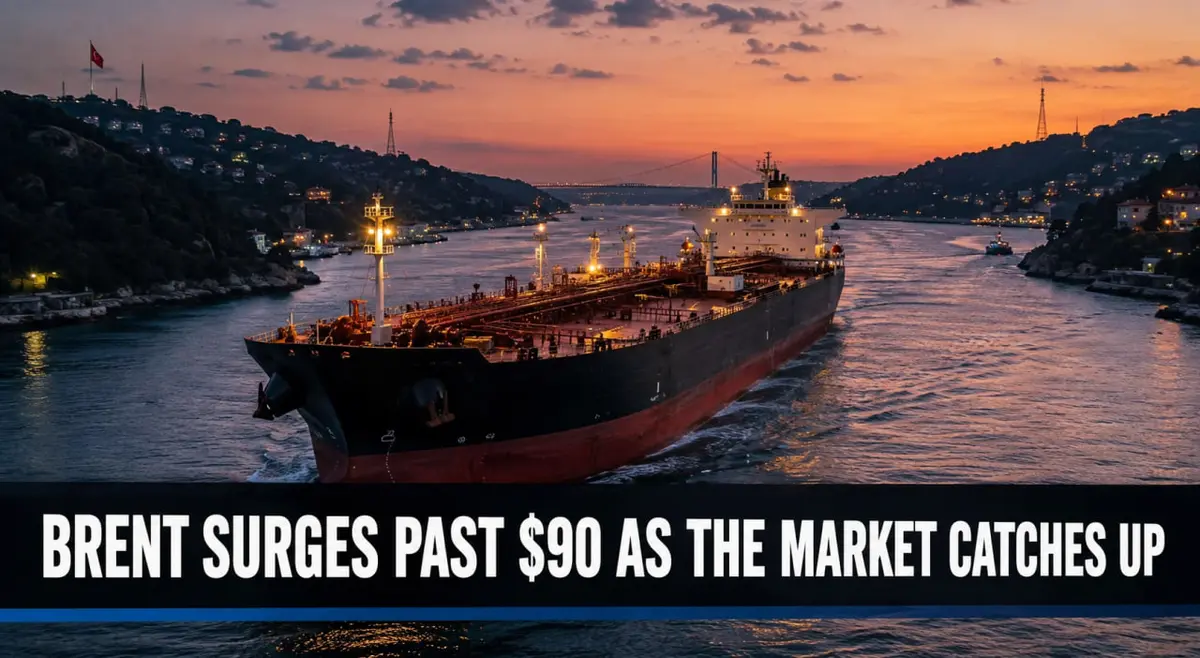
That’s not a rounding error — that’s a market catching up to information it had access to hours earlier.
I’d push back on anyone calling this an overreaction. A three-and-a-half-decade-low inventory cushion combined with live conflict risk around one of the world’s most important oil transit routes is exactly the kind of setup that justifies a real repricing, not a knee-jerk spike that fades by Tuesday. The size of the move matched the size of the risk. What didn’t match was the timing.
The Trade Was in the Lag, Not the Spike
Front-Running the Confirmation
Here’s my actual opinion, and it’s the one I think most coverage of this move is going to miss entirely: the money wasn’t made buying the afternoon spike. It was made in the gap between the morning inventory print and the afternoon price catching up.

Anyone who read the days-of-supply number at 9am, understood what a 45-year low against a live Hormuz risk actually meant, and positioned before the crowd caught on had hours of edge. By the time Brent was through $90 on every financial news ticker, that edge was gone — you were buying confirmation, not information.
This is the part that separates traders who consistently make money on macro setups from traders who consistently chase them. The headline is not the trade. The data underneath the headline, read before everyone else reads it, is the trade.
Why This Matters Past Monday
The broader lesson isn’t “buy oil because Iran is in the news.” It’s narrower and more useful than that: when a market has been trained to ignore a category of headline through repeated false alarms, watch for the moment a harder data point shows up alongside it. That’s usually where the lag — and the opportunity — lives. It won’t always be oil. It won’t always be Iran. But the pattern of “the crowd is discounting real information because of unrelated noise fatigue” shows up across commodities more often than people give it credit for.
This Isn’t a One-Day Story
I don’t think Monday’s move was a single-session pop that fades by Wednesday. A 43-day supply cushion doesn’t refill itself in 48 hours, and the Hormuz risk isn’t contingent on any one headline cycle — it’s structural as long as U.S.-Iran tensions stay elevated. Thin buffer plus live geopolitical risk is a combination that tends to keep markets on edge for weeks, not hours.
What would change my mind: a genuine, verified de-escalation — not just a quiet news day, but an actual reduction in tension around Hormuz — or a sharp, sustained inventory rebuild that pushes days-of-supply back toward that 65-day average. Absent either of those, I’d expect crude to stay jumpy and biased higher on any further Iran-related headlines, because the market has now seen what happens when the data backs up the risk.
I could be wrong. Geopolitical trades have a way of humiliating anyone who gets too confident about direction. But the setup — thin cushion, live risk, and a market that just demonstrated it will reprice hard once it stops discounting the headline — is not a one-and-done story in my view.
Risk Disclaimer
Oil markets are volatile and geopolitically sensitive, and past price reactions are not a guide to future moves. Nothing in this article constitutes financial advice or a recommendation to buy or sell any commodity, futures contract, or related instrument. Always size positions according to your own risk tolerance and consider consulting a licensed financial advisor
before trading.



Comments
No comments yet. Be the first to share your thoughts!
Authentication Required
You must be logged in to post a comment.