

Corn Futures Fell From a One-Month High
Introduction: The Wednesday When the Grain Rally Ended
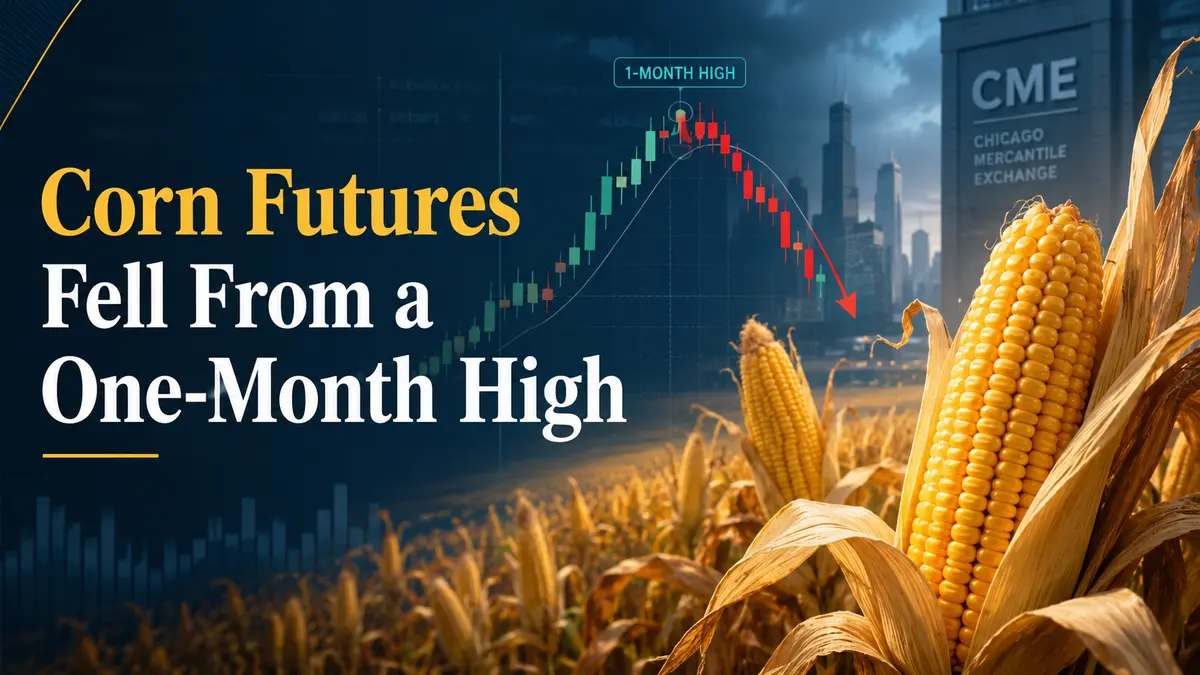
Wednesday, Chicago Board of Trade. Traders who were watching corn prices climb to one-month highs in the morning were forced to acknowledge a reversal by the end of the session. The September contract closed down 8-3/4 cents at $4.35 per bushel, after reaching $4.44-3/4 during the session. The December contract ended trading down 8 cents at $4.56-1/4 per bushel, retreating from $4.65-3/4, its highest level since June 3.
What happened? The corn market experienced a classic reversal: first, a rally driven by expectations of weather risks, followed by profit-taking and a correction. Traders who had bought at lower levels decided to lock in gains, creating pressure on prices.
But the weather — or more precisely, its improvement — became the main factor behind the decline. New forecasts reduced the expected intensity of heat in the U.S. Midwest in mid-July. This eased concerns about heat stress for corn crops during the pollination period. Less heat means lower crop risks, and lower crop risks mean lower prices.
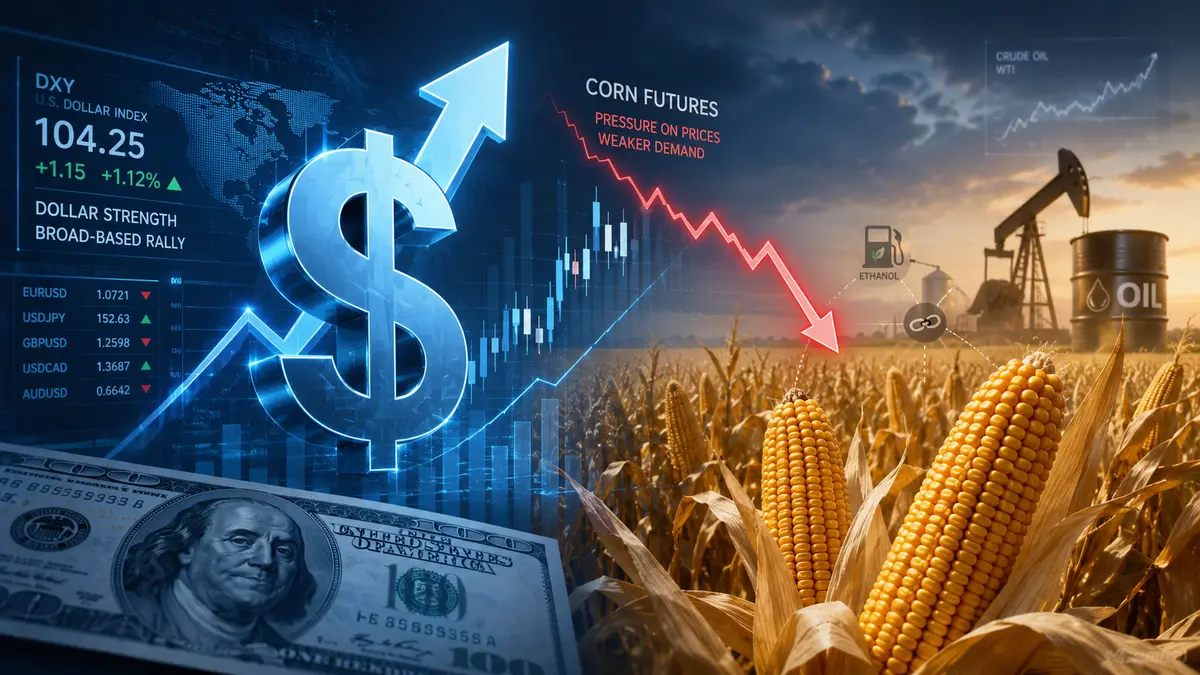
The strengthening dollar also weighed on grain futures, reducing the competitiveness of U.S. grain on global markets. When the dollar rises, American corn becomes more expensive for foreign buyers, which reduces demand and puts pressure on prices.
Grain futures on the Chicago Board of Trade reacted weakly to an approximately 5% rise in oil futures, which followed a statement by U.S. President Donald Trump that an interim deal to settle the war with Iran had been “completed.” The corn market appears to be more concerned about weather and the dollar than Middle East geopolitics.
The U.S. Energy Information Administration reported that corn-based ethanol production for the week ended July 3 totaled 1.093 million barrels per day, down 24,000 barrels per day from the previous week. U.S. ethanol inventories fell to 23.928 million barrels — 762,000 barrels lower than a week earlier — reaching their lowest level since January. This is a positive signal for the corn market, as lower ethanol inventories point to stable demand.
Let’s break down what is really happening in the corn market, why weather has become the key factor, and what may be ahead for grain futures in the coming days.
Why Corn Fell: Profit-Taking and Improved Weather
A Rally to One-Month Highs
At the beginning of the session, corn rose to one-month highs. The September contract reached $4.44-3/4, while the December contract climbed to $4.65-3/4, its highest level since June 3.
The rally was driven by weather concerns. Strong heat was expected in the U.S. Midwest, which could have damaged corn crops during the pollination period. Traders priced in the risk of lower yields.
Profit-Taking
After the rise to one-month highs, traders began taking profits. This is classic behavior in any market: a strong rally is often followed by a correction.
Profit-taking created pressure on prices, and corn began to decline. The September contract closed at $4.35 per bushel, while the December contract ended at $4.56-1/4.
Improved Weather Forecasts
The main factor behind the decline was the improvement in weather forecasts. New forecasts reduced the expected intensity of heat in the Midwest in mid-July.
This eased concerns about heat stress for corn crops during pollination. Less heat means lower crop risks, and lower crop risks mean lower prices.
Weather remains a key factor for agricultural markets. Any change in forecasts can trigger sharp price movements.
The Dollar’s Impact on Grain Futures
A Stronger Dollar
The strengthening dollar also put pressure on grain futures. When the dollar rises, U.S. corn becomes more expensive for foreign buyers.
This reduces the competitiveness of American grain on global markets and weakens demand, putting pressure on prices.
The Dollar’s Role in Pricing
The dollar plays an important role in commodity pricing. Most commodities, including corn, are traded in dollars. When the dollar strengthens, commodity prices become higher for holders of other currencies, reducing demand.
Oil and Corn: A Weak Connection
Oil Rises on Geopolitical Risks
Oil futures rose by approximately 5% after U.S. President Donald Trump stated that an interim deal to settle the war with Iran had been “completed.”
However, grain futures on the Chicago Board of Trade reacted weakly to this rise. The corn market appears to be more focused on weather and the dollar than on Middle East geopolitics.
Why the Connection Is Weak
Corn and oil are indirectly connected through ethanol. Ethanol is produced from corn and used as a fuel additive. However, the impact of oil prices on corn is limited.
The corn market primarily reacts to weather conditions, demand, and supply. Geopolitical factors play a smaller role.
Ethanol Production: A Positive Signal
Lower Production, but Also Lower Inventories
The U.S. Energy Information Administration reported that corn-based ethanol production for the week ended July 3 totaled 1.093 million barrels per day, down 24,000 barrels per day from the previous week.
U.S. ethanol inventories fell to 23.928 million barrels — 762,000 barrels lower than a week earlier — reaching their lowest level since January.
This is a positive signal for the corn market. Lower ethanol inventories indicate stable demand, which supports corn prices.
Ethanol Demand
Ethanol demand remains an important factor for the corn market. If ethanol demand stays high, it will support corn prices. If demand falls, prices may decline.
What Awaits Corn in the Coming Days
Weather Forecasts
Weather will remain a key factor for the corn market in the coming days. If forecasts continue to improve, prices may continue to fall. If forecasts worsen, prices may rise.
Traders will closely monitor every new weather forecast, understanding that any change can trigger a sharp price movement.
Demand and Supply
Corn demand also remains an important factor. If demand is strong, it will support prices. If demand falls, prices may decline.
Corn supply will depend on yields. If the harvest is good, prices may fall. If the harvest is poor, prices may rise.
The Dollar
A stronger dollar will continue to pressure grain futures. If the dollar keeps rising, corn may become cheaper. If the dollar weakens, corn may become more expensive.
Conclusion: Corn at a Crossroads
Corn futures on the Chicago Board of Trade closed lower on Wednesday. Traders took profits after prices rose to one-month highs. Updated weather forecasts, which indicated reduced heat stress for U.S. crops, added further pressure to prices.
The September contract closed at $4.35 per bushel, while the December contract ended at $4.56-1/4.
New weather forecasts reduced the expected intensity of heat in the Midwest in mid-July, easing concerns about heat stress for corn crops during pollination. The strengthening dollar also weighed on grain futures.
Corn-based ethanol production declined, but ethanol inventories fell to their lowest level since January, indicating stable demand.
Corn is at a crossroads. Weather conditions, demand and supply, as well as dollar dynamics, will determine its direction in the coming days and weeks. Traders will closely watch every new weather forecast, understanding that the situation can change at any moment. For now, corn is correcting after its rally, but the potential for another move higher remains if weather risks materialize.

Comments
No comments yet. Be the first to share your thoughts!
Authentication Required
You must be logged in to post a comment.