

Gold Futures Fell During Asian Trading
Introduction: A Tuesday When the Yellow Metal Lost Its Shine
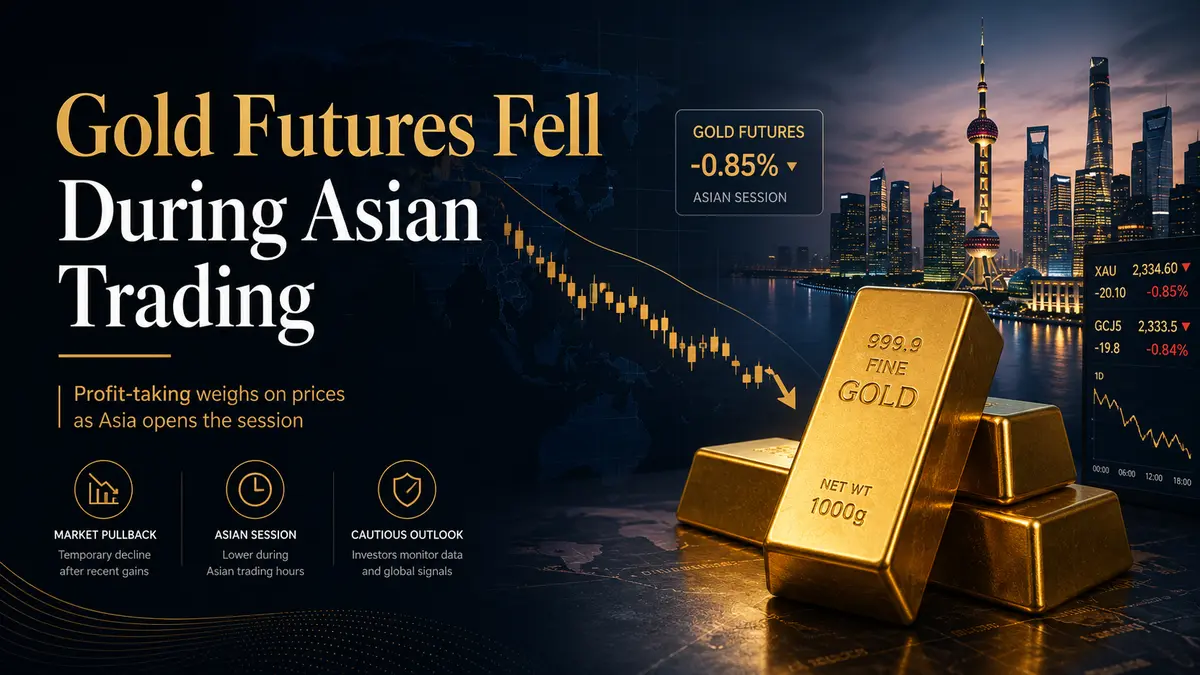
Tuesday, the Asian trading session. Traders in Shanghai, Singapore, and Tokyo opened their terminals and saw an unusual picture. Gold, which had been performing confidently in recent weeks, suddenly moved lower. Futures for August delivery fell to $4,137.80 per troy ounce, losing 0.71% compared with the previous close. This is not a collapse, but it is a noticeable move that makes investors think.
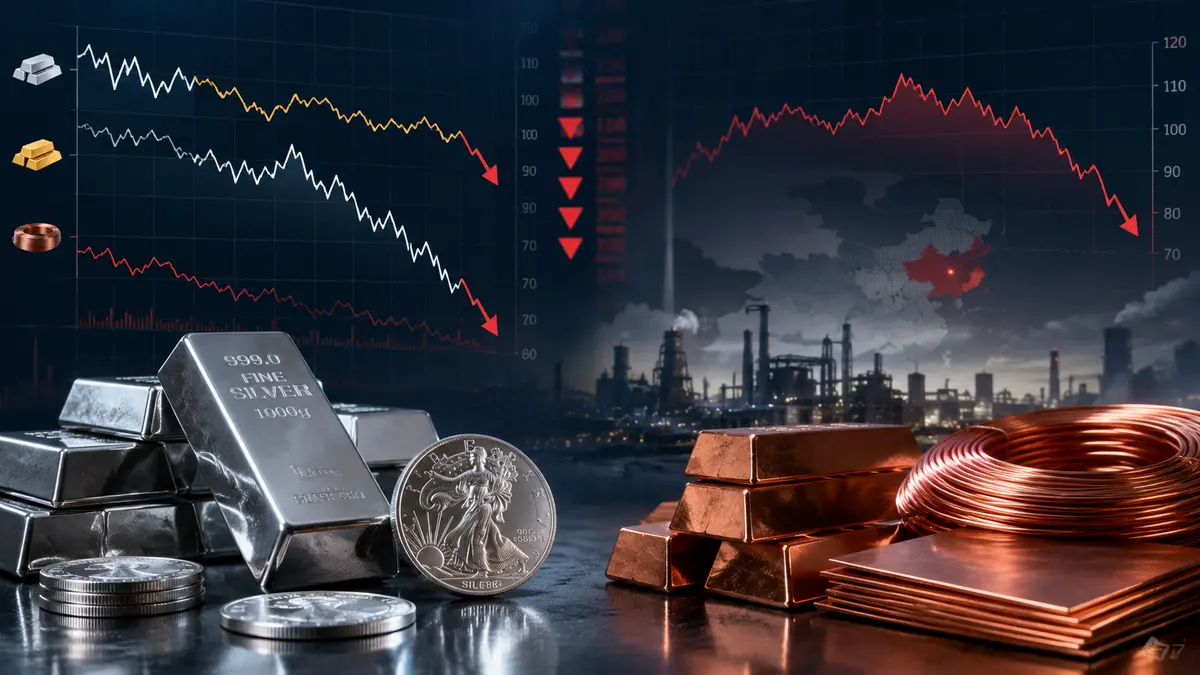
What is happening? Gold, often considered a “safe haven” during periods of uncertainty, suddenly lost some of its appeal. Silver, gold’s faithful companion, fell even more sharply — by 1.95% to $61.12 per ounce. Copper, which had risen the day before amid a weaker dollar, also declined by 0.91% to $6.19 per pound. All metals moved in the same direction — downward.
The dollar index, by contrast, rose by 0.09% to 100.71 points. This is a small strengthening of the U.S. currency, but for gold, which is traded in dollars, even such a move matters. When the dollar rises, gold becomes more expensive for holders of other currencies, which reduces demand and pushes prices lower.
Technically, gold found support at $4,042.80 and resistance at $4,214.91. The current price of $4,137.80 is roughly in the middle of this range. If gold continues to fall, it may test support at $4,042.80. If it reverses, resistance at $4,214.91 will become the next target.
What is behind this decline? Several factors. First, the strengthening of the dollar amid expectations ahead of the release of the Fed minutes. Second, reduced geopolitical uncertainty after the peace agreement between the United States and Iran. Third, technical factors — after a strong rally that pushed gold toward historical highs, a correction began.
Let’s examine why gold is falling, what this means for investors, and where the precious metals market is heading.
Why Gold Is Falling: Pressure Factors
Dollar Strengthening
The main factor putting pressure on gold is the strengthening dollar. The dollar index rose by 0.09% to 100.71 points on Tuesday. This is a small move, but it is happening in the context of expectations ahead of the release of the minutes from the Fed’s June meeting.
Markets expect that the minutes may provide hawkish signals that could strengthen the dollar. If the Fed continues to signal its readiness to raise rates, the dollar will rise, and gold will remain under pressure.
When the dollar rises, gold becomes more expensive for holders of other currencies. This reduces demand for physical gold and weighs on prices. In addition, a stronger dollar is often accompanied by rising Treasury yields, which makes gold less attractive as an alternative asset.
Lower Geopolitical Uncertainty
Another factor weighing on gold is lower geopolitical uncertainty. The peace agreement between the United States and Iran, signed last month, reduced risks in the Middle East. Although reports of attacks on ships in the Strait of Hormuz appeared on Tuesday, markets do not yet see this as a serious threat.
Gold traditionally rises during periods of geopolitical uncertainty, when investors seek a “safe haven.” When uncertainty declines, demand for gold falls, and prices move lower.
In addition, lower oil prices also play a role. Cheap oil reduces inflation expectations, which decreases gold’s appeal as a hedge against inflation.
Technical Correction
After the strong rally that pushed gold toward historical highs, a technical correction was inevitable. Since the beginning of the year, gold has risen by more than 20%, and many investors have taken profits.
A technical correction is a normal process that occurs after any strong rise. Investors sell part of their positions to lock in profits, and this creates pressure on prices.
In addition, many technical indicators pointed to gold being overbought. The RSI, or relative strength index, was at high levels, signaling the need for a correction.
Technical Analysis: Levels and Outlook
Support at $4,042.80 and Resistance at $4,214.91
The technical picture for gold remains relatively clear. Support is located at $4,042.80, while resistance stands at $4,214.91. The current price of $4,137.80 is roughly in the middle of this range.
If gold continues to decline, the next important level will be $4,042.80. A break below this level could lead to a drop toward $4,000 and lower.
If gold reverses and begins to rise, resistance at $4,214.91 will become the next target. A breakout above this level could open the way to new historical highs.
Volumes and Indicators
Gold trading volumes remain average, indicating that investors are not rushing to open large positions. They are waiting for additional signals — both from the Fed and from the geopolitical situation.
Indicators such as the RSI are beginning to show that gold is moving out of overbought territory. This may be a signal that the correction is nearing its end.
What Is Happening With Other Metals
Silver: A Sharper Decline Than Gold
Silver fell by 1.95% to $61.12 per ounce. This decline was sharper than gold’s, which is typical for silver, as it is more volatile and more sensitive to industrial demand.
Silver is both a precious and an industrial metal. Its price depends not only on investment demand, but also on the state of industry. Weaker industrial demand, especially in China, puts pressure on silver prices.
Copper: A Decline After Growth
Copper fell by 0.91% to $6.19 per pound. The day before, copper had risen amid a weaker dollar, but on Tuesday it gave back part of that gain.
Copper, often called “Dr. Copper,” is sensitive to macroeconomic signals. Expectations ahead of the Fed minutes and uncertainty over future interest rates are creating pressure on this metal.
What Awaits Gold in the Coming Weeks
Fed Minutes: The Key Event
The release of the minutes from the Fed’s June meeting on Wednesday will be the key event for the gold market. If the minutes provide hawkish signals, the dollar may strengthen, and gold may continue to fall.
If, however, the minutes point to disagreements within the regulator or show that Fed members are uncertain about the need to raise rates, the dollar may weaken, and gold may recover.
Geopolitical Situation
The situation in the Strait of Hormuz remains tense. If escalation continues, it may increase geopolitical uncertainty and support gold.
However, for now, markets do not see a serious threat to oil supplies. If the situation remains stable, gold may continue to correct.
Inflation Expectations
Inflation expectations remain an important factor for gold. If inflation continues to decline, demand for gold as an inflation hedge may weaken.
However, if inflation remains high, gold may receive support. For now, inflation in the United States remains above the target level, which creates potential for gold growth in the long term.
Conclusion: A Correction, Not the End
Gold fell during Asian trading on Tuesday, dropping to $4,137.80 per ounce. This 0.71% decline is part of a correction after a strong rally that pushed gold toward historical highs.
The dollar strengthened by 0.09% to 100.71 points, putting pressure on gold. Lower geopolitical uncertainty and technical factors also played their role.
Silver fell by 1.95% to $61.12, while copper declined by 0.91% to $6.19 per pound.
Technically, gold has support at $4,042.80 and resistance at $4,214.91. The current price of $4,137.80 is in the middle of this range.
The release of the Fed minutes on Wednesday will be the key event for the gold market. If the minutes provide hawkish signals, gold may continue to fall. If they point to a softer stance, gold may recover.
Gold’s correction is not the end of the bullish trend, but a normal process after strong growth. Investors who believe in gold’s long-term potential may view the current decline as an entry opportunity.
For now, gold remains under pressure, but its growth potential remains intact, especially if inflation expectations stay high or geopolitical uncertainty increases.

Comments
No comments yet. Be the first to share your thoughts!
Authentication Required
You must be logged in to post a comment.