

Fundamental Analysis: Why I Stopped Looking Only at Charts and Started Reading News About Farmers and Interest Rates
Hi, this is NorthRay.💥
For a long time, I thought: “Technical analysis is enough. The chart reflects everything. Why should I bother with reports, GDP figures, and interest rates?”
I drew support and resistance levels, watched the stochastic oscillator, and opened trades.
And often, technical analysis would tell me “buy.” The price would move up at first, then suddenly reverse and crash lower. No apparent reason. No warning.
I’d sit there thinking:
“What went wrong? The level was solid…”
Then I started reading the news.
It turned out that inflation data had been released in the U.S. that day. Or the Federal Reserve Chair had made comments about interest rates. Or Europe was dealing with a crisis.
My technical analysis wasn’t wrong. It simply didn’t know what the market already knew.
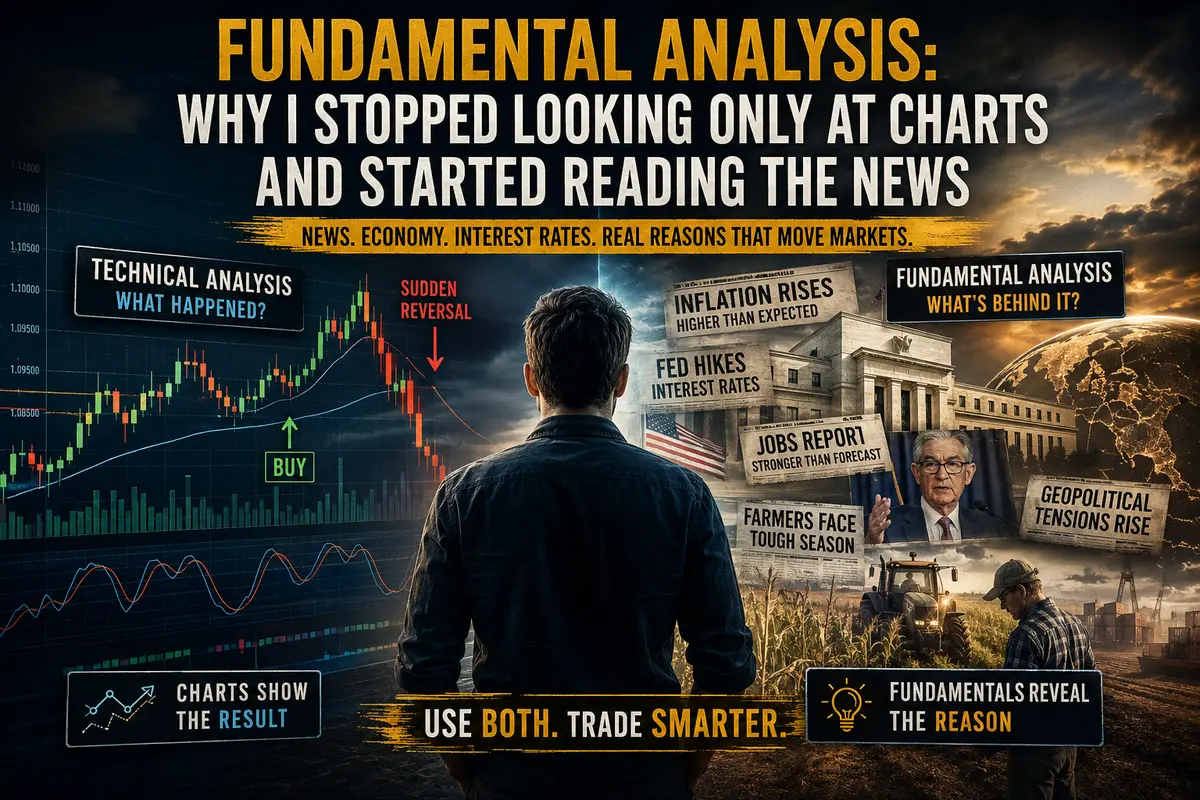
That’s when I realized: the chart is the result. The cause lies in fundamentals.
So I started studying fundamental analysis.💬
What Is Fundamental Analysis? (In Simple Terms)
If technical analysis focuses on the chart itself (candlesticks, levels, indicators), fundamental analysis focuses on what’s behind the chart.
A country’s economy. Central bank actions. Politics. Natural disasters. Wars. Elections.
Everything that can affect the supply and demand of currencies, stocks, or commodities.
A simple example:
Imagine you want to buy an apartment in a city.
Technical analysis looks at housing prices over the past year and says:
“Prices usually rise in spring and fall in autumn. It’s spring now, so prices will probably go up.”
Fundamental analysis looks at the city itself:
-
Is a new factory being built? (More people move in → prices rise.)
-
Is a major employer shutting down? (People move away → prices fall.)
-
Are mortgage rates being lowered? (Housing becomes more affordable → prices rise.)
Technical analysis is about history and recurring patterns.
Fundamental analysis is about causes and real-world conditions.
Ideally, you use both.🤔
Why Traders Need Fundamental Analysis (Especially Beginners)
I asked myself this question too. Here’s what I discovered.
1. News Moves the Market More Than Any Indicator
One tweet from an influential person can wipe out a week’s worth of profits in five minutes.
Indicators won’t predict that.
Fundamental analysis helps you understand when those risks exist.
2. It Helps You Understand Long-Term Direction
Technical analysis is excellent for short-term trades.
But if I want to hold a position for several days, I need to understand what’s happening in the economy.
3. It Explains Why Price Is Moving
When I understand the reason behind a move, decision-making becomes easier.
I don’t panic during every pullback because I know:
“This is just a correction. The overall trend remains intact.”
4. It Protects You From Technical Analysis Traps
Sometimes price breaks above resistance.
Technical analysis says:
“Breakout! Open a buy position!”
Fundamental analysis says:
“Wait. Employment data is due in an hour, and expectations are weak.”
I wait.
The data comes out worse than expected.
Instead of rallying, the market drops.
I avoid the trap.
The Main Components of Fundamental Analysis
When I first started learning it, fundamental analysis felt like an endless ocean of complicated terminology.
Eventually, I broke it down into a few key areas.💻
Block 1: Macroeconomic Indicators
These are numbers that show how a country’s economy is performing.
Block 2: Central Bank Actions
For currency traders, this is arguably the most important factor.
The Federal Reserve (U.S.), European Central Bank, Bank of England, and Bank of Japan largely determine the direction of their currencies.
What they do:
-
Raise rates → currency tends to strengthen.
-
Cut rates → currency tends to weaken.
-
Quantitative easing (money printing) → currency often weakens.
-
Verbal guidance and speeches can move markets significantly.
My rule:
If there’s an FOMC or ECB meeting this week, I either close positions beforehand or wait until the decision is announced.
Markets can move 50–100 pips in seconds.
Block 3: Geopolitics and Unexpected Events
Wars. Trade disputes. Natural disasters. Elections. Brexit. Pandemics.
All of these affect markets.
Sometimes dramatically.
A recent example:
When the war in Ukraine began, oil prices surged, the ruble collapsed, and gold rallied.
No technical indicator could have predicted that event itself.
I’m not a political expert.
But now I at least follow the news so I’m not completely blindsided.🧠
How I Started Applying Fundamental Analysis
I didn’t begin by reading economics textbooks.
I started small.
Step 1: Spend 10 Minutes on News Every Morning
I check the economic calendar.
I look for major events marked in red and read brief summaries about them.
Step 2: Learn Who Matters
-
Federal Reserve (Jerome Powell) — the most influential voice for the U.S. dollar.
-
European Central Bank (Christine Lagarde) — key for the euro.
-
NFP (Non-Farm Payrolls) — released on the first Friday of each month and closely watched.
Step 3: Look at Charts Through the Lens of News
Before opening a trade, I ask:
-
Are there important news releases for this currency today?
-
Are there major events this week?
-
What is the overall market sentiment right now?
-
Are investors seeking risk or hiding in safe-haven assets?
Step 4: Keep a Reaction Journal
I write down how markets respond to specific news events.
Over time, this helps me understand market behavior.✍️
My Biggest Fundamental Analysis Mistakes
Mistake #1: Ignoring It Completely
I used to think chart traders were the real traders and fundamental traders were just boring economists.
I was wrong.
Mistake #2: Trying to Trade Every News Release
I saw an NFP release coming and thought:
“This is my chance to make money!”
I entered a trade one minute before the announcement.
Price spiked up, then down, then up again.
My stop-loss got hit.
A minute later, the market moved exactly where I expected.
I got nothing.
Now my rule is:
Don’t trade the news. Observe it. Enter after a trend develops.💪
Mistake #3: Assuming Good News Automatically Means a Stronger Currency
Not always.
Sometimes the market has already priced in the good news.
Or broader conditions have deteriorated.
Mistake #4: Ignoring the Previous Reading
Forecast: 2.5%
Actual: 2.5%
I assumed nothing had changed.
But the previous reading was 2.0%.
Inflation was still rising.
The market reacted.
What I Learned Today
First: Fundamental analysis is not magic. It’s simply understanding what actually drives markets.
Second: You don’t need an economics degree. You only need to know the key indicators, follow major central banks, and stay aware of important news.
Third: The best traders use both approaches.
Technical analysis for entries.
Fundamental analysis for direction and protection against surprises.
Fourth: Fighting a strong fundamental trend is dangerous.
If the U.S. economy is strong and the Federal Reserve is raising rates, the dollar will likely remain supported.
Trying to short it can be painful.🤝
My Fundamental Analysis Plan for the Next Few Weeks
-
Spend 10 minutes every morning reviewing the economic calendar and major news.
-
Follow the key central banks: Federal Reserve (USD), ECB (EUR), and Bank of England (GBP).
-
Record how markets react to different types of news.
-
Avoid trading during major announcements; enter afterward.
-
Gradually learn which news matters and which can be ignored.
What’s Next
-
I’ll continue combining technical and fundamental analysis.
-
In the next post, I’ll break down exactly how I decide to enter a trade—my complete checklist covering technicals, fundamentals, and risk management.
-
If there’s interest, I’ll also write a dedicated post about the economic indicators I consider most important for traders.
If you’re still trading solely from charts and ignoring the news, start with the economic calendar.
Simply mark the high-impact events and be cautious around those times.
Fundamental analysis won’t make you a millionaire overnight.
But it can save you from situations where your perfect setup gets destroyed by three words from some guy in a suit.🍀
— NorthRay
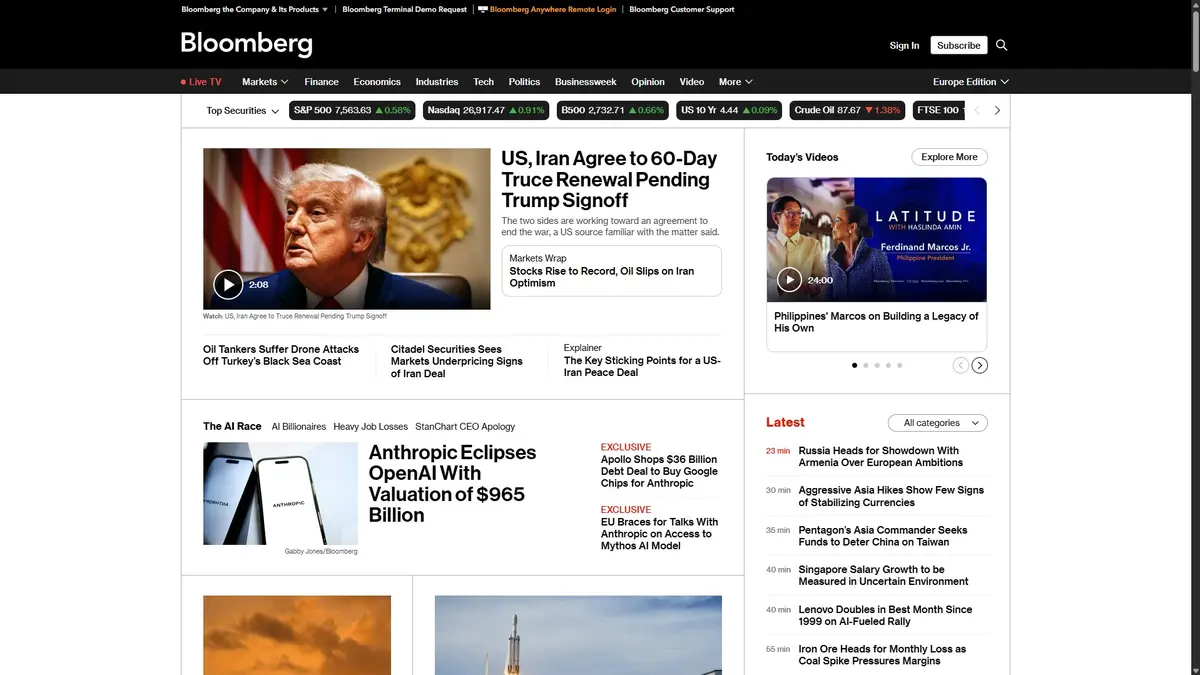
(with Investing.com and Bloomberg open in separate tabs, subscribed to Fed news alerts, and promising myself never again to say, “Fundamental analysis isn’t for me.”)

Comments
No comments yet. Be the first to share your thoughts!
Authentication Required
You must be logged in to post a comment.