

Bitcoin Under Fire: How Iranian Bombs and ETF Flight Crushed Crypto
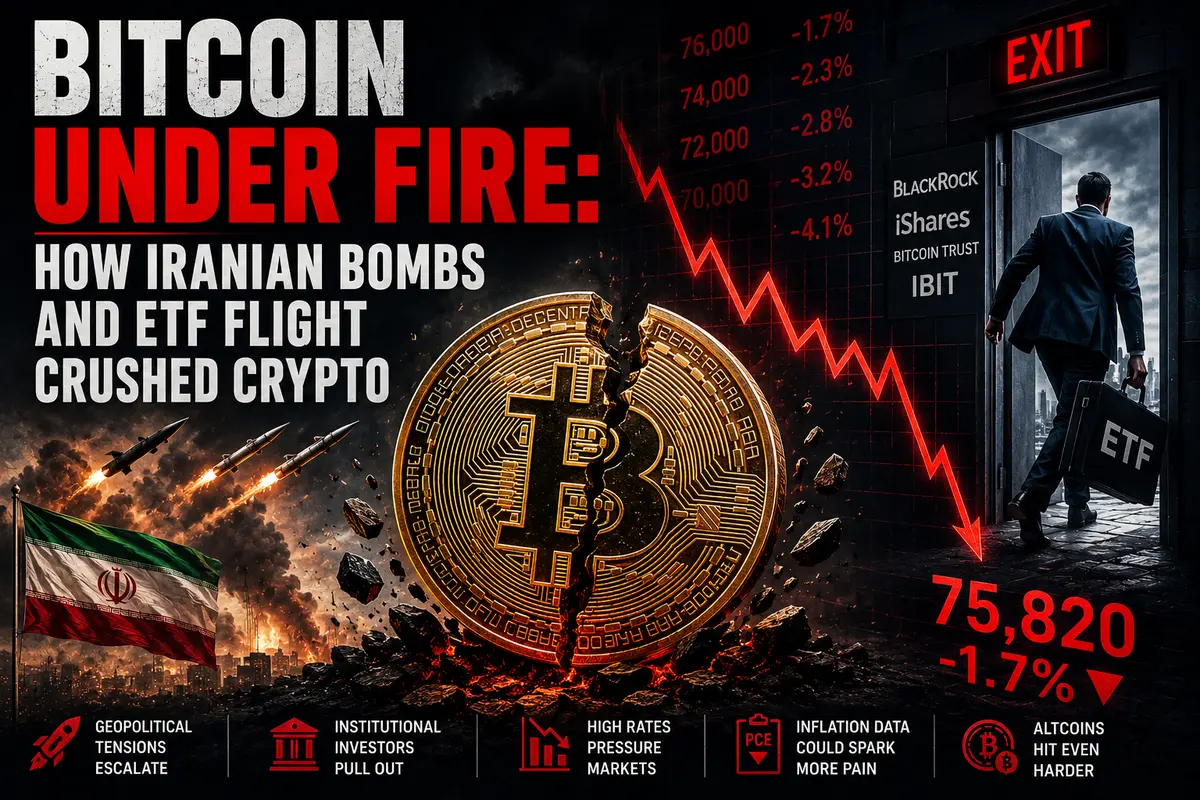
Wednesday became the kind of day Bitcoin investors would rather forget as quickly as possible. The world’s leading cryptocurrency plunged below seventy-six thousand dollars, touching 75,820 dollars and losing one point seven percent during the session. But the percentages are not even the main story. The real issue is the context.
While tech stocks on Wall Street and across Asia were climbing to fresh highs, Bitcoin moved sharply in the opposite direction. This divergence — with the NASDAQ and S&P 500 hitting record levels while crypto trades in the red — suggests something specific is happening inside the crypto market, unrelated to the broader appetite for risk. And the name of that “something” is a combination of geopolitical fear and institutional flight.
The Iranian Front: Bombs That Hit Bitcoin
New U.S. strikes on Iranian targets earlier this week continue to poison sentiment across the crypto market. Iran called the attacks a violation of the ceasefire agreement. U.S. officials responded by describing the strikes as defensive in nature. But for traders, the legal wording means little. What matters is that the conflict is not cooling down — it is escalating again.
Moreover, the geopolitical fire has begun spreading beyond the direct U.S.-Iran confrontation. Reports emerged of Israeli strikes in southern Lebanon. This is no longer merely a bilateral conflict; it is beginning to resemble the expansion of a regional war. And for cryptocurrencies, which are still widely viewed as risk assets, such escalation is a direct hit.
The logic here, however, is more complicated than it first appears. Normally, periods of geopolitical tension should support Bitcoin as a defensive asset — digital gold. But what we are witnessing is the opposite. Why? Because the current conflict hurts Bitcoin indirectly through the monetary channel.
War drives oil prices higher. Higher oil prices fuel inflation. Rising inflation forces the Federal Reserve to keep interest rates elevated — or even consider further hikes. And high rates are toxic for cryptocurrencies, which generate no cash flow.
ETFs: Institutional Exodus
But geopolitics is only half the story. The second half is unfolding in the Bitcoin ETF market — and what we are seeing there is an exodus.
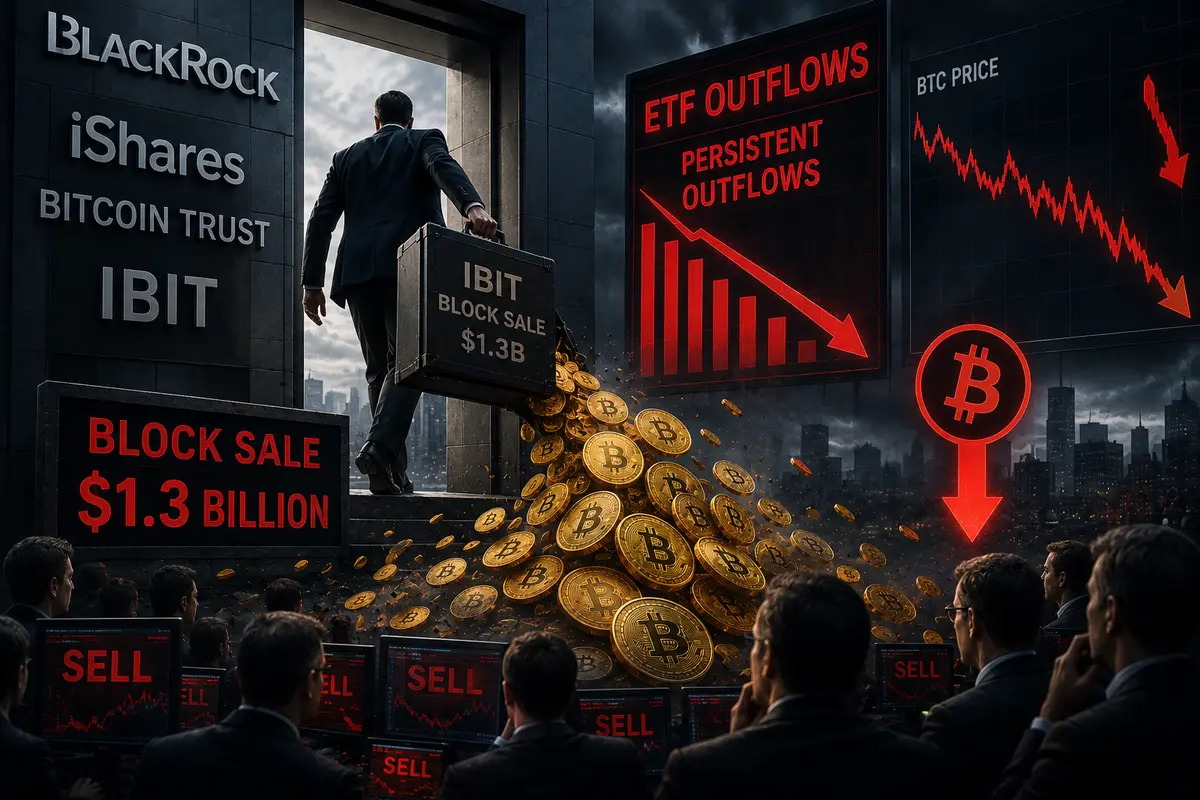
Spot Bitcoin ETFs have recorded persistent outflows for several consecutive sessions. Institutional investors who only recently embraced crypto through regulated investment vehicles are now turning around and heading for the exit.
The loudest event was a massive block sale of shares in BlackRock’s iShares Bitcoin Trust ETF, known by the ticker IBIT. The sale totaled 1.3 billion dollars. More than a billion dollars dumped onto the market in a single transaction.
Retail investors panicking over red candles do not execute trades like this. These are the actions of a large institutional player making a strategic decision to reduce exposure.
A block sale of this magnitude pressures price in two ways. First, directly: an enormous amount of supply is thrown onto the market and must be absorbed by buyers. If demand is insufficient, prices fall. Second, psychologically: when investors see someone large and sophisticated exiting Bitcoin, they begin questioning their own positions. Herd behavior takes over, and smaller sellers follow the larger one out the door.
The Contrast With the Stock Market: Tech Versus Crypto
Bitcoin’s decline looks especially painful against the backdrop of what is happening in traditional equity markets.
The NASDAQ and S&P 500 closed at record highs. Asian technology stocks rallied on optimism surrounding artificial intelligence. SK Hynix surged into the trillion-dollar club, Samsung refreshed all-time highs, and Nvidia continues its triumphant run. The technology sector is experiencing one of the strongest periods in its history.
And Bitcoin is falling.
Why is capital choosing equities over crypto? The answer is straightforward: technology companies have profits, cash flows, and products generating revenue today. Bitcoin has none of these things.
When interest rates are high, investors want real returns, not stories about a brighter future. Nvidia stock offers dividends and buybacks. Bitcoin offers only the hope of future price appreciation. In an era of expensive money, that is no longer enough.
PCE on the Horizon: Fear of the Data
Another factor weighing on crypto markets is anticipation surrounding the upcoming PCE inflation report. The Personal Consumption Expenditures index is the Federal Reserve’s preferred inflation gauge, and it is due Thursday.
Markets are nervous.
Interest-rate futures currently imply only limited chances of rate cuts this year. More importantly, traders have started pricing in a small probability of another rate hike if inflation remains stubbornly elevated and oil prices continue rising because of Middle East tensions.
For Bitcoin, this is close to a worst-case scenario.
High rates reduce liquidity, make safer yield-generating assets more attractive, and drain capital away from speculative investments. A cryptocurrency that pays no dividends and produces no cash flow becomes one of the first assets investors sell in such an environment.
Altcoins: Even More Painful Than Bitcoin
If Bitcoin fell one point seven percent, altcoins suffered even more.
Ethereum lost two point one percent, dropping to 2,080 dollars. XRP fell one point six percent to 1.33 dollars. Solana, Cardano, and Polygon also declined, extending their losses. Even meme tokens, which often trade according to their own rules, failed to escape the selloff: Dogecoin lost zero point seven percent.
This pattern is familiar to anyone who follows crypto markets: when Bitcoin falls, altcoins fall harder. It is a beta effect.
Altcoins are more volatile, more speculative, and more sentiment-driven. When fear spreads across the market, investors first dump the riskiest assets — and altcoins become the primary victims.
Wednesday demonstrated that the crypto market has entered dangerous territory. Geopolitical tensions are rising, institutional investors are pulling back, and inflation data could deliver another unpleasant surprise.
Bitcoin remains trapped in a downtrend, and there is still no obvious catalyst capable of reversing it. For bulls, this is a warning sign. For bears, confirmation that their thesis is playing out. And for everyone else, it is another reminder that cryptocurrency remains one of the riskiest asset classes in the world — and when real fear takes hold, it is often the first to fall.

Comments
No comments yet. Be the first to share your thoughts!
Authentication Required
You must be logged in to post a comment.