

Gold Under Fire: How New Bombings in Iran Crushed the Precious Metals Rally
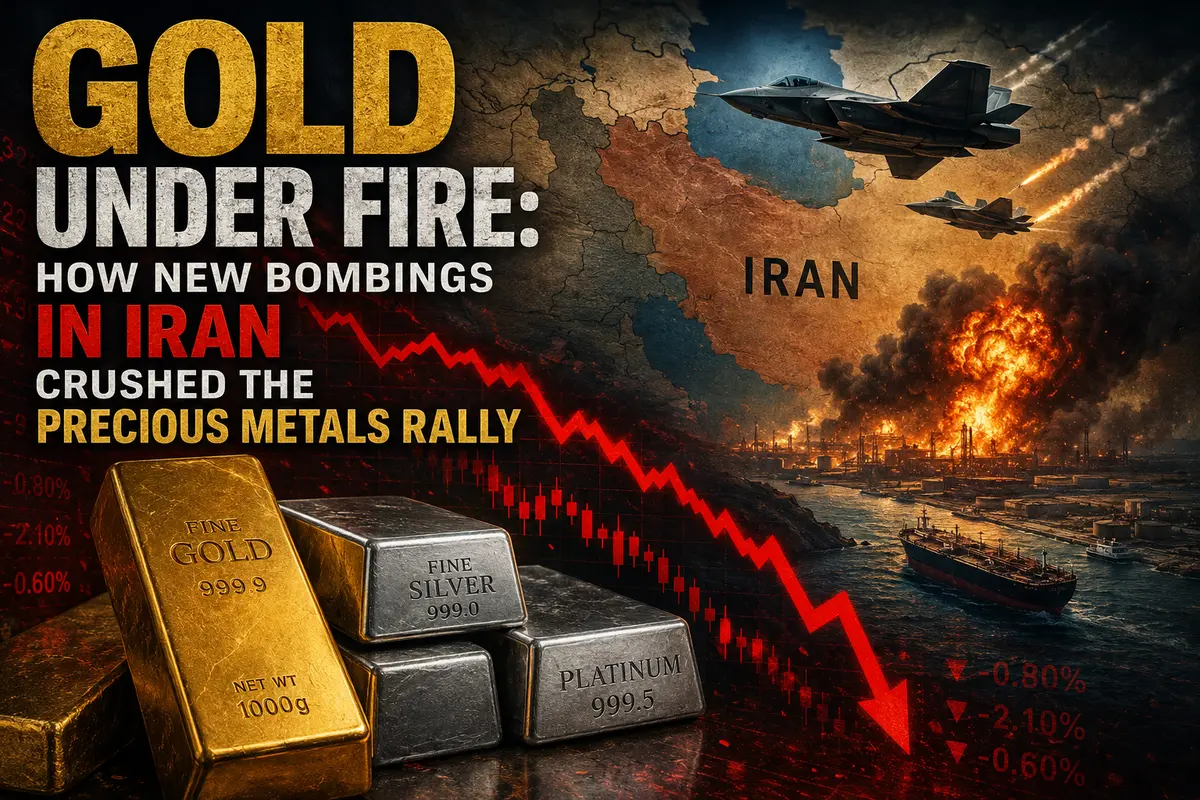
Tuesday’s Asian trading session delivered a brutal reality check to gold traders. Just yesterday, spot gold prices were confidently climbing higher amid hopes for peace with Iran, while futures painted bullish charts suggesting the rally would continue. Today, everything reversed.
Spot gold plunged 0.8% to $4,535 per ounce. Futures followed, falling by the same margin. Silver collapsed by more than 2%, while platinum lost 0.6%. Precious metals, which had celebrated a return to life on Monday, came under attack on Tuesday — both literally and figuratively. And the reason for this reversal was the very bombs the United States dropped on southern Iran.
The Paradox of War and Gold: Why Bombs Are Sinking Prices
At first glance, this seems backward. Gold is the classic safe-haven asset. When guns fire, investors usually run into gold. This rule has worked for decades and entire investment strategies are built around it.
But the current conflict with Iran has rewritten those rules. To understand why, we need to look at how this war affects gold — not directly, but through a complex chain of macroeconomic consequences.
The conflict with Iran triggered an energy crisis. The closure of the Strait of Hormuz sent oil prices soaring. Rising energy prices fueled inflation worldwide. And accelerating inflation forced the Federal Reserve and other central banks to start talking about higher interest rates.
This is where the mechanism becomes deadly for gold.
Gold generates no yield. When rates rise — or even when there is merely a threat of higher rates — holding gold becomes an expensive luxury. Investors look at a gold bar sitting idle in a vault, then compare it with Treasury bonds offering guaranteed dollar returns, and make the rational choice in favor of bonds.
That is why gold fell during the hottest phases of the conflict. Not because war itself is harmless, but because the inflationary consequences of war are even worse for gold than the war itself.
Now this logic is reversing again — but in the opposite direction. The hopes for peace that emerged over the weekend implied hopes for the reopening of the strait, lower oil prices, easing inflation, and reduced pressure for rate hikes. All of this was positive for gold.
The new U.S. strikes on Iran signal that peace is being postponed, oil prices are climbing again, inflation fears are returning, and the threat of higher rates is once more becoming real. And gold is falling accordingly.
Strikes on Southern Iran: What Exactly Spooked the Markets
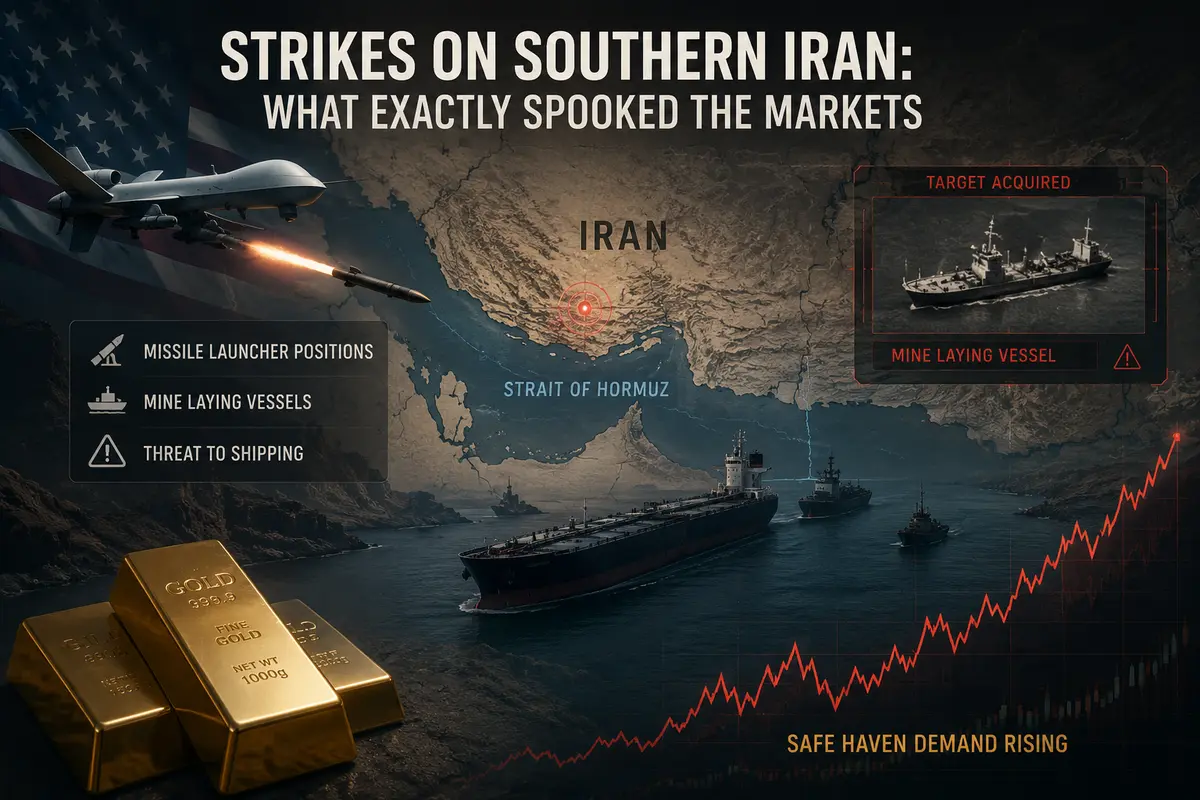
Reports of new American strikes emerged Monday evening. According to U.S. media, the targets included missile launcher positions and vessels involved in mining waters in southern Iran.
This was not merely a bombardment of military infrastructure. It was an attack on the very forces that Washington believes threaten shipping through the Strait of Hormuz.
In other words, the United States is attempting to clear a path for tankers through military means. But the very fact that such measures are necessary suggests diplomacy is stalling.
The choice of targets is revealing. A vessel laying mines is not a fixed military installation. It is a mobile target that must be tracked, identified, and destroyed. Such operations require intelligence preparation, continuous surveillance, and rapid decision-making.
This was not a spontaneous strike. It was part of a carefully planned military campaign.
And the fact that the United States continues carrying out such strikes even amid negotiations suggests military pressure is being viewed as a tool to force peace. But markets interpret this differently: negotiations are failing, diplomacy is bogged down, and the conflict is continuing.
Gold is reacting accordingly.
Silver and Platinum: A Double Blow
Silver suffered the most among precious metals on Tuesday, plunging 2.1%.
This decline reflects silver’s dual nature. On one hand, it is a precious metal that follows gold. On the other, it is an industrial metal whose demand depends heavily on the global economy.
Two negative forces are hitting simultaneously.
As a precious metal, silver suffers from the same monetary fears affecting gold. As an industrial metal, it suffers because a prolonged war means prolonged uncertainty, reduced investment plans, and slower industrial production.
Industrial consumers of silver — electronics manufacturers, solar panel producers, and automakers — are postponing purchases while waiting for greater clarity. Demand falls, and prices follow.
Platinum lost 0.6%. It too is under both monetary and industrial pressure. But for platinum, the automotive sector is especially critical because the metal is widely used in catalytic converters.
Automakers facing expensive oil and growing uncertainty are cutting production plans. As a result, demand for platinum is also weakening.
The Dollar and Oil: Gold’s Two Enemies
Two factors weighed especially heavily on gold Tuesday: a strengthening dollar and rising oil prices.
The dollar stabilized after its recent decline and even strengthened slightly amid renewed geopolitical fears. When the U.S. currency rises, gold — which is priced in dollars — becomes more expensive for holders of other currencies. Demand weakens, and prices fall.
Oil pressures gold indirectly through the mechanism described above. Tuesday’s rise in oil prices, triggered by the strikes on Iran, revived inflation fears across the markets.
Inflation fears lead to expectations of tighter monetary policy. Expectations of tighter policy push bond yields higher. Rising yields reduce the attractiveness of gold.
The chain is complete.
Peace Delayed Once Again
Gold rose on hope Monday. It is falling on reality Tuesday.
And the reality is this: the peace agreement with Iran that seemed so close over the weekend is once again slipping beyond the horizon.
Trump spoke of a memorandum that was “largely agreed upon.” Iranian officials denied those claims. And now there are new airstrikes on top of everything else.
Under such conditions, only desperate optimists can still believe in imminent peace.
Markets, meanwhile, remain cynical and pragmatic. They see bombs and draw a simple conclusion: the conflict continues, inflationary pressure will persist, central banks will remain hawkish, and gold will stay under pressure.
Yet this decline may prove just as short-lived as the previous rally.
The geopolitical situation is changing at dizzying speed. Today there are bombs, tomorrow negotiations, the day after perhaps more bombs again.
Gold will react to every twist and turn.
The only question is which fear dominates investors’ minds: fear of war, which pushes money into gold, or fear of inflation, which pushes money out of gold.
For now, the second fear is winning.
But who knows what tomorrow will bring?

Comments
No comments yet. Be the first to share your thoughts!
Authentication Required
You must be logged in to post a comment.