


USD/TRY – Emerging Market Volatility, Hyperinflation Mechanics, and Unconventional Policy Traps
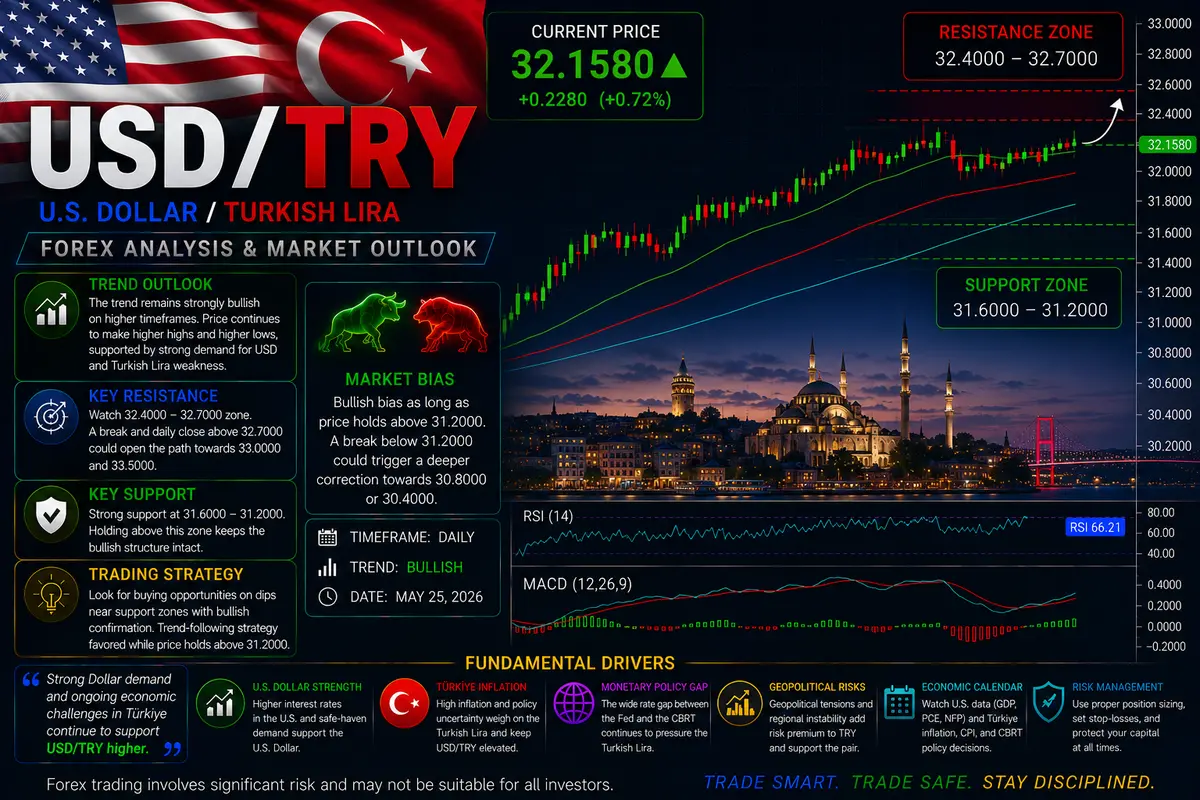
Ask any institutional desk operator about the single most dangerous chart on their monitor, and USDTRY ... will almost certainly come up within thirty seconds. The Lira doesn't behave like standard G10 major currencies, nor does it follow the predictable mean-reverting rhythms of European cross-rates. Over the past decade, it morphed from a relatively stable regional trading vehicle into a classic example of what happens when a central bank abandons conventional monetary policy while domestic inflation runs rampant.
If you bring standard technical analysis patterns or major-pair leverage models to this chart, the order book will eat you alive. Navigating the Turkish Lira requires throw-away assumptions about clean support levels and mastering the raw mechanics of negative real yields, reserve depletion, and overnight liquidity freezes.
The Core Problem: Negative Real Yields and the Flight to Hard Currency
The foundational driver behind the long-term slide of the Turkish Lira comes down to a straightforward concept that every domestic saver in Istanbul understands intuitively: real interest rates. When the rate of inflation in an economy far outpaces the benchmark interest rate set by the central bank, anyone holding cash in local currency is watching their purchasing power evaporate month after month.
For years, the Central Bank of the Republic of Turkey (CBRT) attempted an unorthodox experiment, cutting interest rates repeatedly even as annual inflation spiked past fifty percent. The logic on the street was simple. If your local bank account pays you twenty percent interest while the price of groceries, fuel, and housing rises by sixty percent, sitting on Lira is a guaranteed way to lose wealth.
Domestic citizens and corporate treasuries responded exactly as economic theory predicts. They took their Lira paychecks and immediately converted them into US Dollars, Euros, and physical gold. This continuous, structural demand for foreign currency created an...
