

Same Tariff Announcement, Two Completely Different Outcomes; Here’s Why China Lost and the EU Didn’t
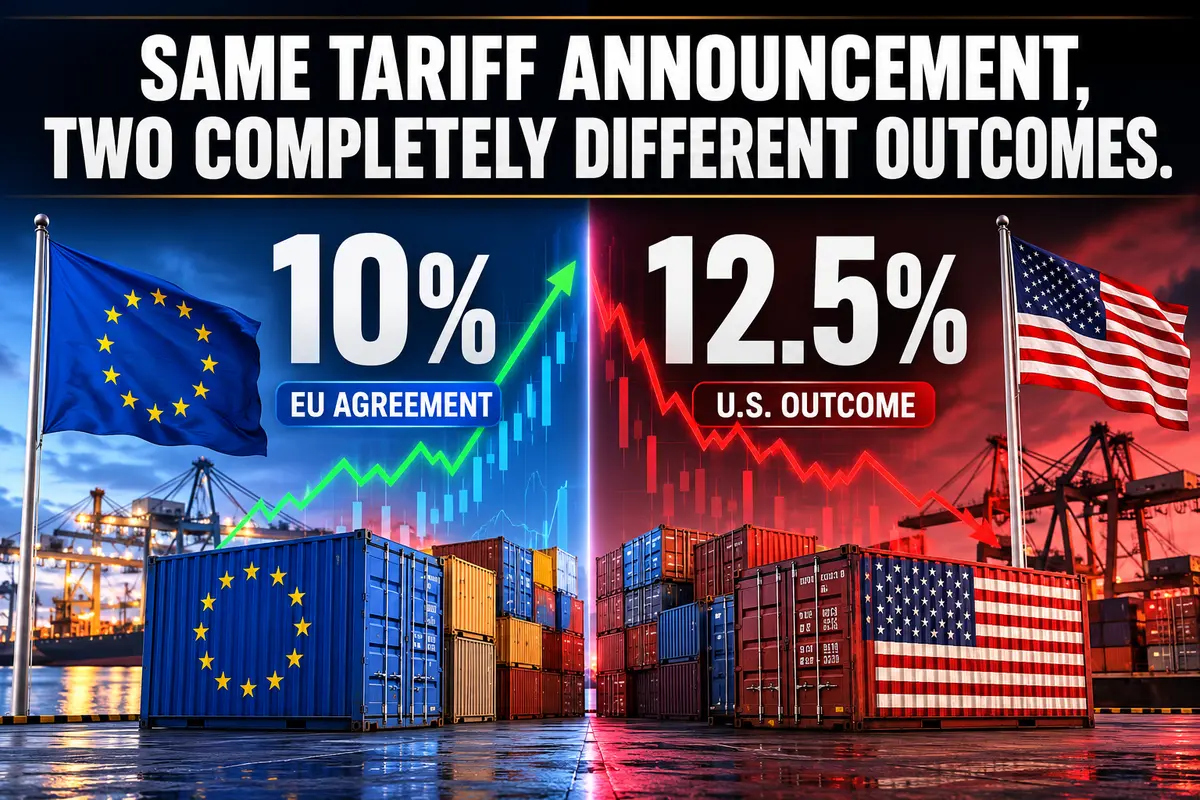
Friday’s new US tariffs hit 60 economies at once, all under the same forced-labor justification, announced in the same Federal Register notice, at the same moment. And yet China and the European Union walked away with completely different results. China got the highest rate in the entire framework, 12.5%. The EU got the lowest, 10%, and its own trade officials are annoyed about being included at all rather than panicked about the number.
That gap isn’t about who actually has a forced-labor problem. It’s about who showed up with a deal already on the table.
Same Justification, Same Day, Different Rooms
The mechanics of Friday’s action are simple on paper: countries with a forced-labor import ban in place, or a credible commitment to introduce one, got 10%. Everyone else got 12.5%. China, Japan, South Korea, and Switzerland landed in the higher bracket.
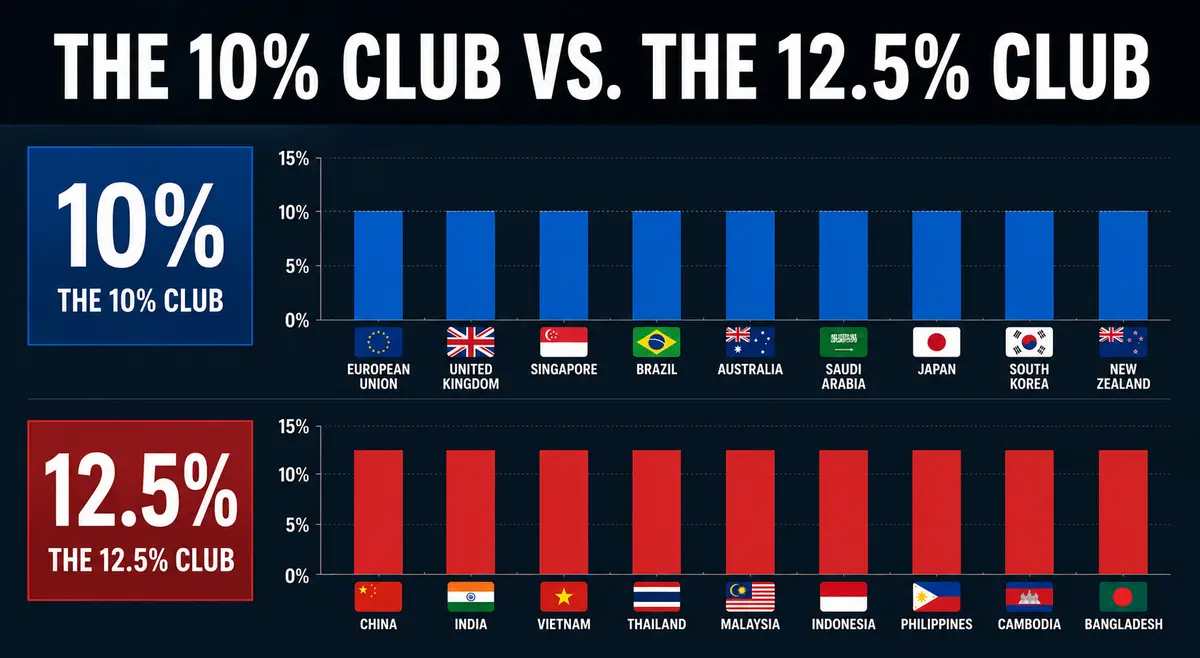
The EU, UK, Canada, and Mexico landed in the lower one.
But the justification doesn’t actually hold up evenly across that split, and the EU’s own reaction proves it. Bernd Lange, who chairs the European Parliament’s trade committee, called the forced-labor framing “crazy,” pointing out the EU already has legislation on this that’s arguably stronger than what the US enforces itself. If the EU’s rules are genuinely tougher and it still got tariffed, the forced-labor rationale isn’t really deciding who pays what. Something else is.
What Actually Decided the Rate
That something else is the Turnberry framework, the trade pact Trump and European Commission President Ursula von der Leyen hammered out last summer.
The EU’s 10% rate under Friday’s action wasn’t earned through forced-labor compliance. It was already baked into a separate, pre-negotiated deal, and Washington structured this week’s tariff to sit inside that existing arrangement rather than stack on top of it.
China had no equivalent deal to slot into. No prior framework absorbing the impact, no negotiated ceiling to land inside of. So it got the number the formula actually produces when there’s nothing softening it: the top rate, full stop.
I think this is the real story Friday’s announcement tells, more than the forced-labor angle it’s dressed in. This wasn’t really a referendum on labor practices. It was a test of who had already done the negotiating work in advance, and the EU had, and China hadn’t.
The Detail That Gives the Game Away
There’s a specific mechanism buried in this tariff structure that I think says more than anything else here: a textile carve-out that lets a country import apparel at a reduced rate, sized according to how much American cotton and textile material that country buys in return.
That’s not a human rights enforcement tool. That’s a purchase order wearing a human rights mechanism as a costume.
Once you see that detail, the EU-versus-China split makes a lot more sense. This tariff round was never purely about forced labor. It was about leverage, prior deals, and what each side was willing to buy or commit to in advance. The EU walked in with leverage already spent. China didn’t.
Where This Points Next for China Specifically
There’s a number worth watching closely here. Reporting around this action indicates the administration intends to rebuild tariffs on Chinese goods back toward the roughly 20% level agreed to in last November’s trade truce, without exceeding it.
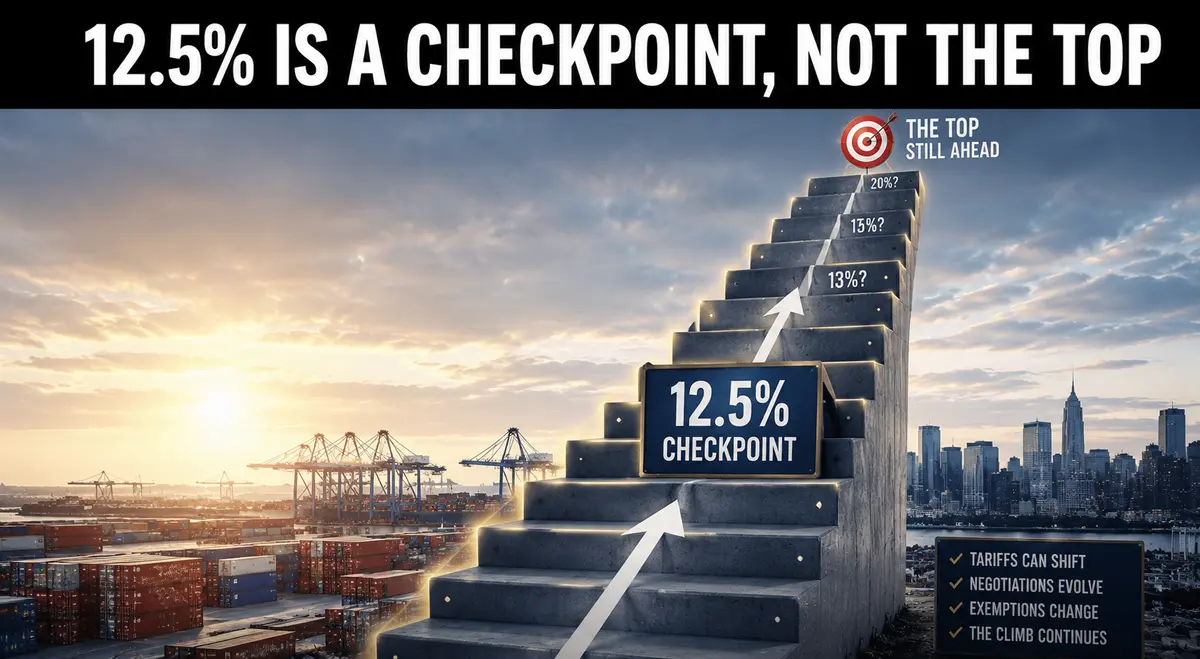
Before Friday, China’s effective rate had actually drifted down to around 10%, excluding older industrial-goods tariffs from Trump’s first term. This new 12.5% duty is a step back up that ladder, not the top of it.
If that reporting holds, the honest way to read Friday’s number isn’t as a final rate. It’s a checkpoint on a path back toward 20%, using a justification that, per the EU’s own pushback, isn’t really about the thing it claims to be about.
What This Means for Traders
The forced-labor framing makes this look like a compliance story. I’d treat it as a leverage story instead. Countries that arrive with an existing framework or negotiated commitment get shielded from the worst of these actions; countries that don’t, get the full rate applied with no cushion. That’s a useful lens for reading whatever comes out of the still-open Section 301 investigation into excess industrial capacity, covering 16 economies including China, Japan, and the EU again. Watch which economies have deals in motion before that one lands, because on this evidence, that’s what actually determines the number more than the stated rationale does.
Risk Disclaimer
Tariff rates and trade frameworks remain subject to further negotiation, legal challenge, and revision. Nothing in this article constitutes financial, legal, or trade compliance advice. Importers and traders should consult a licensed customs broker or financial advisor for guidance specific to their exposure.

Comments
No comments yet. Be the first to share your thoughts!
Authentication Required
You must be logged in to post a comment.