

Gold Pulls Back During Asian Trading
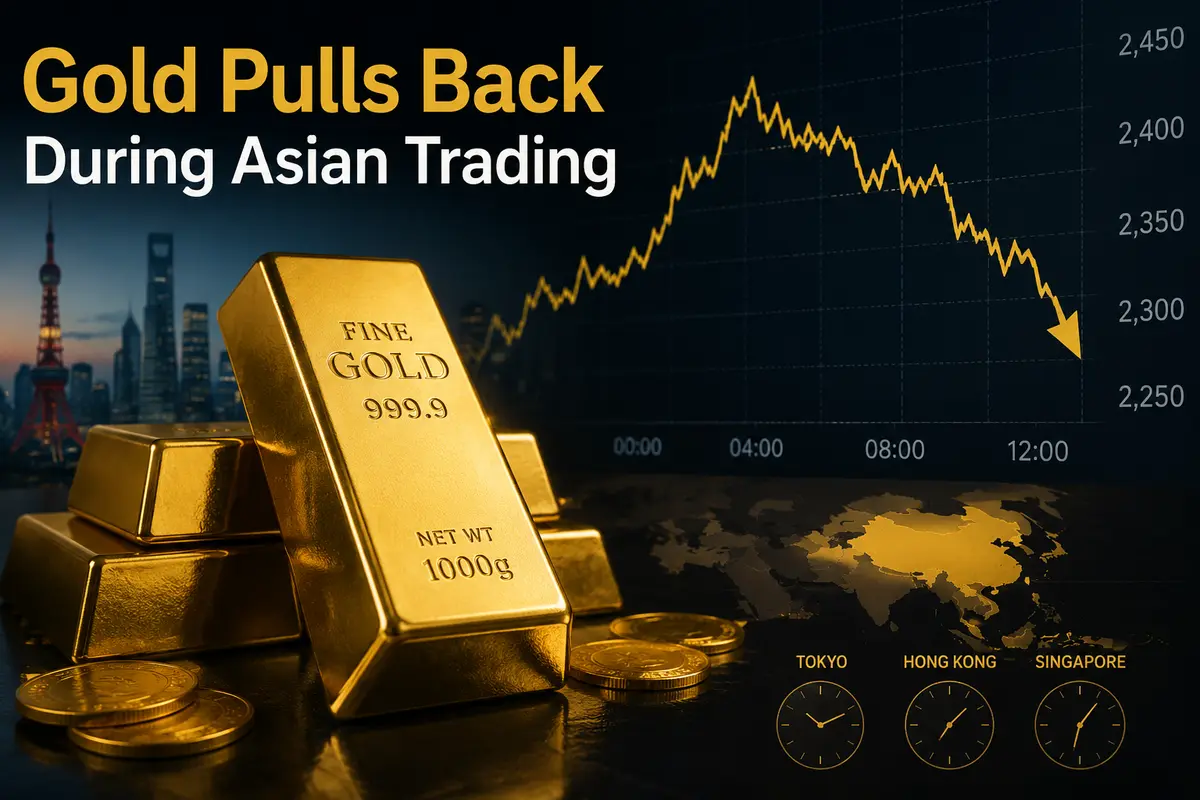
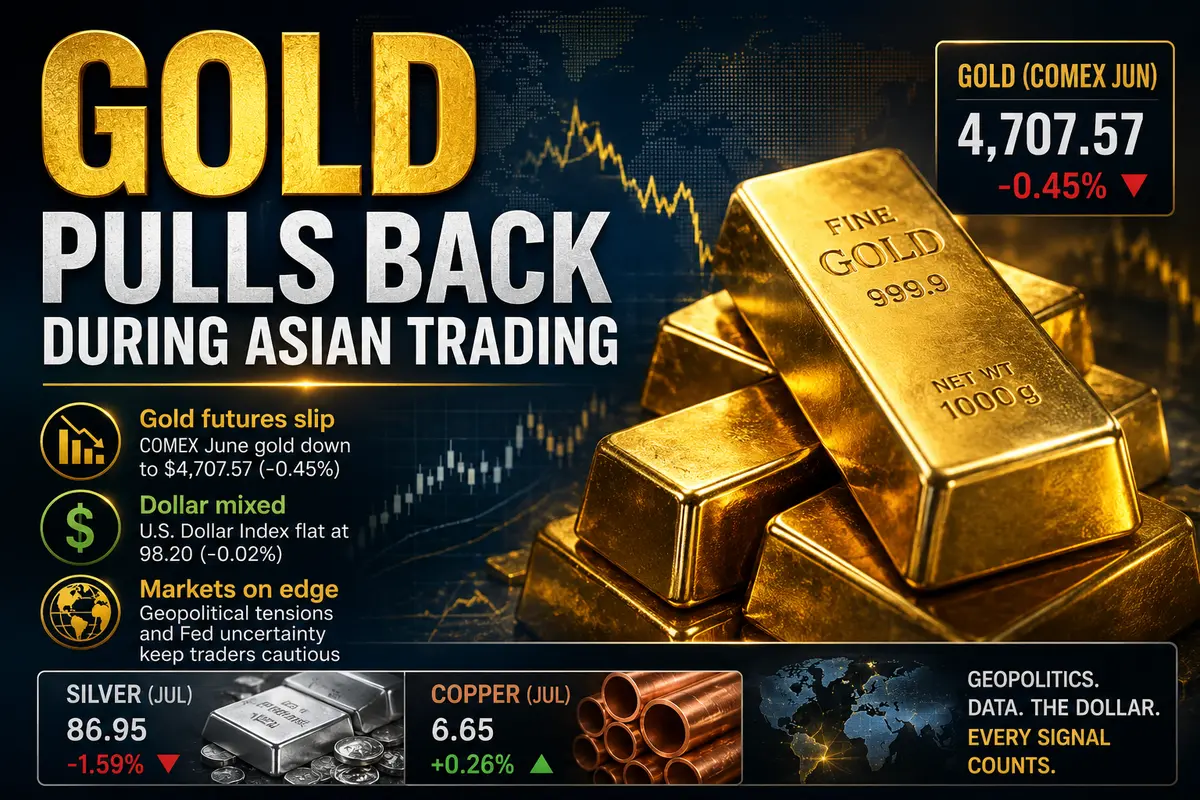
Gold futures headed lower during the Asian session on Wednesday, snapping a recent stretch of choppy trading near the elevated levels reached earlier. The COMEX division of the New York Mercantile Exchange recorded a decline in June gold contracts, which settled at roughly $4,707.57 per troy ounce, down about 0.45% at the time of writing.
The session kicked off with the metal searching for a foothold. The intraday low plunged well below the opening levels, and gold was forced to test support around the 4,646.01. A narrow corridor emerged, and the metal spent the entire morning trading within this confined range.
Why is this happening now? Gold is highly sensitive to the mood surrounding the U.S. dollar, and the greenback was sending mixed signals on Wednesday. The U.S. Dollar Index, which measures the dollar’s strength against a basket of six major currencies, was barely changed — trading at 98.20, down just 0.02%. On the surface, any slight dollar weakness should nudge gold higher. Instead, investors seemed to hit the pause button, clearly unwilling to pile into aggressive positions ahead of the next batch of macroeconomic news.
Silver and Copper: A Sharp Divergence
While gold was slipping moderately, the silver market was undergoing a far steeper correction. July silver futures tumbled 1.59%, hitting $86.95 per troy ounce. For silver, which often moves in gold’s wake but with larger swings, this kind of drop wasn’t a shock. When the market gets jittery, industrial demand forecasts for the white metal often get revised downward, and speculators rush to lock in profits.
The copper market told a completely different story. July contracts on this key industrial metal instead rose by 0.26%, climbing to $6.65 per pound. Copper has been living a life of its own lately, paying little attention to its precious metal cousins. Investors appear to be betting on steady demand from the industrial and construction sectors, as well as long-term trends tied to the energy transition.
This three-way split among the major exchange-traded metals perfectly captures the current market picture. Gold is hunting for direction, torn between geopolitical risks and rate expectations. Silver is correcting after its own rally. And copper is stubbornly holding in positive territory, reflecting ongoing faith in the real economy.
The Dollar and the Broader Market Backdrop
The path of the U.S. currency remains the chief conductor for all commodity markets. The Dollar Index, hovering around 98.20 on Wednesday, was essentially frozen, waiting for a fresh trigger. On one hand, uncertainty about the Federal Reserve’s next moves has traders on edge. On the other, geopolitical tensions in the Middle East, along with the fog around trade negotiations with China, are preventing the dollar from sliding too far.
For gold holders, this is a familiar dilemma. When global central banks signal that tighter policy might drag on, yields on competing assets like bonds rise, and non-interest-bearing gold loses some of its shine. But the moment a new crisis flares up — be it a military escalation or a stock market rout — capital comes rushing straight back into the safe-haven metal, pushing prices up again.
For now, the market is suspended at this point of uneasy equilibrium. June gold futures are trading within a fairly tight range, hemmed in by support beneath and resistance overhead. A breakout on either side could set the tone for the next several sessions. Traders are glued to the news flow, fully aware that any unexpected statement from Washington, Beijing, or the Middle East could instantly redraw the entire picture.
What to Watch Next
The coming days promise to be eventful for commodity markets. Gold will continue to react sharply to every comment from Fed officials about the outlook for monetary policy. Beyond that, macroeconomic data — especially U.S. inflation figures — will either reinforce fears about a prolonged period of high interest rates or, conversely, offer some hope of easing.
For silver, the key factor remains the balance between investment demand and industrial consumption. If the global economy continues to show signs of slowing, the white metal risks being hit from both sides. Copper, on the other hand, could benefit from any hint of new stimulus measures in China or large-scale infrastructure programs elsewhere.
The overall picture across commodity markets right now looks like a complex mosaic, with each element — from the dollar’s trajectory to geopolitical flashpoints — trying to pull the blanket its own way. Investors are left watching the signals closely, mindful that even on seemingly quiet days, strong moves can be brewing just beneath the surface.

Comments
No comments yet. Be the first to share your thoughts!
Authentication Required
You must be logged in to post a comment.