

Four Days of Decline: Gold Loses Its Shine
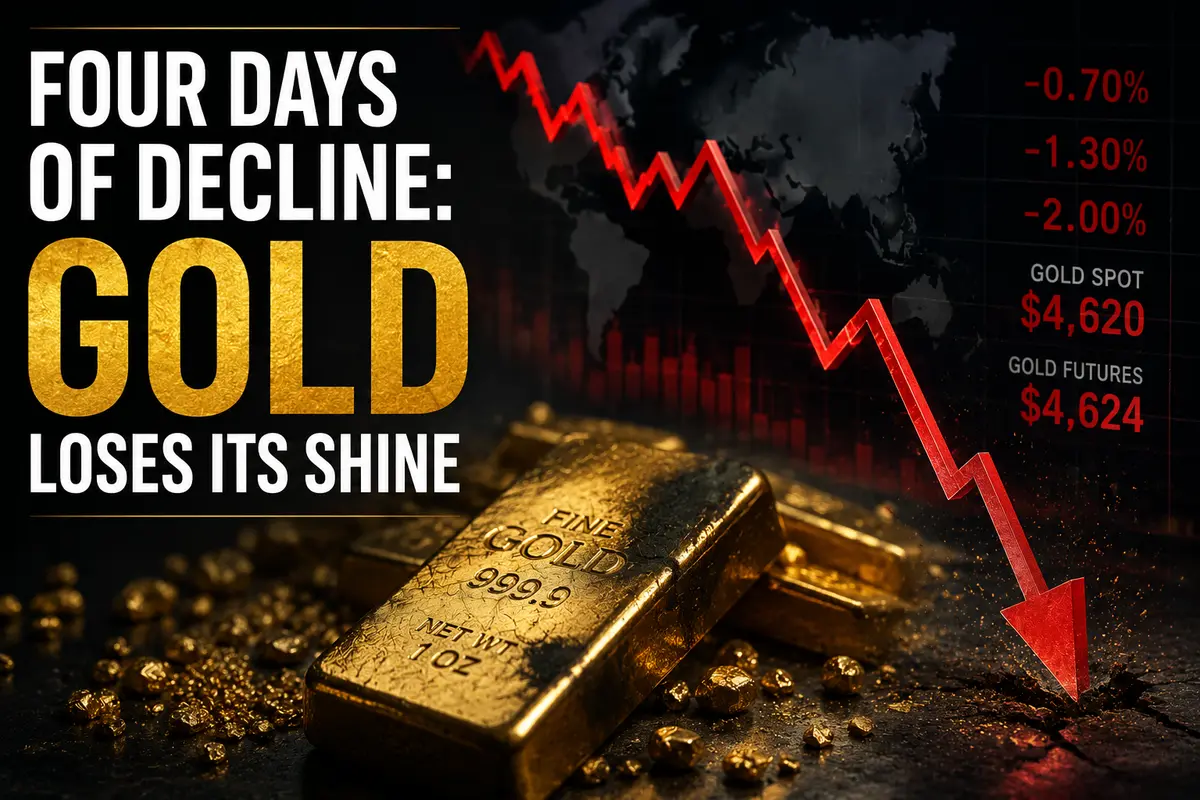
Gold ended the week deep in the red on Friday. It marked the fourth consecutive losing session — a stretch the precious metals market has not seen in quite some time. Spot prices slipped another 0.7% and hovered near $4,620 per ounce in early trading. Futures performed even worse, plunging 1.3% to around $4,624. Looking at the week as a whole, the picture is grim for the bulls: gold lost roughly 2% over five trading days.
For an asset traditionally viewed as a safe haven, this behavior looks unusual. But that very unusualness is the story. Gold is currently trapped between two grinding forces: a strengthening U.S. dollar on one side and shifting expectations around Federal Reserve interest rates on the other. As long as those forces continue turning, the metal keeps sliding lower despite the geopolitical fears that would normally send it soaring.
The Dollar Flexes Its Muscles
The U.S. Dollar Index gained another 0.3% during Asian trading on Friday, climbing to a two-week high. For the week, the greenback was on track to rise more than 1% — a sharp reversal after months of speculation that the dollar was losing its dominance amid budget concerns and political instability in the United States.
But economic data released throughout the week shattered those bearish narratives. One report after another exceeded analyst expectations. Producer prices in April posted their strongest annual increase in four years. Four years is a long time in economic terms — enough for supply chains, consumer behavior, and entire market structures to change dramatically. Consumer inflation also came in hotter than expected, while retail sales painted a picture of an American consumer who continues spending despite expensive energy and broad uncertainty.
Under different circumstances, this combination of data might have fueled a rally in equities and perhaps even boosted gold, since inflation is usually supportive for precious metals. But this time, the market reacted differently.
Rate Cuts No Longer Look Certain
Strong economic numbers crushed hopes for imminent Federal Reserve easing. If inflation refuses to cool, consumers keep spending, and producer prices continue rising, why would the Fed cut rates? Traders who only recently expected two or even three rounds of easing this year suddenly began recalculating their models.
Even more striking, some market participants have started discussing the possibility of additional tightening. Not just a pause, not just rates staying higher for longer — but another rate hike altogether. For now, that remains a minority view, but the fact that it has resurfaced shows how dramatically sentiment has shifted over the past week.
For gold, this is close to the worst possible environment. The metal generates no yield. When interest rates remain high, holding gold becomes expensive because investors forgo returns available in bonds or even bank deposits. And if rates might rise even further, the opportunity cost becomes even more painful. Add a strong dollar — which makes gold more expensive for holders of other currencies — and you get a perfect headwind for precious metals bulls.
The Shadow of Trump and Xi: A Summit Markets Hoped Would Deliver
While economic data pressured gold through the dollar and rates, another factor theoretically had the power to reverse the trend. Talks between Donald Trump and Xi Jinping were taking place in Beijing — a summit markets watched with both tension and hope.
A great deal depended on those discussions. Trade relations between the world’s two largest economies have remained strained for years, and any sign of warming ties could move global markets. The agenda also included Iran, perhaps the most dangerous geopolitical flashpoint at the moment. If Beijing agreed to act as a mediator — or at least pressure Tehran toward de-escalation — it could ease tensions in the Middle East, lower oil prices, and remove one of the main drivers of inflation.
But after the first day of negotiations, there was little sign of a breakthrough. Both sides described the talks as “constructive” — the standard diplomatic phrase that usually means nobody stormed out, but no real agreements were reached either. Markets expecting a dramatic announcement instead received polite emptiness.
The Morning Tweet That Changed Everything
Then Trump did what he does best: detonated the information landscape with a single social media post. Early Friday morning on Truth Social, he wrote: “Military destruction of Iran (to be continued!).”
Exactly like that — with an exclamation mark, with the promise of more to come, delivered in the unmistakable style that has unsettled diplomats, analysts, and traders for years.
That brief statement wiped out hopes for rapid de-escalation. If the President of the United States publicly discusses the military destruction of an entire country, that is not the language of peace negotiations. It is the language of conflict — potentially imminent conflict. Geopolitical risks that would normally boost gold never disappeared; they simply took a back seat to dollar strength and shifting rate expectations.
The Oil Factor: How the Strait of Hormuz Squeezes Everyone
Another layer of the story — impossible to ignore when analyzing precious metals — is oil. Disruptions around the Strait of Hormuz remain unresolved, and energy prices continue to stay elevated. At first glance, expensive oil should support gold because higher energy prices fuel inflation. But the mechanism is more complicated.
High oil prices do indeed increase inflationary pressure. But that same inflation forces the Federal Reserve to keep rates elevated — or even consider raising them further. Higher rates strengthen the dollar, and a stronger dollar hurts gold. The result is a paradox: an oil shock that textbooks would classify as bullish for precious metals becomes bearish through the channel of monetary policy.
At the same time, expensive oil attracts capital directly into energy markets. Investors seeking to profit from the commodity rally move into oil futures, energy stocks, and anything tied directly to rising fuel prices. In that competition for speculative capital, gold is losing.
Silver and Platinum: Younger Brothers Hit Even Harder
Silver collapsed 2.6% on Friday, falling to $81.30 per ounce. Platinum dropped 1.5% to around $2,028. The move highlights a familiar rule: when gold falls under pressure from the dollar and interest rates, industrial precious metals usually suffer even more.
Silver remains especially vulnerable because it sits in two worlds at once. It is both a precious metal that follows gold and an industrial metal tied to global economic demand. When the dollar strengthens and rate expectations turn hawkish, silver takes a double hit: investors abandon defensive assets while industrial demand expectations weaken amid fears of slower growth.
Platinum faces its own pressures. Its fortunes depend heavily on the automotive industry, where it is used in catalytic converters, as well as jewelry demand, which is highly sensitive to price fluctuations. A stronger dollar hurts both.
What Comes Next: Gold at a Crossroads
Gold now stands at a crossroads. On one side, geopolitical tensions in the Middle East remain dangerously high, and any new escalation could instantly reverse the trend and send prices soaring again. Trump’s threats toward Iran are not empty rhetoric, and if words turn into action, markets may quickly forget about rates and the dollar as investors rush back into safe-haven assets.
On the other side, the macroeconomic backdrop remains deeply unfavorable. A resilient economy, persistent inflation, a stubbornly strong dollar, and a Federal Reserve unwilling to rush toward easing all continue to weigh heavily on gold.
The Trump-Xi summit could have become a turning point if it had delivered meaningful progress on Iran. But the first day of talks showed that quick solutions are unlikely. Diplomacy moves slowly, while markets hate waiting. As politicians exchange pleasantries in Beijing, traders continue voting with their money — and for now, they are voting for the dollar and against gold.
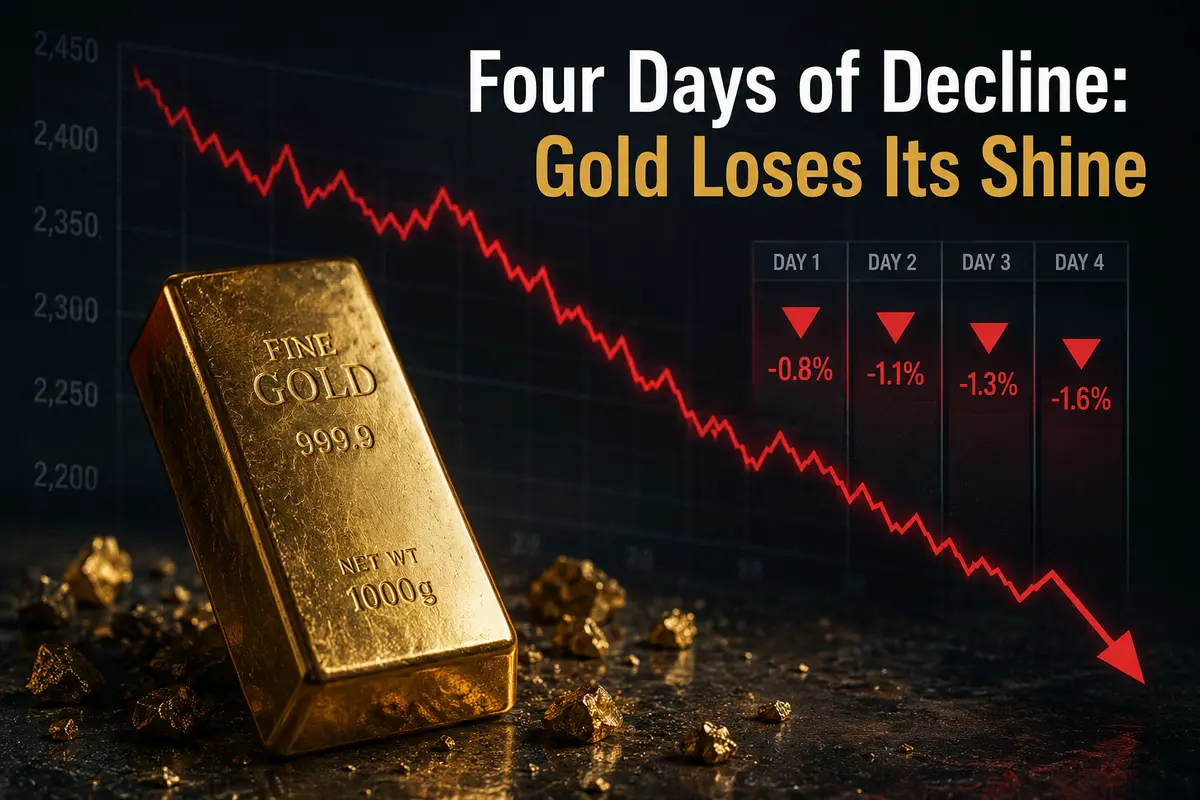
The week closes in negative territory. Four consecutive days of decline have painted an ugly technical picture, and precious metals bulls are being forced to accept that their favorite asset is currently losing the battle against macroeconomic reality.
Yet gold remains one of the most unpredictable markets in the world. One tweet, one headline, one geopolitical incident — and the entire structure of dollar strength, rate expectations, and inflation narratives could collapse like a house of cards. That unpredictability is exactly what keeps traders on edge, checking not only price charts every morning, but the news feed as well.

Comments
No comments yet. Be the first to share your thoughts!
Authentication Required
You must be logged in to post a comment.