

Why do currency pairs moves? The simple truth every forex trader should know
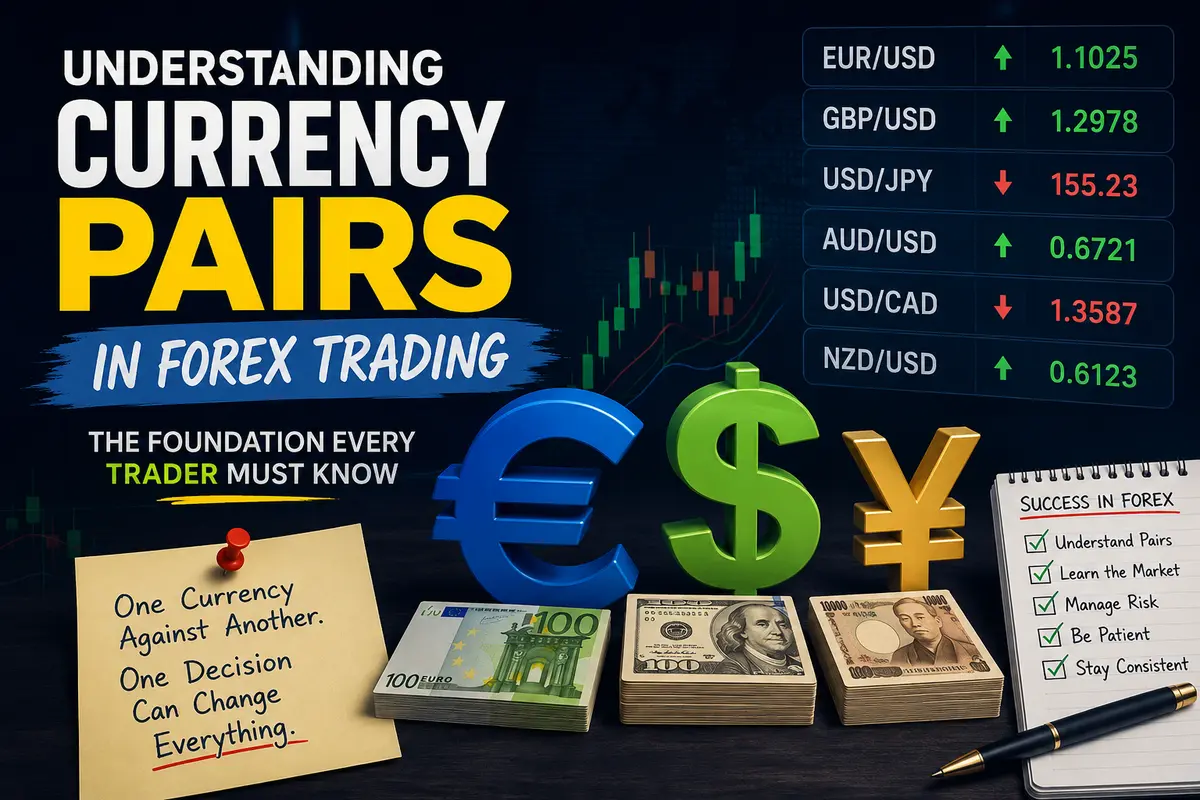
Why Do Currency Pairs Move? The Simple Truth Every Forex Trader Should Know
One question nearly made me give up on forex.
I won’t even lie.
Every time I opened my chart, the price was moving up and down like somebody was playing with it.
One minute EUR/USD was rising.
Five minutes later, it had dropped.
I just kept asking myself, “Who is pushing this market?”
At one point, I even thought there was one big man somewhere pressing Buy and Sell buttons for the whole world.
Omo, I didn’t know how funny that sounded until I started learning.
The truth is, nobody controls the market.
The market moves because millions of people are buying and selling currencies every single day.
Banks are trading.
Big companies are exchanging money.
Governments are involved.
Investment firms are entering and leaving trades.
Even small retail traders like you and me are part of the market, although our trades are tiny compared to the big players.
Imagine you’re in a busy market on Saturday morning.
Everybody wants to buy tomatoes.
Before you know it, the price goes up because demand is high.
Now imagine the next week. Tomatoes are everywhere and nobody is rushing to buy.
What happens?
The price comes down.
Forex works almost the same way.
When more people want to buy a currency, its value usually increases.
When more people want to sell it, the value usually falls.
Simple.
One thing that surprised me was finding out that news can move the market within seconds.
I remember watching a trade one afternoon.
Everything looked perfect.
Then one news report came out.
Omo, before I could even blink, one long candle appeared from nowhere.
That day taught me to always check the economic calendar before entering a trade.
Some news can completely change market direction.
Another thing that affects currency prices is interest rates.
If a country’s central bank increases interest rates, investors may move their money there because they can earn better returns.
As more people buy that country’s currency, demand increases and the currency may become stronger.
Inflation also plays a role.
When prices keep rising too fast in a country, the value of its currency can become weaker over time.
Employment reports, economic growth and even political events can also shake the market.
That’s why experienced traders don’t look at only the chart.
They also pay attention to what’s happening around the world.
One mistake beginners make is thinking every movement has one secret reason.
Sometimes the market moves because of major news.
Sometimes it’s simply because buyers are stronger than sellers at that moment.
No need to overcomplicate everything.
Another lesson I learned the hard way was trying to fight the market.
Omo, market no dey argue with anybody.
If the market is clearly moving down, forcing a buy because you “feel” it should go up can be expensive.
The market doesn’t know your opinion.
It only reacts to what buyers and sellers are doing.
Instead of arguing with price, learn to follow it.
You’ll save yourself plenty of stress.
As time goes on, you’ll begin to notice that every move on the chart tells a story.
Some stories are driven by news.
Some are driven by fear.
Others are driven by greed.
Your job as a trader isn’t to control the market.
Your job is to understand what’s happening and make smart decisions.
At the end of the day, currency pairs don’t move randomly.
There is always a reason behind the movement, even if we don’t see it immediately.
The more you study the market, the easier it becomes to understand why prices rise and fall.
So the next time you see EUR/USD flying up or crashing down, don’t panic.
Instead, ask yourself one simple question:
“What could be making traders buy or sell this currency today?”
That single habit will help you think like a trader instead of someone who is only guessing.
And trust me, in forex, understanding why the market moves will always take you further than chasing every candle you see.
One thing I wish somebody told me when I started is that you don’t have to know every reason the market moves before taking a good trade.
At first, I wanted to explain every single candle. If price went up, I would start searching Google. If it came down, I would jump to YouTube looking for one expert to explain what happened. Omo, I was stressing myself for nothing.
With time, I realised that even experienced traders don’t always know why every candle forms. Sometimes they simply respect what the chart is showing them and manage their risk.
Another mistake I made was thinking news always meant profit. Anytime I heard people say, “Big news is coming,” I would quickly open a trade, hoping to catch one massive move. Instead, the market would move so fast that my stop loss got hit before I even understood what happened. Na there my eye clear.
That’s why many traders avoid entering a few minutes before major news releases. They would rather wait for the market to calm down than gamble with their account. There’s no prize for being the first person to enter a trade.
One thing you’ll discover as you gain experience is that the market is always giving opportunities. If you miss one trade today, another setup will come tomorrow. No need to chase price because of fear of missing out. Forex has been here for years, and it will still be here tomorrow.
So focus less on predicting every move and more on understanding the market one step at a time. Patience won’t make you rich overnight, but it can keep you in the game long enough to become a consistently profitable trader. That’s the mindset every beginner should build.

Comments
No comments yet. Be the first to share your thoughts!
Authentication Required
You must be logged in to post a comment.