

Why You Keep Exiting Winning Trades Too Early
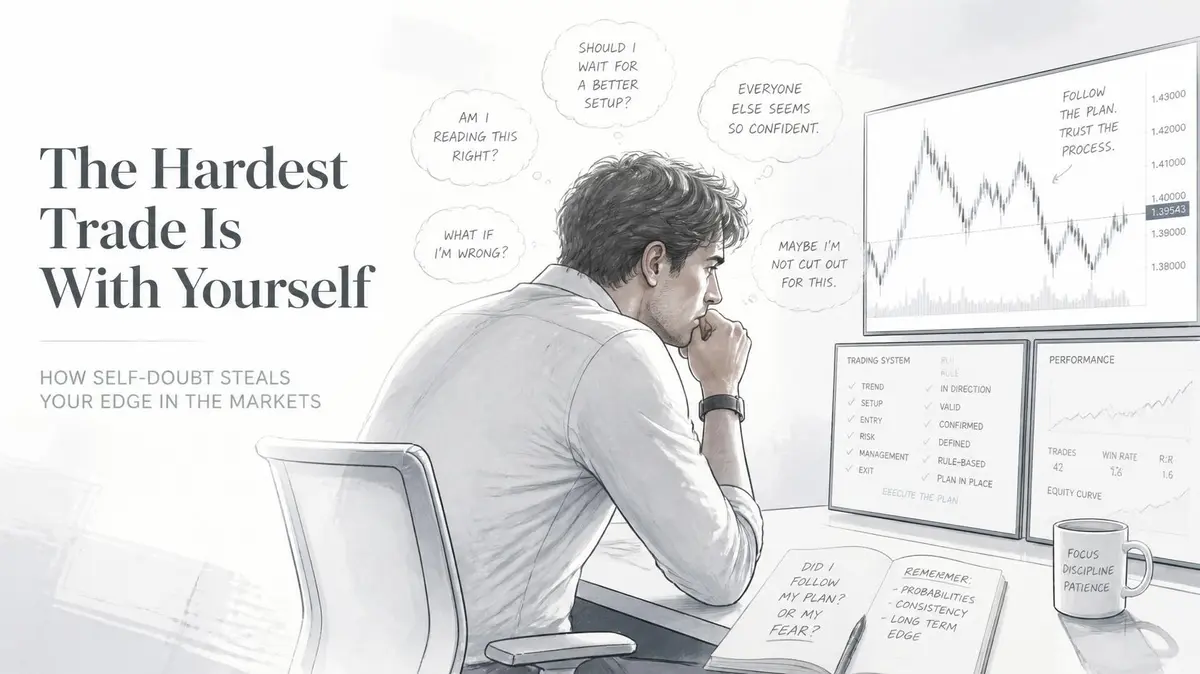
Have you ever found yourself in a trade that’s working well, yet you still close it far too soon? Not because your stop loss was hit. Not because the chart broke your setup. Just a tight feeling in the chest, a wave of anxiety, and the quiet fear that it might reverse any second. That feeling does not come from the market. It comes from inside you. And most of the time it means one clear thing—you do not fully trust your own setup.
This is one of the most common and costly patterns among traders who understand charts yet still struggle with consistency. The problem is rarely the strategy. The real issue is the gap between knowing the rules and believing them enough to stay in the trade when it matters most.
What Really Causes Premature Exits?

Many traders blame the market for shaking them out. They talk about stop hunts or sudden volatility. While those things exist, they are rarely the main reason a trader exits early. The deeper cause is internal. When belief in the system is weak, even a normal pullback starts to look dangerous. A single red candle feels like a threat. A routine retracement begins to look like a full reversal. In that moment the mind chooses the temporary relief of closing the position over the discomfort of uncertainty.
This creates a painful cycle. You exit, the trade continues in your original direction, and you watch it reach the target you had planned. The regret that follows only deepens the lack of trust. The next time a similar setup appears, the fear is stronger. Over time the trader starts switching strategies after every few losing trades, searching for a “better” system that will somehow remove the need for patience.
The Psychological Mechanism Behind Early Exits
Fear of giving back open profits is powerful. The mind treats unrealized gains as already owned money. Losing that money feels like a real loss, even though the trade is still within the original risk parameters. This is why many traders feel more stressed holding a winning trade than a losing one. Without deliberate training, the mind will always prefer the certainty of a small win over the uncertainty of a larger potential outcome.
Signs That You Don’t Trust Your Setup
Lack of trust rarely announces itself clearly. It shows up in small, repeated behaviors that slowly erode performance.
You Exit Early Even Though the rules are still intact.
The structure that justified the entry remains valid. No invalidation has occurred. Yet you close the trade because “something feels off.” This is the clearest signal that emotion has overridden the system.
You Check the chart constantly after entry.
Frequent checking is rarely about information. It is about seeking reassurance. When trust is low, the mind needs continuous confirmation that the trade is still safe.
You Feel Nervous Holding Any Open Position
Even trades moving in your favor create tension. The body stays in a mild fight-or-flight state. This physical discomfort often becomes the real reason for the early exit.
You Abandon Setups After One or Two Losing Trades
A robust system will have losing periods. When a trader discards a method after a short losing streak, it usually means the method was never fully trusted to begin with.
Where Real Confidence Comes From
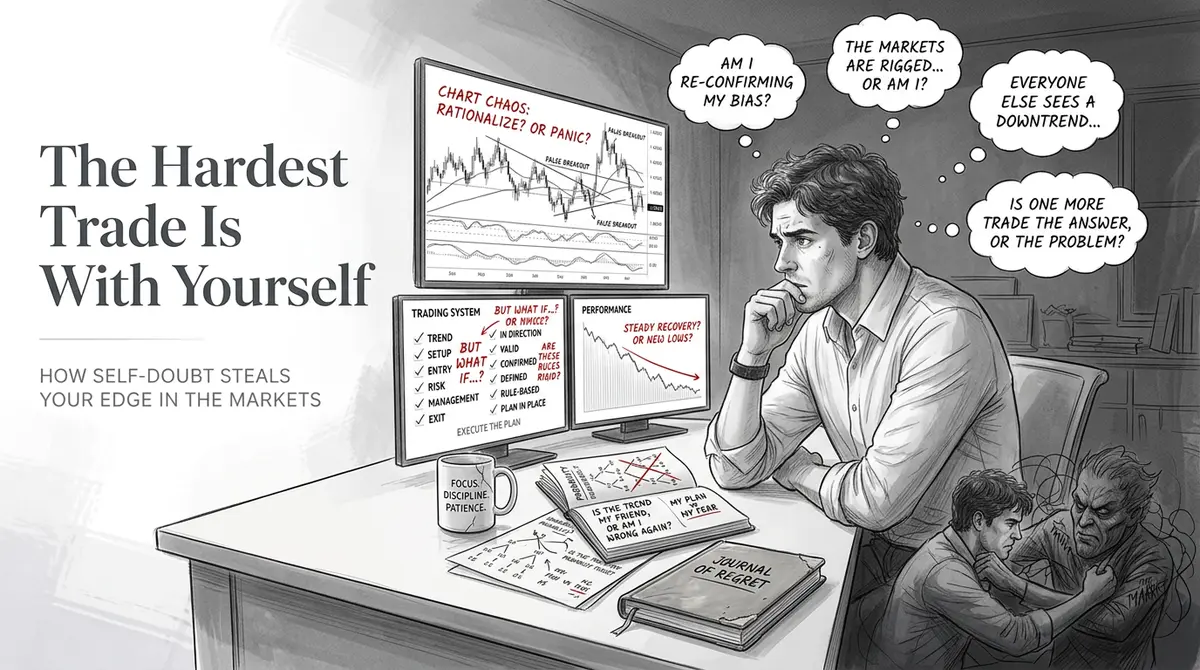
Confidence in trading is not a personality trait you can switch on. It is built through evidence, clarity, and repetition.
When you have thoroughly backtested a system, observed how it behaves across different market conditions, and then forward-tested it with real risk, a different relationship with the trade begins to form. You start to see that drawdowns are part of the process rather than proof that the system is broken. Clear rules reduce the number of decisions that have to be made under pressure. Over time, the repeated experience of following the process even when it feels uncomfortable rewires the emotional response.
Without that foundation, even an excellent strategy will be abandoned at the first sign of difficulty. The edge is not only in the entry. A large part of the edge is in the ability to stay in the trade long enough for the probability to play out.
Prafull’s Tip💡
-
You do not need a new setup. You need stronger belief in the one you already have.
-
Next time you feel the urge to exit early, pause and ask one simple question: “Did my system actually fail, or am I just scared?” If the honest answer is fear, then hold the line. This is not stubbornness. It is the deliberate choice to let the process work.
-
Real trading edge is incomplete without the ability to stay present with an open position. Entries get most of the attention, yet the majority of the money is made (or lost) in the management phase.
Conclusion
Panic exits are not market problems. They are mindset problems. The solution is not more indicators or a different timeframe. The solution is to rebuild trust in the rules you already follow.
Believe in the setup enough to let it breathe. Follow the rules even when emotion says otherwise. Allow the market the space to deliver the outcome the probabilities suggest. Your trade does not need your constant protection. It needs your disciplined presence.
Have you ever closed a trade early out of fear and then watched it hit the target without you? Almost every trader has. Share what that experience taught you — the lessons from those moments are often more valuable than the wins themselves.

Comments
No comments yet. Be the first to share your thoughts!
Authentication Required
You must be logged in to post a comment.