

Gold Market on April 29, 2026: In-Depth Fundamental Analysis and Technical Forecast
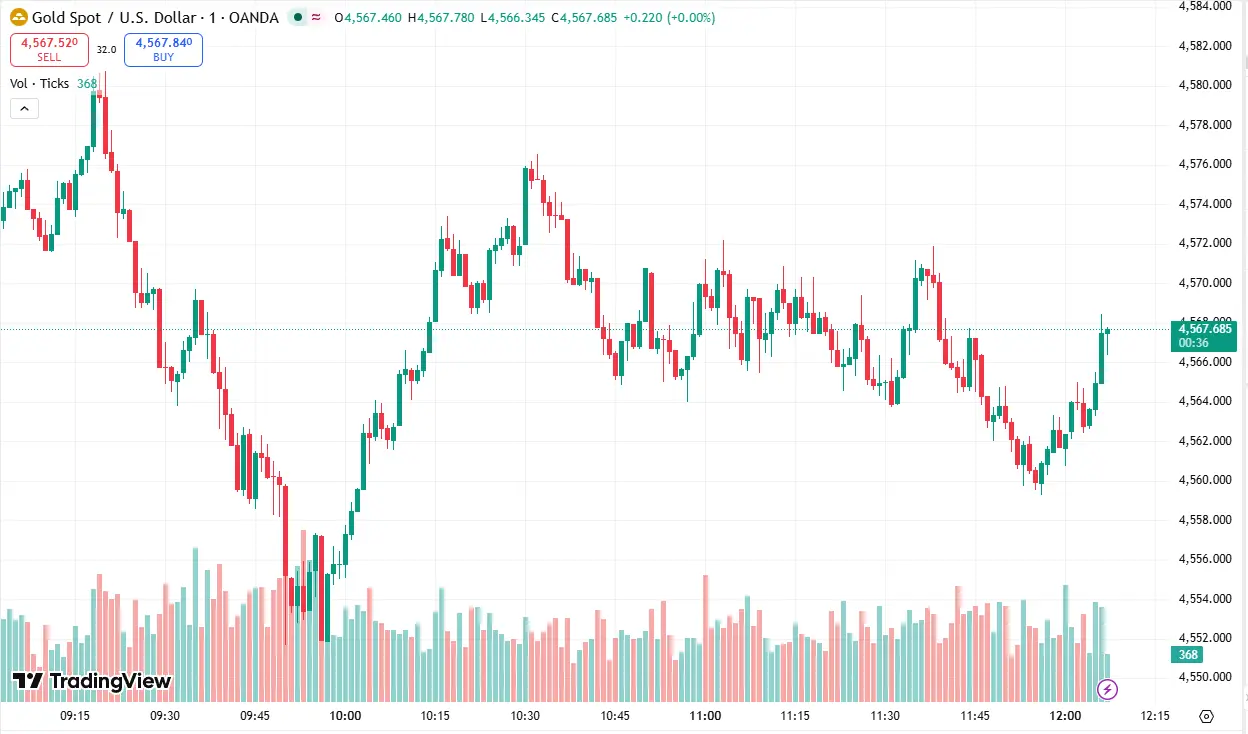
Today, April 29, 2026, the gold market (XAUUSD) remains under pressure from sellers. Traders’ primary focus is on the US Federal Reserve’s interest rate decision, as well as the geopolitical situation in the Middle East. Trading is taking place around the $4,600–$4,620 per troy ounce level following a sharp decline the day before. Let’s examine the key factors that will determine the precious metal’s dynamics in the short term.
Fundamental Analysis: Geopolitics and Monetary Policy
The main fundamental factor weighing on gold remains the geopolitical crisis in the Middle East. Negotiations between the US and Iran on ending the conflict and unblocking the Strait of Hormuz have reached an impasse. According to sources, President Donald Trump is not satisfied with Iran’s new proposal, which excludes discussion of its nuclear program. This is keeping energy prices elevated: Brent crude is firmly entrenched above $100 per barrel, and the rising cost of energy, in turn, is fueling global inflation expectations—a key negative factor for gold as a non-interest-bearing asset.
It is precisely the fear of accelerating inflation that is shifting central banks’ rhetoric. Although the market is almost 100% certain that the Fed will keep rates unchanged today in the 5.25–5.50% range, the main intrigue lies in the commentary from Fed Chair Jerome Powell and the updated economic projections. Rising oil prices are forcing the regulator to abandon ultra-dovish rhetoric. Market participants are hastily revising their expectations: anticipated Fed rate cuts in 2026 are now priced at just 5 basis points, virtually ruling out any monetary policy easing this year. Such a “hawkish” reassessment reduces gold’s appeal while simultaneously strengthening the US currency.
Demand statistics are creating additional pressure. According to data, investment demand for gold dropped sharply in the first quarter of 2026. Inflows into gold ETFs fell by 73% compared to the same period last year, and a net capital outflow of $11.8 billion was recorded in March. This indicates that large institutional investors are gradually reducing their gold positions, reallocating funds to dollar-denominated assets against the backdrop of deteriorating prospects for monetary stimulus.
Technical Analysis: Bearish Momentum Accelerates
The technical picture also suggests further declines. On the 4-hour chart, gold has firmly settled below the key moving averages EMA(50) and EMA(200), which have formed a “death cross”—a classic bearish signal indicating seller dominance. The structure of price highs and lows is consistently downward: each local peak is lower than the previous one, which intensifies the pressure on prices.
The breach of the important support area around $4,670–$4,680 has paved the way for testing lower levels. The next significant target for sellers is the $4,550–$4,560 zone, which was already partially tested during the Asian session. This is where the critical 61.8% Fibonacci retracement level of the last upward move lies on the daily chart, giving this area particular significance.
Momentum indicators also point to buyer weakness. The Relative Strength Index (RSI) on the 4-hour timeframe is in the oversold zone but continues to hold below the 40 mark, preventing any talk of a reversal and confirming the bearish trend. The stochastic oscillator is attempting to turn upward, but without confirmation in the form of a break above the $4,650 resistance level, any bounces will be purely corrective in nature and used by sellers to add to short positions.
Trading Recommendations and Scenarios for Today
The primary scenario for April 29 assumes a continuation of the downward movement, provided the Fed confirms its commitment to tight monetary policy. The immediate bearish target is the $4,550 level, a break below which would open the path to $4,500 per ounce. The $4,580 area could act as intermediate support, but the strength of sellers and the overall fundamental backdrop do not warrant counting on a sustained bounce from this mark.
An alternative scenario could only materialize in the event of unexpectedly dovish comments from Jerome Powell or positive news from the US-Iran negotiations. In such a development, a corrective bounce in gold to the $4,650–$4,670 zone is possible, where traders should closely monitor the price reaction and consider resuming short positions from this resistance level.
Brief Forecast: Selling gold remains the priority, with a target of $4,550–$4,500, contingent on hawkish Fed rhetoric. Rising yields and a strengthening US dollar against the backdrop of inflation risks will continue to pressure the precious metal, while geopolitical uncertainty only partially curbs the decline. Under these conditions, gold remains “bearish,” and a sell-on-rallies strategy is the most justifiable in terms of the risk-to-reward ratio.

Comments
No comments yet. Be the first to share your thoughts!
Authentication Required
You must be logged in to post a comment.