

Bitcoin on the Edge: $64,500, Iran, and the Bigger Game
Thursday: The Crypto Market Freezes in Anticipation
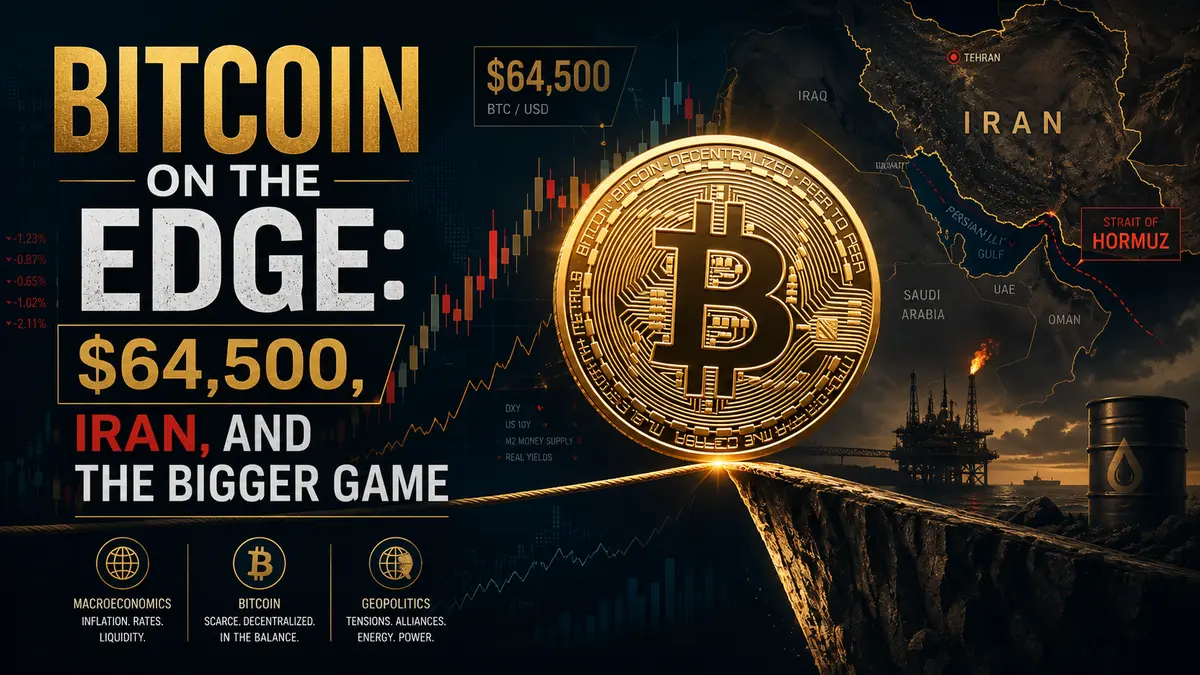
Bitcoin BTCUSD ... appeared frozen in indecision on Thursday. The world’s largest cryptocurrency slipped only slightly—less than 1%—and settled at around $64,800. This followed several days of attempts to climb out of the hole it had fallen into earlier this month. Although Bitcoin has gained nearly 1.6% over the past week, the mood across the market is far from triumphant.
The problem is that cryptocurrencies are currently caught between two opposing forces. On one side are softer US inflation figures, which suggest that further interest-rate hikes may be put on hold, creating a more favorable environment for risk assets. On the other side is geopolitics, which is becoming more alarming by the day. Iran, military strikes, and the Strait of Hormuz are keeping investors on high alert and preventing them from celebrating even positive macroeconomic news.
Two Opposing Forces: Inflation and the Middle East
Let us examine exactly what is driving prices.
First, the good news: US consumer and producer inflation figures for June came in below expectations. For the market, this means that the Federal Reserve may be able to avoid rushing into further interest-rate hikes.
This is critically important for Bitcoin, which does not generate interest income. High interest rates have always put pressure on cryptocurrencies because investors prefer to keep their money in US dollar-denominated assets that offer attractive yields rather than in volatile digital assets. That source of pressure has now weakened.
However, a second and far more troubling factor has entered the picture. Exchanges of military strikes between the United States and Iran have continued for five consecutive days. Oil prices have risen, triggering a mechanism as old as the markets themselves: higher oil prices increase inflation expectations, and rising inflation may push the Federal Reserve toward tighter monetary policy.
It is a chain reaction, and it appears to frighten investors even more than the geopolitical developments themselves.
To make matters worse, equity markets are witnessing a sell-off in the semiconductor sector, adding another layer of nervousness. While Bitcoin struggles to remain afloat, the entire financial world is watching closely to see how events in the Persian Gulf unfold.
Strategy Inc.’s Strategy: A Long-Term Bet or a Fight for Survival?
A separate but extremely important story is developing around Strategy Inc., formerly known as MicroStrategy, which has become the world’s largest corporate holder of Bitcoin.
The company’s CEO, Phong Le, gave an interview to Bloomberg TV this week, and market participants quickly began dissecting his comments.
His statement combined confidence with several worrying signals. Le said that the company remained a long-term buyer of Bitcoin and that he personally intended to remain its largest buyer for the foreseeable future.
However, he also made one remark that caused many investors to stop and think. According to Le, risks to the company’s treasury model would emerge only if Bitcoin fell to between $8,000 and $10,000.
On the one hand, this sounds reassuring. Current prices remain far above those levels, suggesting that the company’s treasury position is secure. On the other hand, the statement acknowledges that the company is actively evaluating the risk of a major Bitcoin collapse and has included such price levels in its calculations.
There is another important detail. This month, Strategy sold more than $215 million worth of Bitcoin. At the same time, the company has not purchased any new coins for nearly a month.
That is unusual for a company that has historically increased its holdings on a regular basis. Bitcoin purchases had previously become an almost monthly ritual. Now, however, there is a pause—and that is raising questions.
Some analysts see this as a sign that the company’s strategy may have reached its limits. Strategy borrowed money against its Bitcoin holdings and raised capital through convertible bonds, all with the goal of expanding its cryptocurrency portfolio.
But the market environment has changed. Interest rates have risen, and servicing the company’s debt has become more expensive. Selling part of its Bitcoin holdings may therefore be a necessary step to repay some obligations or simply maintain sufficient liquidity in case conditions deteriorate.
If Strategy begins selling its reserves systematically, it could have a significant negative impact on the market. The company owns more than 400,000 Bitcoins. Even a relatively small portion of that volume entering the market could cause prices to fall sharply.
So far, the sales have been moderate, but investors remain cautious.
Altcoins: Who Is Rising and Who Is Falling?
Against this backdrop, altcoins are showing mixed performance.
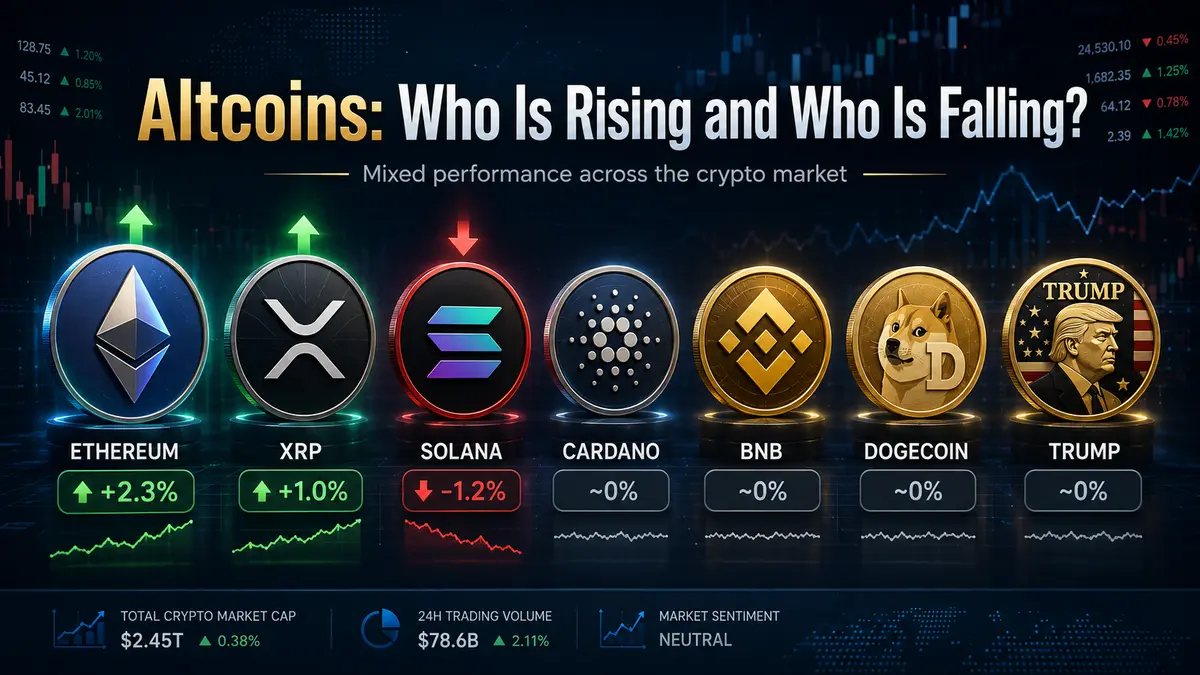
Ether, the second-largest cryptocurrency, gained 2.3% and rose to $1,926. That is not a poor result, but it is hardly impressive either.
XRP increased by almost 1%, which is also relatively modest, particularly given that the token has its own ongoing story involving court cases and regulators that could potentially provide stronger reasons for price growth.
Solana, by contrast, fell by 1.2%. Cardano and BNB remained virtually unchanged. Memecoins such as Dogecoin and the “official” TRUMP token also showed little to no movement.
The market is clearly not in the mood to take excessive risks or chase quick profits.
It is particularly interesting that Solana, which had been performing strongly in recent months, is now doing worse than many of its competitors. This may reflect broader nervousness surrounding the technology sector.
After all, Solana is not merely a cryptocurrency. It is an entire ecosystem, and its long-term success depends on the development and adoption of decentralized applications.
What Comes Next?
Bitcoin is currently like a tightly stretched string.
On the one hand, the macroeconomic environment is becoming more favorable. Softer inflation figures reduce the threat of further monetary tightening. In theory, this should support Bitcoin, as investors begin searching for alternatives to traditional assets.
On the other hand, geopolitical developments are undermining confidence. The conflict between the United States and Iran could escalate into something much larger, and no one knows how far markets could fall if that happens.
Oil prices are already rising. If they continue to climb, they could trigger another wave of inflation, once again making cryptocurrencies less attractive.
Strategy Inc. adds another layer of uncertainty. Even if the company does not begin selling its reserves on a large scale, the absence of new purchases may itself signal that the market’s largest corporate Bitcoin holder is waiting on the sidelines.
And if the biggest player is waiting, smaller investors are likely to become more cautious as well.
Technical analysts note that Bitcoin has been unable to establish a firm position above $66,000, but it has also resisted falling below $60,000.
This reflects a state of uncertainty: buyers and sellers currently appear to be in roughly equal positions. Once one side gains enough supporting arguments, a sharp price movement is likely to follow. The only question is when.
In the short term, much will depend on two factors: developments in the Middle East and Strategy’s next moves.
If the conflict begins to subside and the company resumes its Bitcoin purchases, the cryptocurrency could make a strong move higher. If the opposite happens, the market may be forced to search for a new bottom.
Crypto investors are holding their breath. For now, Bitcoin is holding its ground—but no one knows how long that will last.

Comments
No comments yet. Be the first to share your thoughts!
Authentication Required
You must be logged in to post a comment.