

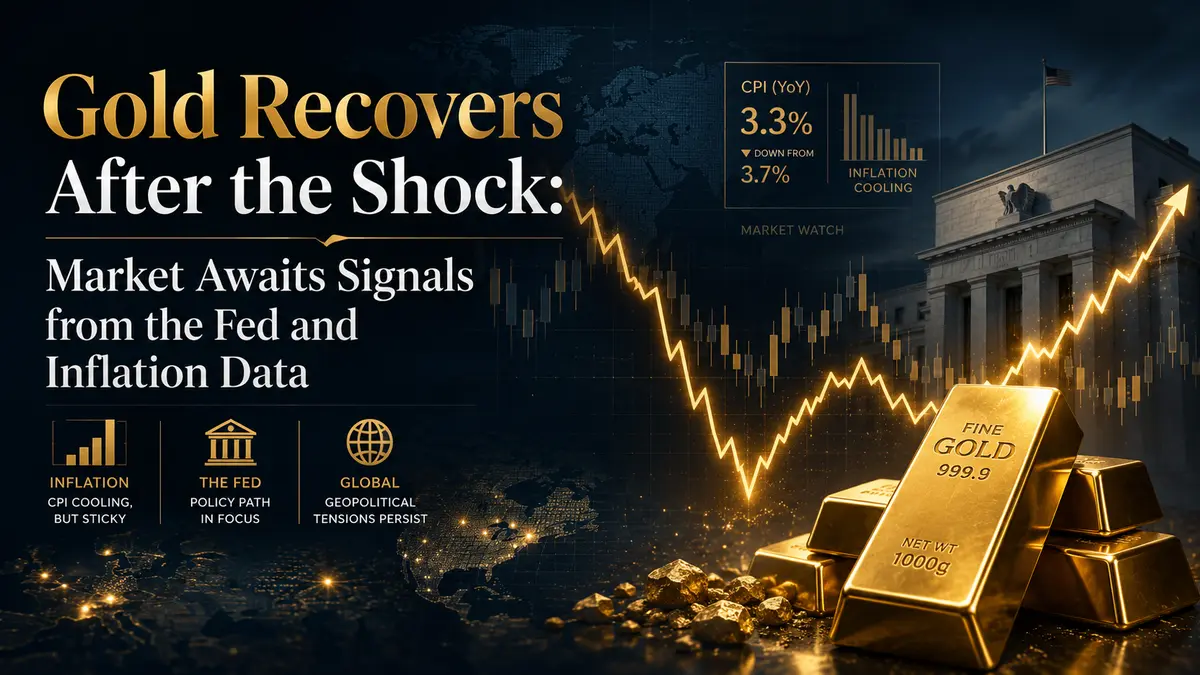
Gold Recovers After the Shock: Market Awaits Signals from the Fed and Inflation Data
Introduction: A Breather After the Sell-Off
Tuesday brought long-awaited relief to gold investors. After plunging nearly 3% on Monday—the sharpest one-day decline in more than a month—the precious metal began to recover. XAU/USD rose by 0.54% to $4,022.87 per ounce, while gold futures gained 0.59% to reach $4,029.22. Silver and platinum also moved higher, rising by 0.63% and 0.42%, respectively.
However, this increase does not represent a confident recovery but rather a cautious pause. The market has entered a holding pattern ahead of two key events: the release of US inflation data and testimony by Federal Reserve Chair Kevin Warsh before Congress. These events are likely to determine the direction of gold prices over the coming weeks.
Tensions in the Middle East continue to escalate, while comments from Federal Reserve Governor Christopher Waller have added fuel to the fire by strengthening expectations of a possible interest rate hike. In this article, we will examine all the factors currently affecting gold and attempt to determine where the precious metal may move in the coming days.
The Middle East Conflict: A Double Blow to Gold
Escalation and Transit Fees
President Trump announced the reinstatement of a blockade on Iranian shipping in the Persian Gulf and described Washington as the “Guardian of the Strait of Hormuz.” Moreover, he proposed introducing a 20% fee on cargo passing through this strategically important waterway.
The announcement represented a sharp escalation of US pressure on Tehran and raised doubts about the durability of the fragile ceasefire reached in June. Markets reacted immediately: oil prices continued to rise, while investors began reassessing their inflation expectations.
Inflation Risks
Rising energy prices are reviving concerns that higher energy costs could fuel inflation and complicate the Federal Reserve’s efforts to return price growth to its target level.
For gold, this creates a double blow. On the one hand, rising inflation expectations increase the appeal of gold as a store of value. On the other hand, they strengthen expectations of tighter monetary policy, putting pressure on the precious metal through higher bond yields and a stronger US dollar.
A Double-Edged Sword
The inflation outlook represents a double-edged sword for the precious metal. Rising energy costs may increase gold’s appeal as a defensive asset. However, if they also reinforce expectations of tighter monetary policy, the resulting increase in bond yields and the US dollar may outweigh that support.
This is exactly what happened on Monday, when gold plunged by almost 3%. Investors were concerned not so much about the geopolitical conflict itself as about its potential consequences in the form of tighter Federal Reserve policy.
Hawkish Signals from the Federal Reserve
Waller Warns of Possible Rate Hikes
Federal Reserve Governor Christopher Waller said that policymakers may need to raise interest rates in the near future if underlying inflation continues to indicate widespread price pressures.
The statement added further pressure to gold. Waller is known for his hawkish stance, and markets interpreted his remarks as a signal that the Federal Reserve is prepared to act aggressively if inflation fails to decline.
Market Expectations
ANZ analysts noted that the latest escalation in the Middle East had strengthened expectations that higher energy prices could keep inflation elevated, increasing the likelihood of tighter monetary policy. According to the brokerage, markets are currently pricing in a 43% probability of a rate hike at the Federal Reserve’s July 28–29 meeting.
This is a significant figure. Just one month ago, most investors were convinced that the monetary tightening cycle had ended. Now, a considerable share of the market believes that another rate increase is possible, putting additional pressure on gold.
Opportunity Costs
Higher borrowing costs typically reduce the attractiveness of non-yielding assets such as gold by increasing the opportunity cost of holding the precious metal. When interest rates rise, investors may find it more profitable to hold income-generating debt instruments rather than gold, which does not provide interest or dividend payments.
In addition, higher interest rates support US Treasury yields and the US dollar, creating further pressure on the precious metal.
Technical Overview: Key Levels to Watch
Recovery from a Two-Week Low
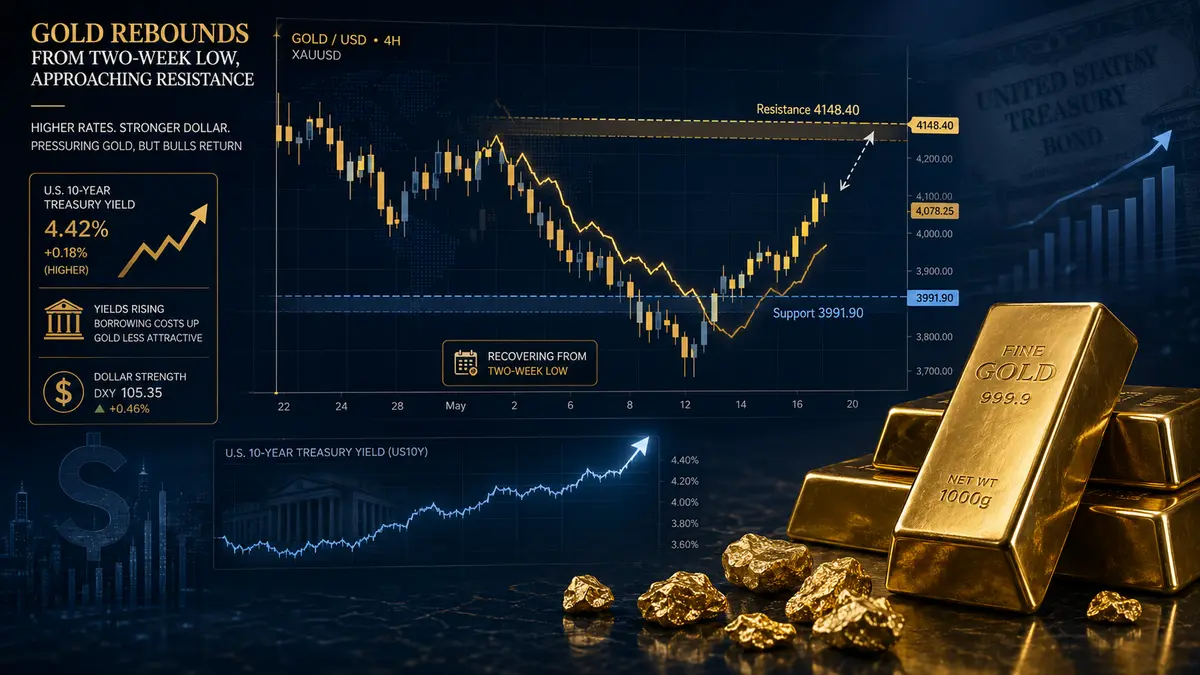
Gold recovered after briefly falling to a two-week low. The metal temporarily dropped below $4,000 per ounce for the first time in three weeks before attracting buyers and rebounding.
Holding above the support level of $3,991.90, as indicated by morning trading data, was a critical development. Had the metal broken below this level, the decline could have continued toward the next support zones.
Resistance as the Next Target
Gold must now overcome resistance at $4,148.40. A successful breakout above this level could open the way toward $4,200 and beyond, potentially extending as far as the 200-day moving average near $4,491.
For now, however, this remains only a target. A sustainable recovery will require positive signals from the Federal Reserve and inflation data that do not disappoint the market.
Investors Await Key Signals
Tuesday’s CPI Data
Investors are awaiting the release of the US Consumer Price Index for June. Headline inflation is expected to slow on a monthly basis, while the core index is projected to remain at approximately 2.8%–2.9% year over year.
The data will be a key driver for gold. If inflation exceeds expectations, it will reinforce hawkish expectations and put pressure on the precious metal. If inflation comes in below forecasts, the recovery may continue.
Warsh’s Testimony
The second major event will be Federal Reserve Chair Kevin Warsh’s testimony before Congress. This will be his first appearance in his new role, and markets will be listening closely to every word.
Should Warsh signal a willingness to tighten monetary policy further, gold could come under renewed pressure. However, if his comments are more cautious or contain hints of policy easing, the precious metal may receive additional support.
Silver and Platinum Follow Gold Higher
Silver Recovers
XAG/USD rose by 0.63% to $58.02 per ounce. Silver traditionally follows gold but is also influenced by industrial demand. Rising energy prices could negatively affect industrial activity and weigh on silver. Nevertheless, its current recovery is moving in line with gold.
Platinum Moves Higher
XPT/USD gained 0.42% to reach $1,610.82. Like silver, platinum is sensitive to industrial demand, while also functioning as a precious metal. Its recovery reflects a broader improvement in sentiment across the precious metals market.
Market Psychology: Fear and Hope
Why Gold Fell on Monday
Monday’s decline of almost 3% was the sharpest one-day drop in more than a month. The fall occurred despite the escalation of the conflict in the Middle East, which would normally be expected to support gold as a safe-haven asset.
The apparent contradiction can be explained by the fact that investors were less concerned about the war itself than about its inflationary consequences. Rising energy prices and Waller’s hawkish comments created expectations of tighter monetary policy, putting pressure on the precious metal.
The Recovery as a Breather
The current recovery appears to be more of a technical correction than a genuine trend reversal. Investors are taking profits following the sharp decline but remain unwilling to open large long positions before receiving clearer signals.
The market is currently in a wait-and-see mode. Inflation data and Warsh’s testimony will serve as catalysts that determine the next direction of price movement.
What Comes Next: Possible Market Scenarios
Bullish Scenario for Gold
If inflation data comes in below expectations and Warsh signals a willingness to ease monetary policy, gold may continue its recovery. Under this scenario, the metal could test resistance at $4,148.40 and potentially break above it.
Further geopolitical uncertainty could also support gold, particularly if safe-haven demand begins to outweigh inflation-related concerns.
Base-Case Scenario
The more likely scenario is that the current uncertainty will persist. Inflation may remain at a level that does not require immediate action from the Federal Reserve but also does not justify discussions of monetary easing. Warsh may deliver balanced remarks without making any strong statements.
In this case, gold could trade within a range of $4,000–$4,150, reacting to developments in the Middle East and incoming macroeconomic data.
Bearish Scenario
If inflation exceeds expectations and Warsh confirms the Federal Reserve’s readiness to tighten monetary policy, gold could decline again. A breakout below the $3,991.90 support level would open the way toward $3,800–$3,900 and potentially lower.
Under this scenario, investors could begin exiting gold positions and reallocating capital toward yield-generating US dollar-denominated assets.
Conclusion: Awaiting Clear Signals
Gold’s recovery after falling by almost 3% on Monday is a positive signal, but it should not be misleading. The market remains highly uncertain, and a sustainable recovery will only be possible if clear signals emerge from the Federal Reserve and the latest inflation data.
Tensions in the Middle East continue to escalate, while Waller’s hawkish comments are strengthening expectations of tighter monetary policy. This creates two opposing forces for gold: inflation expectations provide support, while expectations of monetary tightening put pressure on the metal.
The key events of the week—the inflation report and Warsh’s testimony—will determine gold’s future trajectory. Positive signals could allow the metal to continue recovering and test resistance at $4,148.40. Negative signals could lead to a renewed decline.
Investors should remain cautious and be prepared for multiple possible scenarios. The current recovery represents hope for improvement, but not yet confidence in a sustainable rebound. Important events lie ahead, and they will determine the fate of the precious metal over the coming weeks.

Comments
No comments yet. Be the first to share your thoughts!
Authentication Required
You must be logged in to post a comment.