

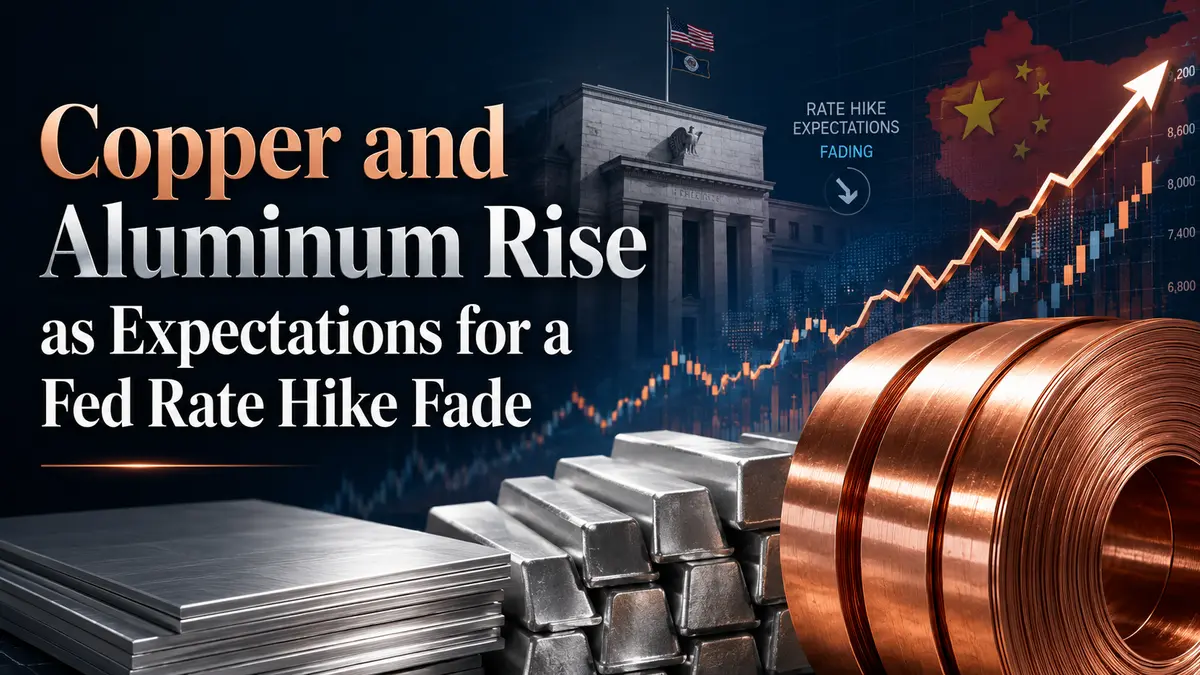
Copper and Aluminum Rise as Expectations for a Fed Rate Hike Fade
Introduction: Metals Step Out of the Shadows
Monday. The London Metal Exchange opens the week with confident growth. Copper is rising for the third day in a row, interrupting a two-week losing streak that had made investors nervous. Aluminum continues to recover from a four-month low, adding another 0.5% and returning to levels that had seemed lost forever.
What has changed? The main driver is the shift in expectations regarding the Federal Reserve’s policy. Fed Chair Kevin Warsh said last week that price risks are declining. This became a signal for markets, which immediately reduced their bets on tighter monetary policy. And for industrial metals, which are highly sensitive to the macroeconomic backdrop, this came as a long-awaited relief.
Another factor is also at play — China. Funds in China are beginning to flow into shares and futures of metals producers in anticipation of solid first-half earnings. Several Chinese companies are expected to present preliminary results in the coming weeks, and the commodity rally, from gold to copper, is expected to support their profits compared with last year.
Copper is trading at $13,402.50 per ton, gaining 0.3%. Aluminum is at $3,107 per ton, up 0.5%. These are not spectacular figures, but they matter as a shift in trend. After weeks of decline, when metals were losing 1–2% per day, even a small gain feels like a victory.
Let’s break down what is really behind this recovery, why the Fed is changing its rhetoric, and how Chinese investors are influencing the industrial metals market.
The Fed: From Hawkish Rhetoric to Dovish Signals
Kevin Warsh Acknowledges Declining Price Risks
The key event that changed sentiment in metals markets was a statement by Fed Chair Kevin Warsh last week. He acknowledged that price risks are declining. This may sound like a technical phrase, but in the world of central banks, it has a very specific meaning.
Warsh, who sounded hawkish during his debut speech in Sintra and appeared ready for further rate hikes, is now saying that inflation risks are weakening. This does not mean he is ready to cut rates, but it does mean that the probability of further increases is decreasing.
Markets reacted immediately. The CME FedWatch tool, which tracks the probability of rate changes, recorded a decline in expectations for tightening. While a month ago the probability of a rate hike this year was estimated at more than 60%, it has now fallen below 40%.
For industrial metals, this is important because high rates mean a strong dollar, and a strong dollar puts pressure on commodity prices. When tightening expectations weaken, the dollar softens, making metals cheaper for holders of other currencies. This increases demand and pushes prices higher.
Why the Fed Is Changing Its Rhetoric
The reasons for the shift in rhetoric are clear. First, inflation data in recent months has shown a slowdown. The harmonized consumer price index in the United States is declining, although it remains above the 2% target. Second, the labor market is beginning to cool. June employment data came in weaker than expected, and if this trend continues, the Fed will not be able to ignore recession risks.
Third, the geopolitical situation is stabilizing. The peace agreement between the United States and Iran has reduced supply-side inflation risks. Oil prices have returned to pre-war levels, commercial shipping is recovering, and this is easing price pressure.
Warsh, who began his tenure with tough statements, is now forced to acknowledge that reality has changed. He is not talking about rate cuts, but he is making it clear that the pause could be prolonged. And for markets, that is almost as good as a cut.
The China Factor: Capital Flows Into Metallurgy
Funds Move Into Producers’ Shares
While the Fed is changing its rhetoric, a separate story is unfolding in China. Funds are beginning to flow into shares of metallurgical companies and metals futures. The reason is the expectation of solid producer profits for the first half of the year.
The commodity rally we have seen this year, especially in gold and copper, has supported the revenues of mining companies. When metal prices rise, producers’ profits increase even if production volumes remain unchanged. And if volumes also rise, the effect doubles.
Several Chinese companies are expected to release preliminary results in the coming weeks, and the market is anticipating positive surprises. This is attracting speculative capital that is looking for quick growth opportunities.
For metals, this creates additional demand. When funds buy shares of metals producers, they often hedge their positions through futures on the metals themselves. This creates additional upward pressure on prices.
Profit Expectations and Their Impact on the Market
Chinese companies, especially in the mining sector, have benefited from rising commodity prices. Copper, aluminum, gold — all these metals increased in price during the first half of the year, and this was reflected in producers’ financial results.
The market is now pricing in expectations that the reports will be strong. This creates a positive backdrop for all metals, including copper and aluminum. Investors are buying not only shares, but also the metals themselves, betting that the rally will continue.
This effect may be temporary, but it is working right now. And as long as funds continue to flow into the metallurgical sector, metal prices will remain supported.
Technical Picture: Copper and Aluminum on the Road to Recovery
Copper: Third Day of Growth
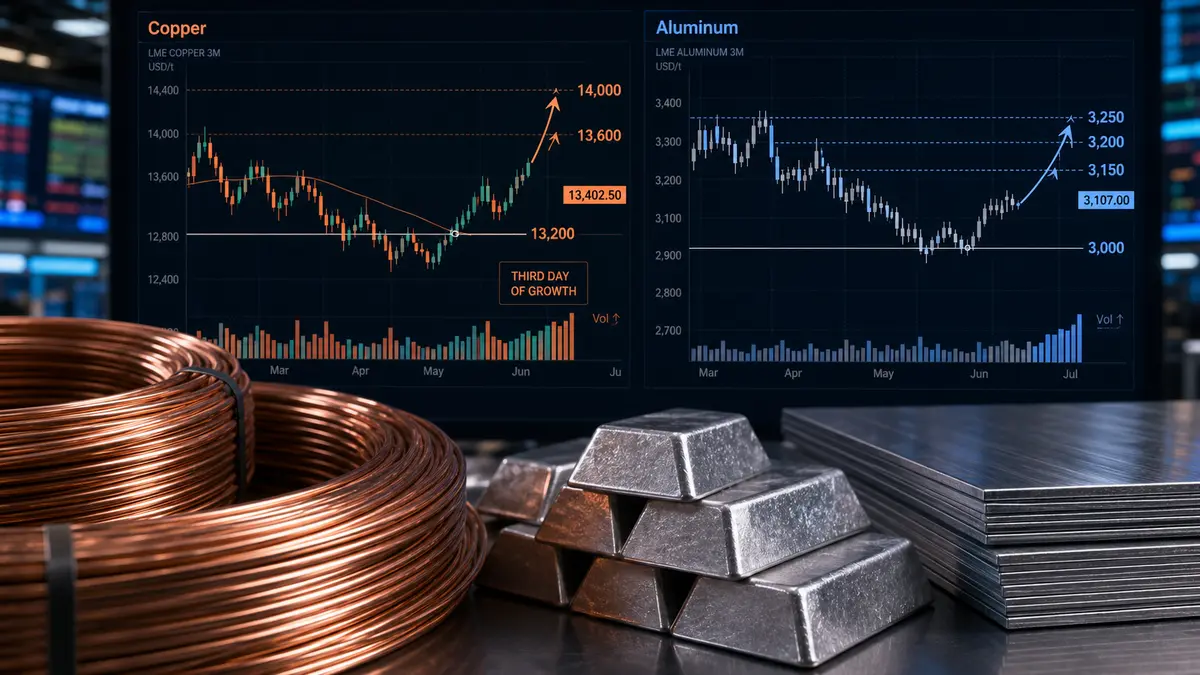
Copper is rising for the third consecutive day, marking the first such run in several weeks. Three-month LME futures rose 0.3% to $13,402.50 per ton, extending gains after adding 0.7% in the previous session.
Technically, this looks like a rebound from an important support level. Copper found a bottom around $13,200 and bounced off it. The next resistance level is now at $13,600, followed by $14,000.
If copper manages to consolidate above $13,600, this will open the way to higher levels. But if it fails to break through this resistance, we may see a return to $13,200 or even lower.
Trading volumes are rising, which indicates that buyers are returning to the market. This is a positive signal that may support further growth.
Aluminum: Recovery From a Four-Month Low
Aluminum gained 0.5% to $3,107 per ton, continuing its recovery from a four-month low. The drop in aluminum was especially sharp: from highs around $3,500 to lows near $3,000. The reason was expectations of renewed supplies from the Middle East after the signing of a peace agreement.
Now that the decline caused by those expectations has already happened, the market is beginning to search for balance. The current rise in aluminum is a technical correction that may develop into a more sustainable recovery.
The next resistance level for aluminum is at $3,150. If aluminum manages to consolidate above this level, it may continue rising toward $3,200 and $3,250.
Other Metals: Zinc, Nickel, and Tin
Zinc and Nickel Follow the Trend
Zinc and nickel are also showing gains, although not as strong as copper and aluminum. These metals are more niche and depend on specific industrial sectors, but the overall macroeconomic backdrop is supporting them.
Nickel, which is often used in electric vehicle batteries, is benefiting from growing demand in this industry. Although the electric vehicle market is facing challenges in the United States, it continues to grow in China and Europe.
Zinc, used in steel galvanizing, depends on the construction sector. And China’s construction sector remains weak, limiting zinc’s growth potential.
Tin: A Modest Participant
Tin has also risen, but less noticeably. This metal has limited applications and is less dependent on macroeconomic factors. Its growth is more a reflection of the general improvement in sentiment across the metals market.
What Awaits Metals in the Coming Weeks
The Fed and the Dollar
The main factor for metals will remain Fed policy and the dollar exchange rate. If Warsh continues to soften his rhetoric and economic data remains weak, the dollar may weaken, which would support metals.
But if inflation or employment data comes in strong, the Fed may return to a hawkish tone. In that case, the dollar will strengthen, and metals may come under pressure again.
China and Demand
The second key factor is demand in China. If the Chinese economy continues to recover and funds continue to flow into the metallurgical sector, this will support prices.
But if China’s economy slows or problems in the real estate sector worsen, demand for metals may fall, and prices may begin to decline again.
Geopolitics
The geopolitical situation also remains an important factor. The peace agreement between the United States and Iran has reduced risks, but the fragility of this agreement remains. Any deterioration in the situation could once again push oil prices higher and, indirectly, affect metals.
Conclusion: Metals Step Out of the Shadows
Copper and aluminum are rising as expectations for a Fed rate hike fade. This is not a random move, but the result of a shift in the macroeconomic backdrop that had been pressuring metals in recent weeks.
Fed Chair Kevin Warsh acknowledged declining price risks, and this changed market perception. Investors reduced their bets on policy tightening, and the dollar began to weaken. For industrial metals, this became a long-awaited relief.
Chinese funds are also supporting the market by flowing into shares of metals producers and metals futures. Expectations of solid producer profits for the first half of the year are creating additional demand.
Copper is trading at $13,402.50 per ton, while aluminum stands at $3,107. These are not record levels, but they matter as a shift in trend. After weeks of decline, metals are finally finding a bottom and beginning to recover.
In the coming weeks, everything will depend on Fed policy, demand in China, and the geopolitical situation. If these factors remain favorable, metals may continue to rise. But if negative signals appear, the current recovery may prove temporary.
For now, however, metals are stepping out of the shadows. Copper and aluminum are rising, giving hope that the worst is behind us.

Comments
No comments yet. Be the first to share your thoughts!
Authentication Required
You must be logged in to post a comment.