

An Unexpected Surge on the Tokyo Stock Exchange
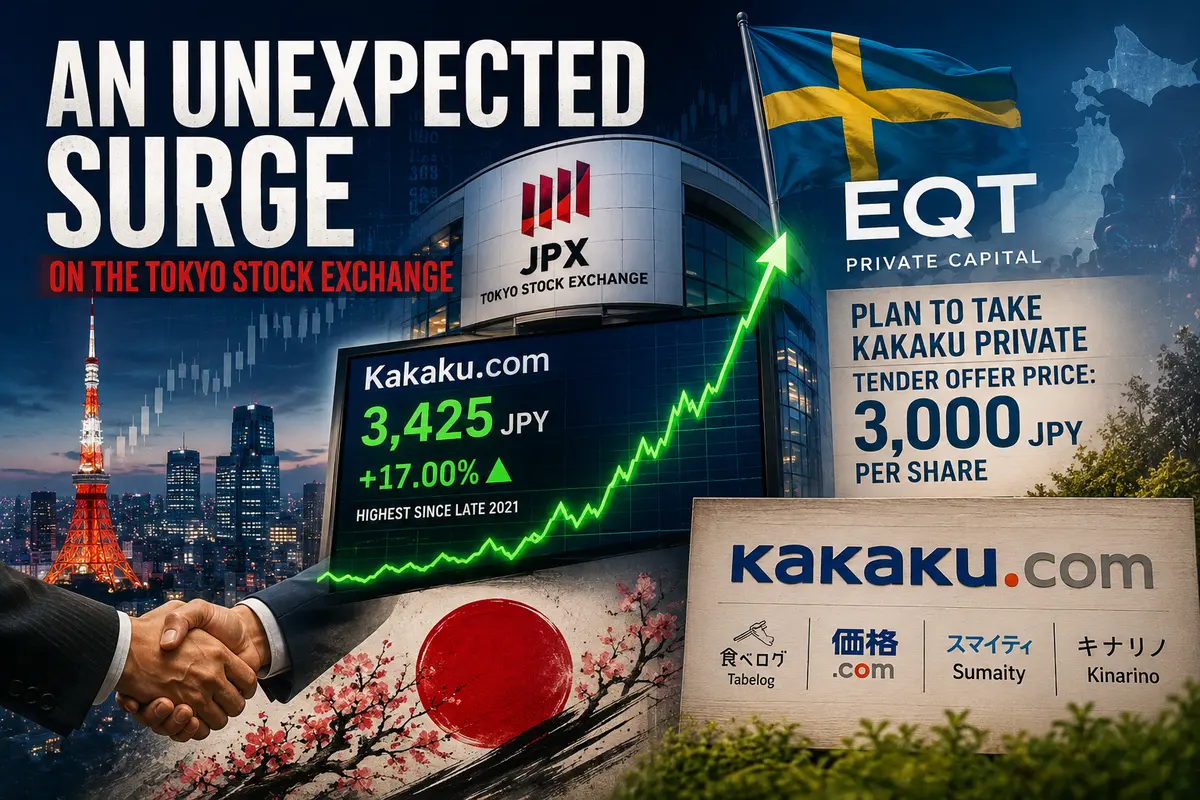
On Wednesday, shares of the Japanese company KakakuCom Inc made a real leap that caught many market watchers off guard. The stock soared by seventeen percent to hit 3,425 yen per share. Prices haven’t climbed this high since late 2021 — nearly three and a half years ago. For the market, it was a glaring signal: something serious is happening, and investors are rushing to buy shares before the price runs even higher.
The reason behind such a fierce rally came all the way from Sweden. That’s where the investment firm EQT is based — the company that became the headline act of the day by announcing its designs on a Japanese business. When a major player like that publicly states it’s ready to buy out an entire company, the market reacts instantly. A seventeen percent single-day jump speaks for itself.
The Swedish Giant’s Plan: Taking the Company Private
EQT laid out its intentions with crystal clarity: the investment group plans to launch a tender offer to fully acquire Kakaku from the public market and take it private. Simply put, the Swedes want the entire Japanese service for themselves, delisting it from the exchange.
The price tag is impressive — the whole business is valued at roughly 593.5 billion yen, which in dollar terms comes to about 3.76 billion. For each individual share, EQT is ready to pay exactly 3,000 yen. That’s the very number that fueled the frenzy: at the time of the announcement, the stock was trading noticeably cheaper, so traders rushed to buy it hoping to pocket the difference as the price climbs toward the offer.
Taking a publicly listed company private is a classic investment fund maneuver. The point is to gain full control, stop worrying about quarterly filings with the exchange, and calmly — away from prying eyes — focus on long-term restructuring and improving profitability. That, it seems, is exactly the fate EQT is preparing for Kakaku.
Japan Is Becoming a Hotspot for Private Capital
This deal is far from EQT’s first attempt to snap up Japanese assets. The Swedish firm has already pulled off several similar acquisitions in the country, and the list is starting to look pretty substantial. Names like Fujitec, CareNet, and Mamezo are already under their belt. Each time, the playbook has been roughly the same: find an undervalued or promising Japanese firm and buy it outright.
There is a simple explanation for this persistence: Japan is currently experiencing a genuine boom of interest from global private investment funds. After decades of stagnation and insularity, the Japanese corporate world has started to change. The government and regulators have launched sweeping reforms aimed at forcing companies to operate more efficiently and share their profits more generously with shareholders. Foreign investors are looking at these shifts with enormous enthusiasm. Where there once were unwieldy structures and hidden reserves, they now see opportunities for growth, optimization, and making money.
In this regard, EQT just happens to be one of the quickest off the mark: while others are still scouting the landscape, the Swedes are already closing deal after deal, expanding their footprint on Japanese soil.

What Lies Behind the Name Kakaku
For those unfamiliar with Japan’s digital landscape, it’s worth explaining what this company that’s causing such a stir actually does. Kakaku isn’t some smokestack factory or a dull industrial giant. It’s the owner of a whole collection of popular online platforms used daily by millions of Japanese people.
The main asset that springs to mind straight away is Tabelog. Imagine a hybrid of a review site, a restaurant guide, and a table reservation service — but entirely tailored to the Japanese market and local habits. Want to know where to find the best ramen in Osaka, or book a cozy spot for two in a Tokyo restaurant tucked away on the thirty-fifth floor of a skyscraper? Chances are you’ll open Tabelog. For the local restaurant industry, this platform means roughly the same as several of the biggest Western equivalents combined.
Beyond its restaurant service, Kakaku runs other digital platforms too, including online classifieds systems. This entire ecosystem makes the company an extremely attractive acquisition target: behind it lie technology, a huge audience, vast troves of consumer preference data, and deep ties with businesses. For an investor like EQT, it’s practically a ready-made foundation to build on and improve.
How the Sides Reached an Agreement
Any deal of this size is impossible without meticulous behind-the-scenes work and securing numerous approvals. In the case of Kakaku, everything seems to be running fairly smoothly. EQT reported that the Japanese company’s board of directors, along with its special independent committee — the body that looks after the interests of all shareholders — have already given their blessing to the tender offer. That’s a strong signal: the company’s leadership is on the buyer’s side and has no intention of putting up obstacles.
But perhaps the most important tactical move EQT made was regarding the business’s largest co-owners. The Swedes managed to strike a deal with two heavyweights — Digital Garage and telecom giant KDDI. Together, these holders control a very hefty stake: thirty-eight point one percent of all Kakaku shares. By reaching an agreement to buy exactly that slice, EQT essentially secured the golden key to the entire transaction. When nearly forty percent of a company has quietly agreed to sell, the chances of the tender offer succeeding become almost one hundred percent.
And so the puzzle pieces fall into place quite elegantly: management isn’t opposed, key shareholders are ready to cash out, and the buyer is offering a price with a noticeable premium over the market. All that’s left now is to wait for the formal completion of the process, and yet another Japanese company will exit the stock exchange listings to begin a new chapter as part of a Swedish investment empire

Comments
No comments yet. Be the first to share your thoughts!
Authentication Required
You must be logged in to post a comment.