

Auction Mechanics — Open/Close Crosses and Volatility Halts
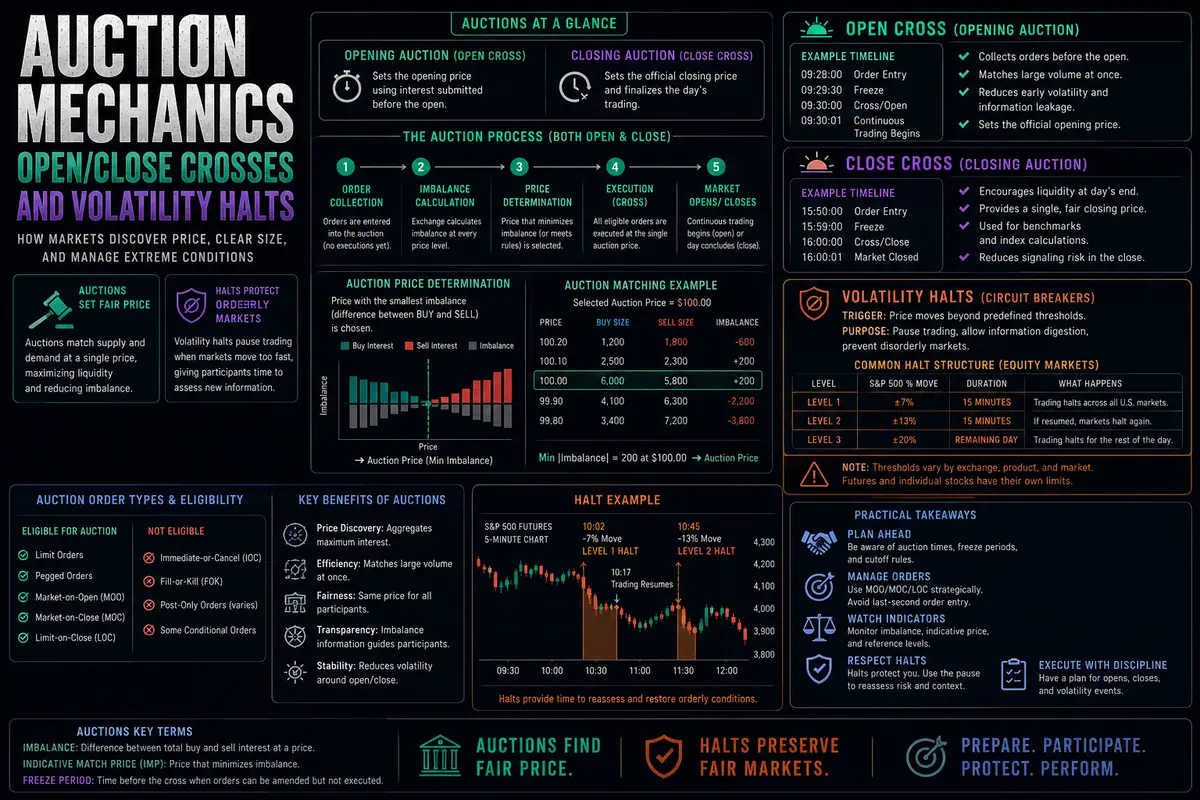
Financial markets do not operate as a continuous, uninterrupted stream of uniform activity. Instead, they function through distinct auction phases that transition from periods of intense price discovery to formal market closures and back again. Understanding the auction mechanics that govern market opens, market closes, and regulatory volatility halts is essential for any trader seeking to avoid the severe execution traps that occur during these transition windows.
Unlike standard intraday trading where liquidity is continuously matched across the order book, auction mechanics rely on centralized call auctions designed to aggregate unexecuted orders and determine a single, fair clearing price for the entire market.
The Opening Cross: Price Discovery and Overnight Accumulation
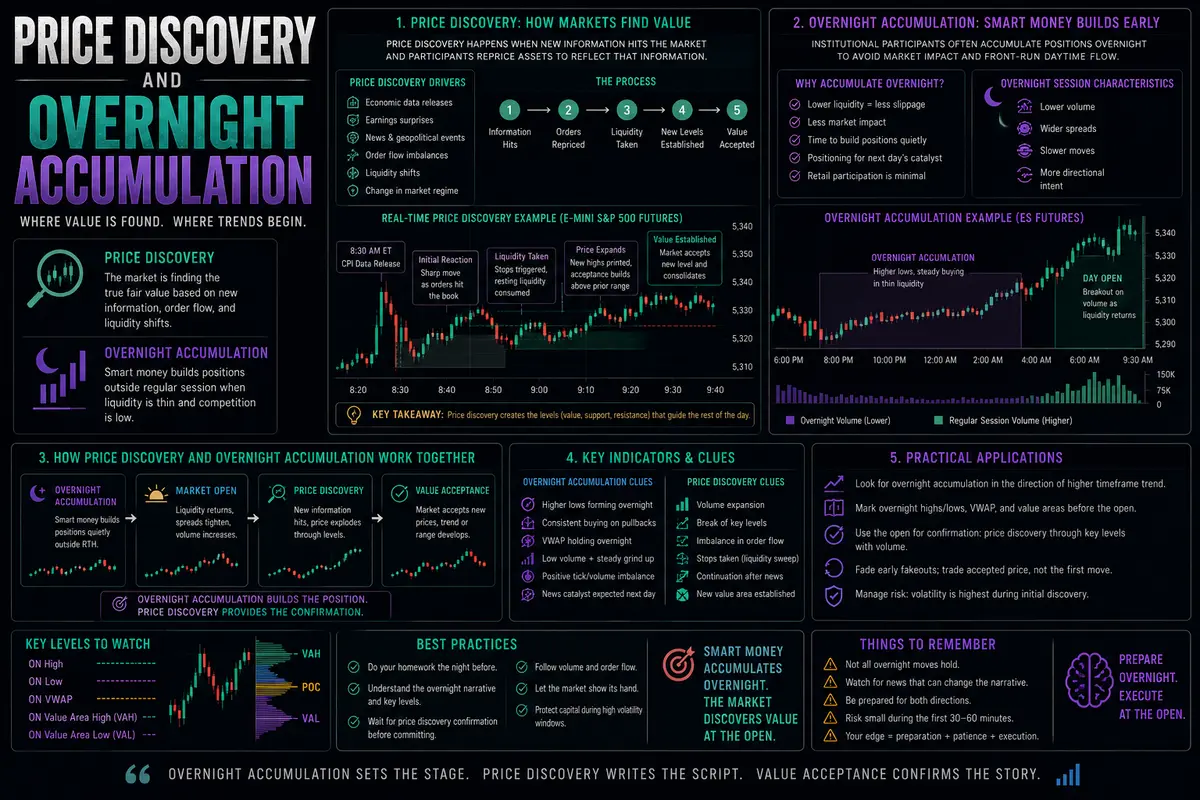
The transition from the overnight closed market to the official cash session open is managed through an opening auction, frequently referred to as the Open Cross.
Throughout the overnight session, news releases, geopolitical developments, and macroeconomic data accumulate. Institutional and retail participants submit orders that sit in the limit order book as unexecuted instructions. During the pre-market phase, these orders are accumulated without executing immediately. The exchange matching engine constantly calculates an indicative clearing price—the exact price level where the maximum volume of buy and sell orders can be matched simultaneously.
As the official open approaches, trading desks flood the system with market-on-open (MOO) and limit-on-open (LOO) orders. This massive influx of accumulated liquidity creates a volatile supply and demand imbalance. When the opening bell rings, the matching engine executes all eligible orders at a single opening price.
For active traders, attempting to trade the immediate open is hazardous. The opening cross often produces aggressive price spikes that immediately reverse once the initial backlog of overnight orders is cleared. Waiting for the initial opening range to establish—typically the first fifteen to thirty minutes of the session—allows the market to digest the opening auction imbalances before establishing reliable directional trends.
The Closing Cross: Institutional Rebalancing and Settlement
Just as markets require an orderly auction to open, they require an equally structured process to close. The closing auction, or Close Cross, is one of the most heavily traded windows of the entire institutional day.
Institutional asset managers, mutual funds, and exchange-traded fund (ETF) providers must benchmark their portfolio performance against official closing prices (such as the daily Net Asset Value or standard index settlement prices). To achieve this without incurring massive slippage, funds utilize market-on-close (MOC) orders.
During the final ten to fifteen minutes leading up to the market close, volume spikes exponentially—often rivaling or exceeding the volume seen at the open. The matching engine compiles all MOC orders and calculates a single closing price.
-
The Impact on Price Action: In the final minutes before the close, you will frequently observe aggressive, seemingly irrational directional pushes. This is not necessarily directional trend momentum; rather, it is institutional rebalancing flow flooding the book to ensure execution at the official settlement price.
-
Trading Implication: Holding unhedged intraday positions directly through the closing cross exposes your capital to erratic, auction-driven price jumps. Professional day traders routinely square away their books prior to the final auction window to avoid unexpected settlement slippage.
Volatility Halts and Limit-Up Limit-Down (LULD) Mechanics
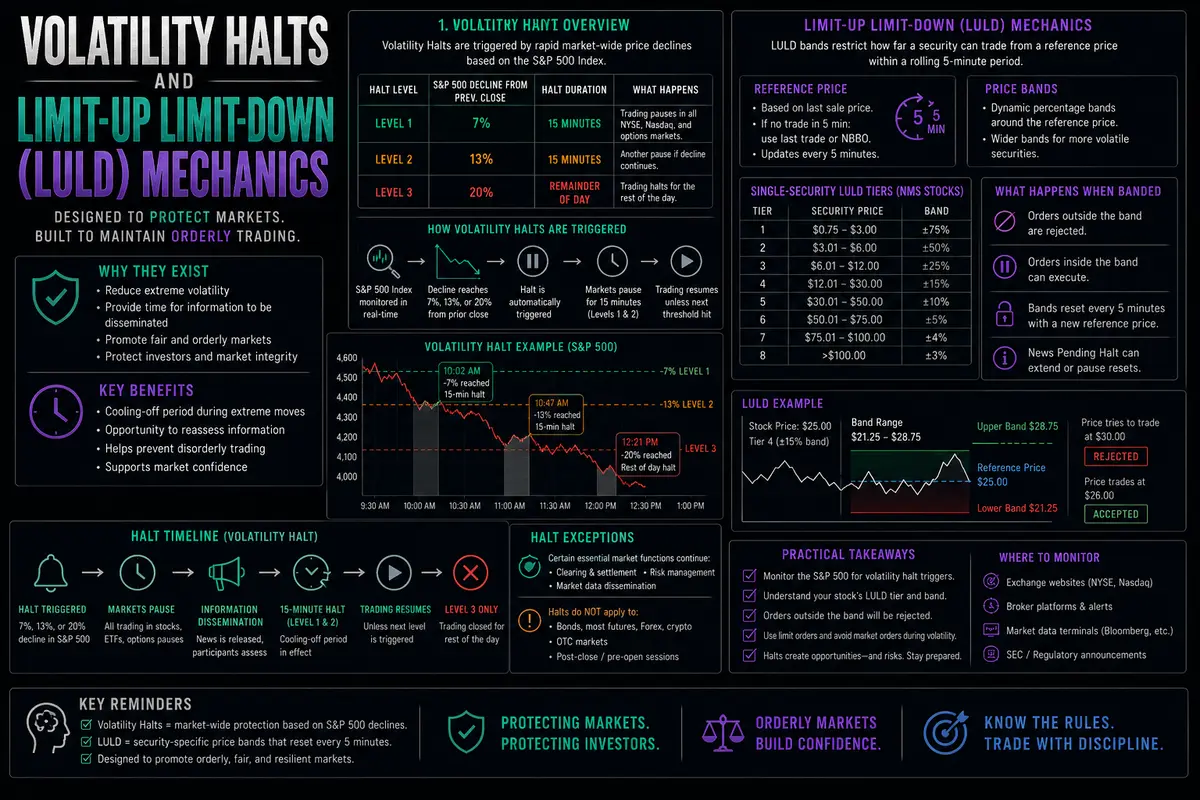
When extreme macroeconomic shocks or cascading sell orders hit a market, standard continuous auctions break down. To prevent disorderly liquidations and systemic flash crashes, regulatory authorities and exchanges enforce structural circuit breakers known as Volatility Halts or Limit-Up Limit-Down (LULD) bands.
LULD bands establish a dynamic pricing envelope around an asset based on its recent average trading price. If sudden aggressive selling or buying drives the price outside of these predefined percentage bands for more than fifteen consecutive seconds, the exchange automatically triggers a trading pause.
-
What Happens During a Halt: All matching engines freeze trading in that specific asset. Limit orders remain in the book, but no new transactions can be executed. Institutional algorithms and market makers use this pause window to reassess risk, cancel toxic orders, and re-evaluate liquidity distribution.
-
The Danger of Halt Resumption: When a volatility halt is lifted, the exchange conducts a reopening mini-auction similar to the morning open. Participants submit orders into a closed book, and the market reopens at a single clearing price. This reopening price frequently gaps violently away from the pre-halt level, meaning traders caught on the wrong side of a volatility halt face extreme gap risk that bypasses normal stop-loss protection.
Practical Execution Protocols for Auction and Halt Windows
-
Avoid Trading the First and Last Five Minutes: The structural noise, institutional cross orders, and massive liquidity swings that occur at the exact open and close offer terrible risk-reward ratios for discretionary traders. Let the opening auction settle before initiating new positions.
-
Clear Intraday Risk Before the Close: Unless your strategy specifically targets multi-day swing holding periods, close out intraday day-trading positions before the institutional closing rebalancing window begins.
-
Respect Limit-Up Limit-Down Bands: If an asset you are trading triggers an LULD volatility halt, never attempt to guess where it will reopen. The resumption auction often opens with a severe gap that can instantly breach your risk parameters. Wait for price acceptance to resume following the halt before making new strategic decisions.

Comments
No comments yet. Be the first to share your thoughts!
Authentication Required
You must be logged in to post a comment.