

Who is a Broker in the Modern Financial World?

The Core Definition and Role
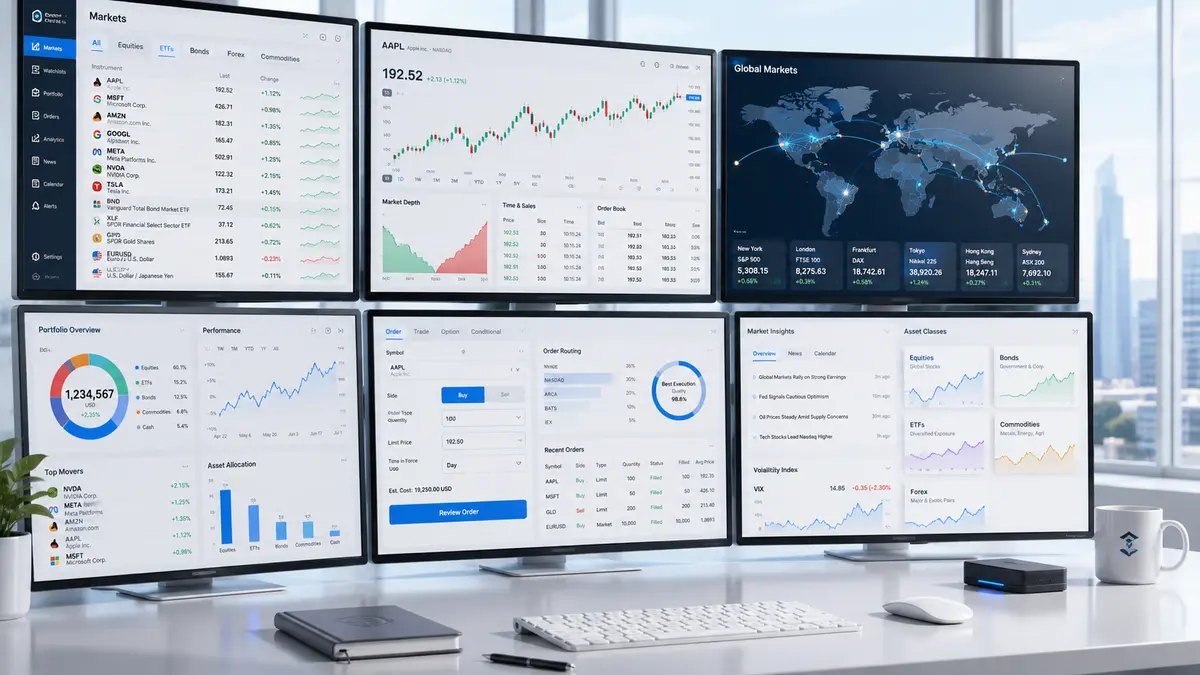
A broker is a vital intermediary that bridges the gap between individual or institutional investors and the global financial markets. In the past, this meant a physical person shouting orders on a trading floor, but today, a broker is often a sophisticated digital platform or a highly specialized financial institution. A broker provides clients with direct access to a vast array of financial instruments — ranging from traditional equities and corporate bonds to mutual funds, exchange-traded funds (ETFs), commodities, and foreign exchange (Forex). Ultimately, they are the gateway that makes executing trades in the market possible.
Beyond Simple Execution: Strategy and Analysis
The primary objective of a modern broker extends far beyond merely processing buy and sell orders. A high-quality broker is designed to help investors make sound, well-informed financial decisions based on rigorous data analysis, macroeconomic conditions, and the highly specific, individual goals of the client.
For instance, a full-service wealth management broker in the United States or Europe will offer tailored consultations on investment strategies. They analyze sweeping market trends — such as the impact of the European Central Bank (ECB) interest rate decisions or US inflation reports — and help clients select the most optimal investment vehicles. Whether an investor is looking to build a conservative retirement portfolio using European government bonds or seeking aggressive growth through US technology stocks on the NASDAQ, the broker provides the necessary compass.
Technical Execution and Transparency
Furthermore, brokers possess the deep technical infrastructure required to execute market trades efficiently. They ensure that retail and institutional clients have uninterrupted access to major trading venues, such as the New York Stock Exchange (NYSE), the London Stock Exchange (LSE), or Euronext. The broker manages the complex backend processes of order routing, clearing, and settlement (such as the T+1 settlement cycle in the US), meticulously monitoring the execution of trades to ensure absolute transparency and regulatory compliance in all financial operations.
Diverse Types of Brokers in Today’s Market
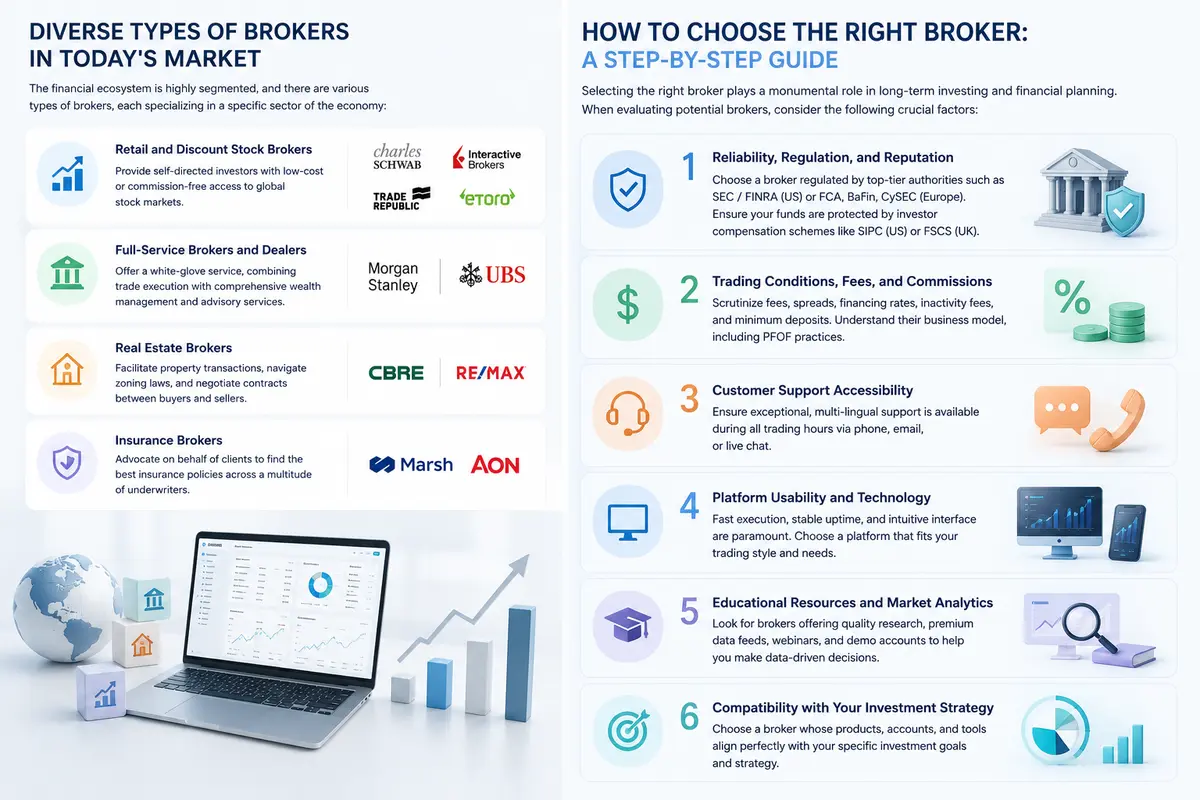
The financial ecosystem is highly segmented, and there are various types of brokers, each specializing in a specific sector of the economy:
-
Retail and Discount Stock Brokers: Platforms like Charles Schwab, Interactive Brokers, or European counterparts like Trade Republic and eToro. They primarily focus on providing self-directed investors with low-cost or commission-free access to global stock markets.
-
Full-Service Brokers and Dealers: Institutions like Morgan Stanley or UBS that offer a white-glove service, combining trade execution with comprehensive wealth management, estate planning, and tax advisory services.
-
Real Estate Brokers: Intermediaries like CBRE (commercial) or RE/MAX (residential) who facilitate property transactions, navigate local zoning laws, and negotiate contracts between buyers and sellers.
-
Insurance Brokers: Firms such as Marsh or Aon that advocate on behalf of clients to find the best corporate or individual insurance policies across a multitude of underwriters.
How to Choose the Right Broker: A Step-by-Step Guide
Selecting the right broker plays a monumental role in long-term investing and financial planning. It is a foundational decision that can directly impact your future wealth, tax liabilities, and overall financial security. When evaluating potential brokers, particularly in the robust US and European markets, consider the following crucial factors:
1. Reliability, Regulation, and Reputation
It is entirely non-negotiable to choose a broker with an impeccable reputation and rock-solid reliability. You must conduct thorough due diligence and seek out independent reviews from other clients. Crucially, verify that the broker is fully licensed and strictly regulated by top-tier financial authorities. If you are trading in the US, look for oversight by the Securities and Exchange Commission (SEC) and the Financial Industry Regulatory Authority (FINRA). In Europe, look for regulation by the UK’s Financial Conduct Authority (FCA), Germany’s BaFin, or Cyprus’s CySEC. Additionally, ensure your funds are protected by investor compensation schemes, such as the SIPC in the US (protecting up to $500,000) or the FSCS in the UK.
2. Trading Conditions, Fees, and Commissions
Pay close attention to the financial terms of trading offered by the broker. Scrutinize the fee structure: while many US brokers now offer zero-commission trading for US stocks, they may charge high fees for options, international equities, or currency conversions. Examine bid-ask spreads, overnight financing rates (for margin trading), inactivity fees, and minimum deposit requirements. Understand their business model — for instance, whether they rely on Payment for Order Flow (PFOF), which is common in the US but heavily restricted in the European Union.
3. Customer Support Accessibility
Financial markets are volatile, and technical glitches can be costly. It is vital to have immediate access to professional help and consultations. Ensure that the broker provides exceptional, multi-lingual customer support that is available during all trading hours via phone, secure email, or live online chat. The ability to reach a human representative during a market crash or a margin call is an invaluable asset.
4. Platform Usability and Technology
Test the usability of the trading platform and the technological solutions provided by the broker. Fast execution speeds, stable uptime, and an intuitive interface are paramount. Professional day traders may require advanced desktop software with Level 2 market data and complex charting tools (like Thinkorswim in the US), while long-term passive ETF investors might prioritize a clean, user-friendly mobile app. You must be able to execute trades and monitor your portfolio effortlessly.
5. Educational Resources and Market Analytics
A reputable broker invests in the success of its clients by providing high-quality educational materials, market analytics, and fundamental research tools. Look for brokers that offer access to premium feeds (like Morningstar or Bloomberg consensus ratings), daily macroeconomic webinars, and “paper trading” (demo accounts). These resources are essential for improving your financial literacy and making data-driven decisions before risking real capital.
6. Compatibility with Your Investment Strategy
Finally, choose a broker whose offerings align perfectly with your specific investment strategy. If your goal is to invest aggressively in international options and futures, you need a broker with direct market access and advanced derivative permissions. Conversely, if you are a European investor looking to build a tax-efficient retirement fund, you need a broker that supports local tax-advantaged accounts (like an ISA in the UK) and offers a wide variety of UCITS-compliant index funds.
Why Are Brokers Indispensable in the Financial System?
Brokers are the central nervous system of global finance. They empower clients to carry out a vast array of financial operations and invest their capital while accommodating highly individualized needs and goals. Here are the primary reasons why brokers are absolutely necessary in the modern economy:
Mastering Risk Management
First and foremost, brokers provide the tools necessary to manage the inherent risks of investing. They offer access to a diverse range of financial instruments that allow investors to build properly diversified portfolios — for example, balancing high-risk US tech equities with stable European dividend aristocrats and government bonds. Furthermore, trading platforms offer automated risk management features, such as stop-loss orders, trailing stops, and margin alerts, which help protect investors from catastrophic, sudden market downturns.
Expert Knowledge and Advisory Services
Secondly, full-service brokers possess deep, institutional expertise regarding financial markets and investment vehicles. The financial landscape is incredibly complex, influenced by shifting geopolitical events, tax legislations, and corporate earnings. Brokers provide bespoke consultations, decipher market trends, and help clients cut through the noise of financial media to select the optimal instruments for wealth preservation and growth.
Seamless Market Access and Trade Execution
Thirdly, individual investors cannot simply walk into a stock exchange and buy shares. Brokers act as the vital, legally authorized proxy, executing trades on the open market on behalf of their clients. They provide the highly regulated API connections and clearinghouse memberships required to match buyers and sellers in fractions of a second. This ensures that trades are executed seamlessly, allowing clients to participate in global wealth creation without needing to navigate the immense legal and technical barriers of direct exchange interaction.
In summary, brokers are foundational participants in the global financial markets. Their combination of technological infrastructure, regulatory compliance, and market expertise plays an indispensable role in ensuring the successful and secure investing journey of individuals and institutions alike.

Comments
No comments yet. Be the first to share your thoughts!
Authentication Required
You must be logged in to post a comment.