

USD/SEK: How to Trade Sweden’s High-Beta Growth Proxy
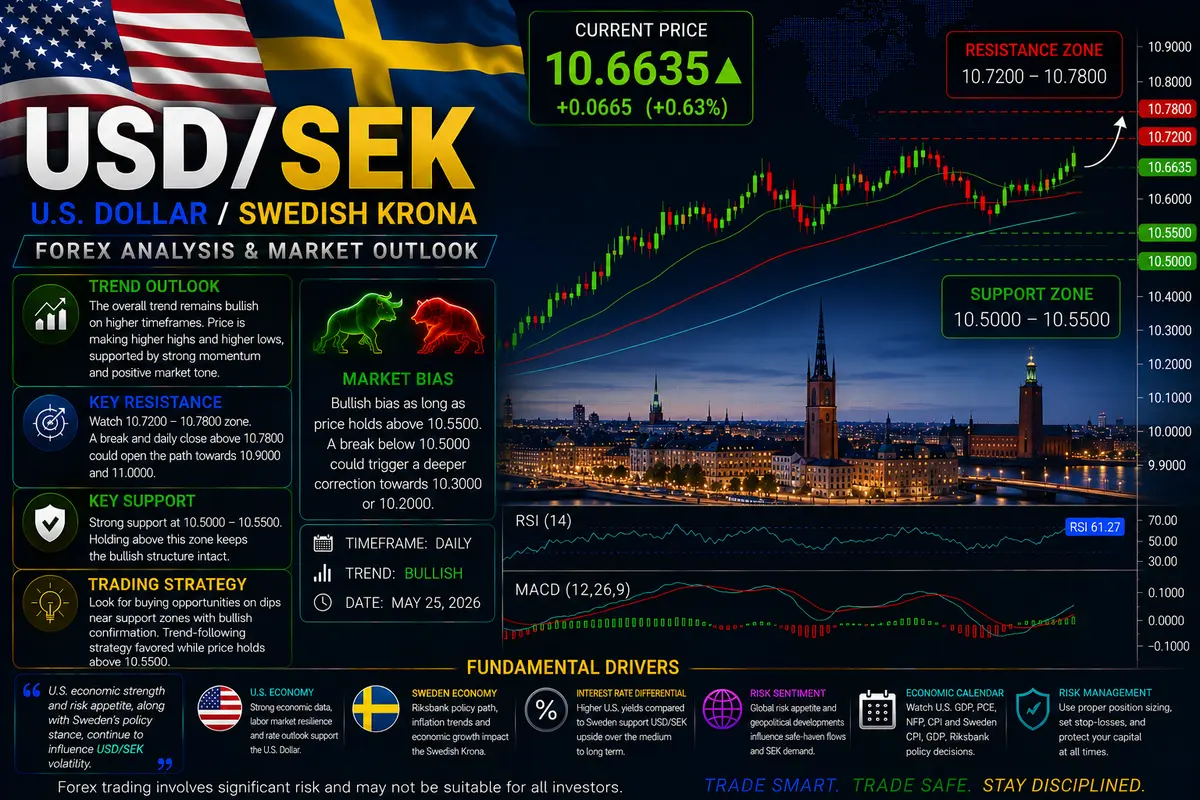
If you ask a spot dealer about the Swedish Krona, they won’t talk about safe-haven flows or defensive positioning. They’ll tell you it acts like an amplifier for European risk.
USD/SEK gives you G10 execution quality paired with percentage swings that look more like an emerging market. That mix comes directly from Sweden’s economic model. It’s a small, open market completely exposed to global trade cycles. When global manufacturing runs hot, money floods into Stockholm. The moment growth stalls or geopolitical headlines break, capital dumps the Krona and sprints straight back to US Dollar cash.
The Industrial Engine: Open Market Realities and German Trade Integration
To understand where USDSEK ... wants to trade over a medium-term horizon, you have to look past simple technical chart patterns and evaluate the health of the European manufacturing sector—specifically Germany.
What Actually Drives the Order Book
Forget traditional support and resistance for a second. The Krona moves on three specific mechanical drivers:
1. Eurozone Factory Orders
Sweden’s major multinationals—the firms building industrial machinery, vehicles, and telecommunications gear—make most of their revenue outside the country. Their biggest customer is Western Europe, especially Germany.
-
When European PMIs expand: Swedish exporters rake in foreign currency. To pay domestic taxes, suppliers, and factory workers, corporate treasuries sell Dollars and buy Krona on local spot desks. That commercial conversion creates a steady floor under SEK, pushing USD/SEK lower.
-
When European growth slows: Those export conversions vanish. Without commercial support, foreign funds pull money out of Swedish assets, and USD/SEK moves up fast.
2. The Riksbank and the Variable Rate Trap
Sweden’s central bank, the Riksbank, faces a delicate balancing act when setting interest rates.
Unlike the US market, where 30-year fixed mortgages are standard, the vast majority of Swedish homeowners carry variable-rate housing loans or short-term fixes.
This creates a specific reaction when rates shift:
-
Hikes hit instantly. Raising rates attracts foreign bond yield chasers, which can temporarily boost SEK. But those higher borrowing costs immediately squeeze domestic consumers and hit local property values, capping how high yields can realistically go.
-
Cuts trigger fast sell-offs. The second the Riksbank cuts rates to relieve domestic housing stress, the yield advantage against the Federal Reserve shrinks. Institutional money managers dump SEK paper, leading to quick short-covering rallies in USD/SEK.
3. Pure Equity Beta
The Krona functions as a high-beta proxy for global stock markets. When equity indexes climb and market volatility stays low, asset managers comfortably hold Scandinavian risk assets. But if a surprise shock hits global markets, investors drop cyclical currencies first. In a panic, capital rushes into Greenbacks, sending USD/SEK vertical in a matter of minutes.
Desk Execution and Rules
To trade USD/SEK effectively without getting caught in sudden liquidity traps or volatility spikes, observe three core rules:
-
Stick to the Overlap: Execute between 08:00 and 16:00 UTC. That’s when Stockholm and London desks are active alongside the US morning open, giving you the best liquidity and narrowest spreads.
-
Watch EUR/SEK First: Because Sweden’s main trade links sit inside the EU, big technical moves on EUR/SEK usually lead or confirm what happens on USD/SEK.
-
Manage the Higher Nominal Figures: USD/SEK trades at higher nominal exchange numbers than major pairs like EUR/USD. Daily moves of 400 to 800 pips are standard when volatility picks up, so size your positions by total portfolio risk rather than a fixed number of pips.
-
Trade the European/US Overlap Window: The deepest order books and narrowest spreads occur between 08:00 and 16:00 UTC, when Stockholm and London institutional desks operate alongside the New York session open. Spreads widen noticeably during the late Asian and quiet overnight sessions.
-
Monitor EUR/SEK as a Lead Indicator: Because Sweden’s primary trade links are within the European Union, major structural breakouts or central bank interventions on EUR/SEK frequently lead or confirm directional momentum on USD/SEK.
-
Calculate Risk Based on Nominal Range: USD/SEK trades at higher nominal exchange values than major G10 pairs like EUR/USD or GBP/USD. Daily moves of 400 to 800 pips are standard when volatility wakes up. Always size your positions based on total portfolio risk percentages rather than fixed pip distances.

Comments
No comments yet. Be the first to share your thoughts!
Authentication Required
You must be logged in to post a comment.