

USD/BRL – Agricultural Commodity Engines, Selic Rate Cycles, and Fiscal Volatility
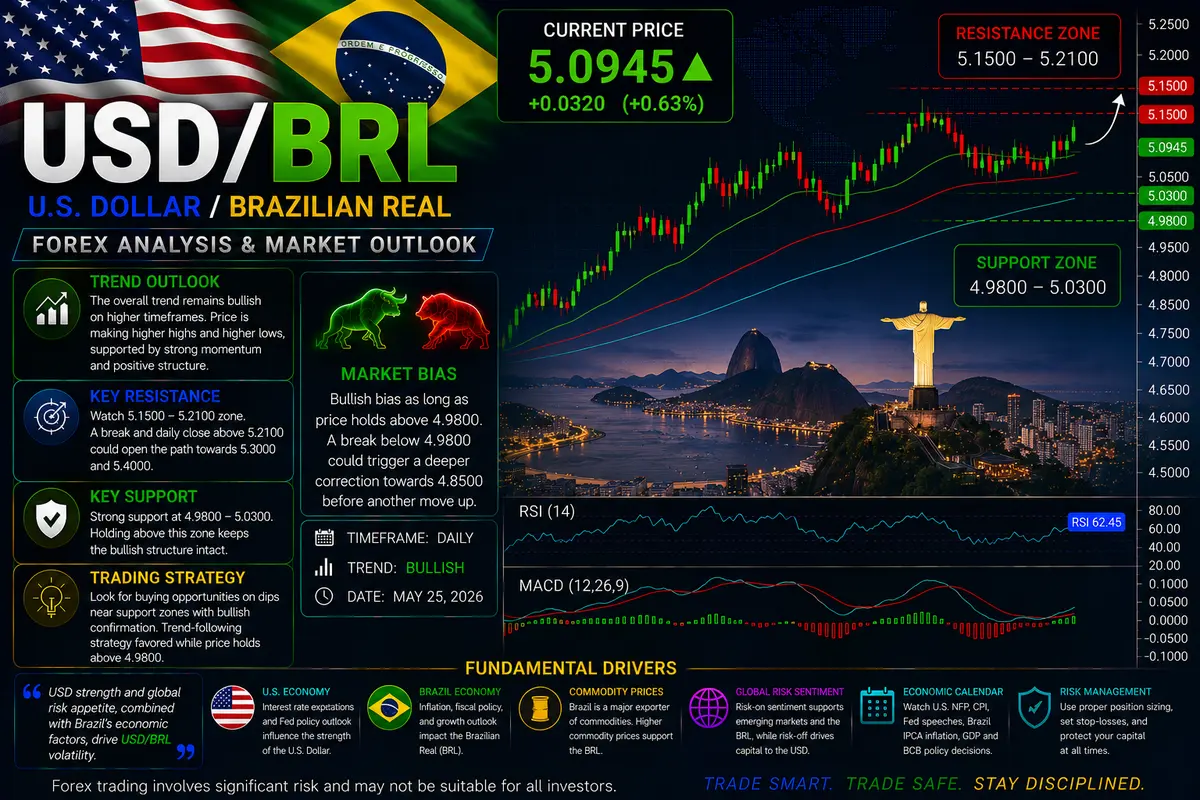
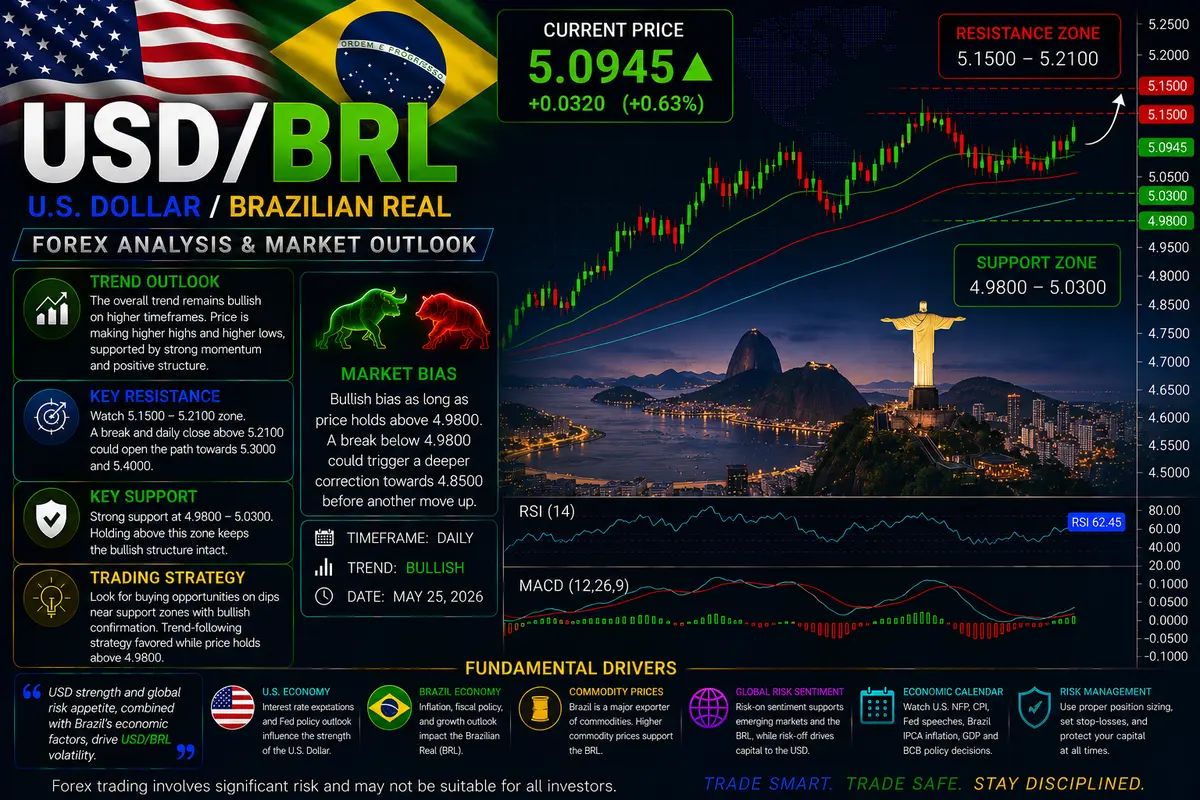
If you ask any Latin American macro desk about the ultimate wild card in emerging market FX, USD/BRL (US Dollar vs. Brazilian Real) will top the list. The Real is a financial heavyweight: it combines massive raw material export volumes with some of the highest real interest rates in the developing world.
When USD/BRL trends, it doesn’t move in cautious fractions. It rips across multi-figure price levels as global commodity supercycles, central bank policy shifts, and domestic fiscal debates collision on the order book.
1. The Agribusiness & Mining Powerhouse
Brazil’s trade balance is heavily driven by hard and soft commodities. The country stands as a dominant global exporter of soybeans, iron ore, crude oil, beef, sugar, and coffee.
When global commodity demand booms—particularly from major trade partners like China—Brazilian exporters generate massive hard-currency revenues. As these corporations convert US Dollars back into local currency to fund domestic operations, pay taxes, and settle local debt, the Real receives a powerful structural bid, driving USD/BRL lower.
However, the commodity story cuts both ways:
-
The Chinese Industrial Link: Iron ore exports to Chinese steel mills make USD/BRL highly sensitive to Chinese property market trends and industrial production data.
-
Weather & Crop Yield Spikes: Severe droughts or unexpected frosts in key agricultural regions like Mato Grosso can disrupt crop yields, altering global soft commodity prices and shifting Brazil’s terms of trade overnight.
2. The Banco Central do Brasil (BCB) and the Selic Buffer
Monetary policy in Brazil is governed by the Banco Central do Brasil (BCB), which sets the benchmark Selic rate. The BCB has built a global reputation for acting early and aggressively against inflation, often raising rates long before G10 central banks begin tightening.
When the BCB maintains a high Selic rate, it creates a massive interest rate differential relative to the US Federal Reserve. This makes the Real one of the most attractive carry trade target currencies in the world.
Carry Trade Flow Mechanics:
+--------------------------------------------------------------------+
| 1. Fund borrows USD at low Fed interest rates
| 2. Fund swaps USD into BRL via spot/futures market
| 3. Fund parks capital in high-yielding Brazilian DI futures or bonds
| 4. Net result: Heavy downward pressure on USD/BRL spot price
+----------
-----------------------------------------------------------+
As long as global market volatility remains low, carry traders collect substantial daily yield, keeping USD/BRL anchored in downward or sideways channels. But when global risk appetite turns sour, carry unwinds hit BRL with sudden, violent force, causing vertical upward spikes on the chart.
3. Fiscal Ceiling Controversies and Intervention Mechanics
While commodity exports and high yields support the Real, domestic fiscal policy remains its biggest structural vulnerability.
Brazil’s constitutional spending limits and public debt ratios are constantly scrutinized by international bond investors. When market participants fear that government fiscal packages or social spending expansions will breach fiscal targets, foreign capital flees Brazilian markets. The resulting sell-off in local stocks and bonds triggers immediate upward spikes in USD/BRL.
To counter extreme volatility and supply-demand imbalances, the BCB frequently steps into the market using FX Swaps and direct spot interventions. These central bank interventions can dump hundreds of millions of dollars into the market within seconds, catching over-leveraged traders off guard.
Execution Rules for the Desk
-
Watch the Local Market Hours: The primary liquidity window for USD/BRL runs between 12:00 UTC and 18:00 UTC, when the B3 exchange in São Paulo and North American markets overlap. Spreads widen significantly outside these hours.
-
Factor in BCB Interventions: Never hold aggressive positions into known BCB auction windows or policy announcements without defined risk parameters. Central bank FX swap auctions can move price by 50 to 100 pips in a single tick.
-
Scale Down Position Sizing: Due to wide intraday swings and higher volatility compared to G10 majors, reduce standard lot sizes and place stops beyond major 4-hour structural swing levels.
Respect the VIX: Keep an eye on global risk sentiment indicators. If equity volatility spikes globally, shorting USD/BR against a raging Dollar trend is akin to standing in front of a freight train.

Comments
No comments yet. Be the first to share your thoughts!
Authentication Required
You must be logged in to post a comment.