



How Hedge Fund Quants Win Every Trade (Using AI)
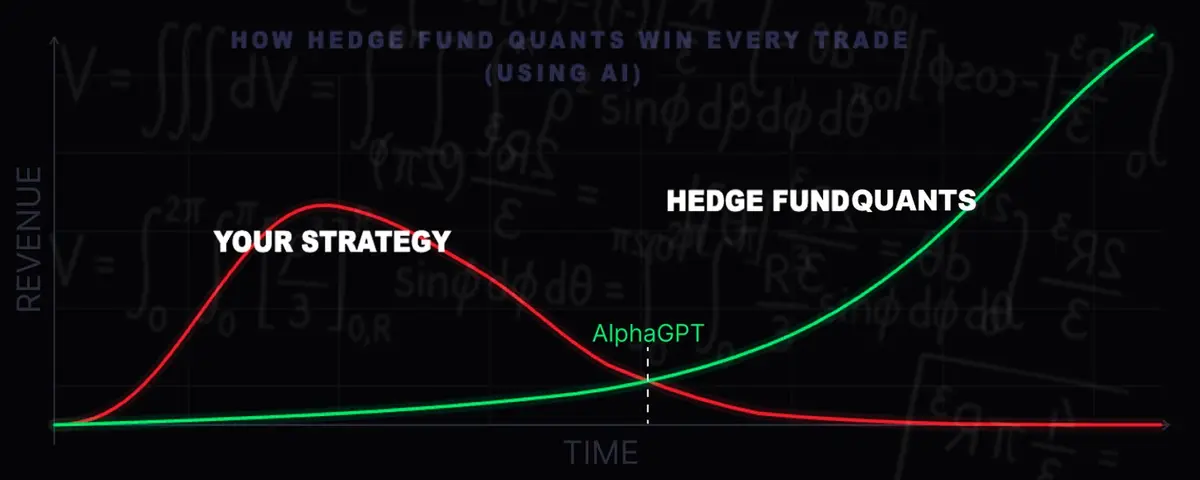
Man Group's Head of Quant said something that stuck with me:
"The challenge is the sheer volume of data and possible market relationships that has grown faster than any human team can evaluate by hand."
So they built AlphaGPT. It generates signal hypotheses, writes the code, and runs the backtests. Autonomously. Hundreds of ideas per week instead of 20 per quarter.
Bridgewater went further and built a $2 billion fund where AI makes the primary trading decisions.
Jane Street spent $6 billion on GPU infrastructure last year to train proprietary models.
I'm not going to pretend I know exactly what's running inside these systems. But the public statements from the people building them tell a fairly consistent story and it's not the one most people assume when they hear "AI trading."
The firms winning aren't replacing their quants. They're making each quant about 10x faster.
This article is the complete framework for running the same architecture on Polymarket today.
PART 1 - WILL AI REPLACE QUANTS?
The question everyone asks wrong.
Man Group went public with AlphaGPT in July 2025. The system generates signal hypotheses, writes implementation code, and runs backtests autonomously. Several dozen signals have already been approved for live trading after passing human review.
The challenge in quantitative investing is the sheer volume of data and possible market relationships that has grown faster than any human team can evaluate by hand.
A strong research team might seriously test 20 signal ideas in a quarter. AlphaGPT tests hundreds in a week.
But not a single signal from AlphaGPT touches real capital without a researcher making a deliberate decision about it.
Bridgewater built an AI Reasoning Engine combining LLMs, machine learning, and reasoning tools. Their co-CIO called it "a big jump." But humans still oversee risk management and execution.
Citadel's...
