

“The Liberation of Cuba”: What Lies Behind Trump’s Bold Words and the Charges Against Castro
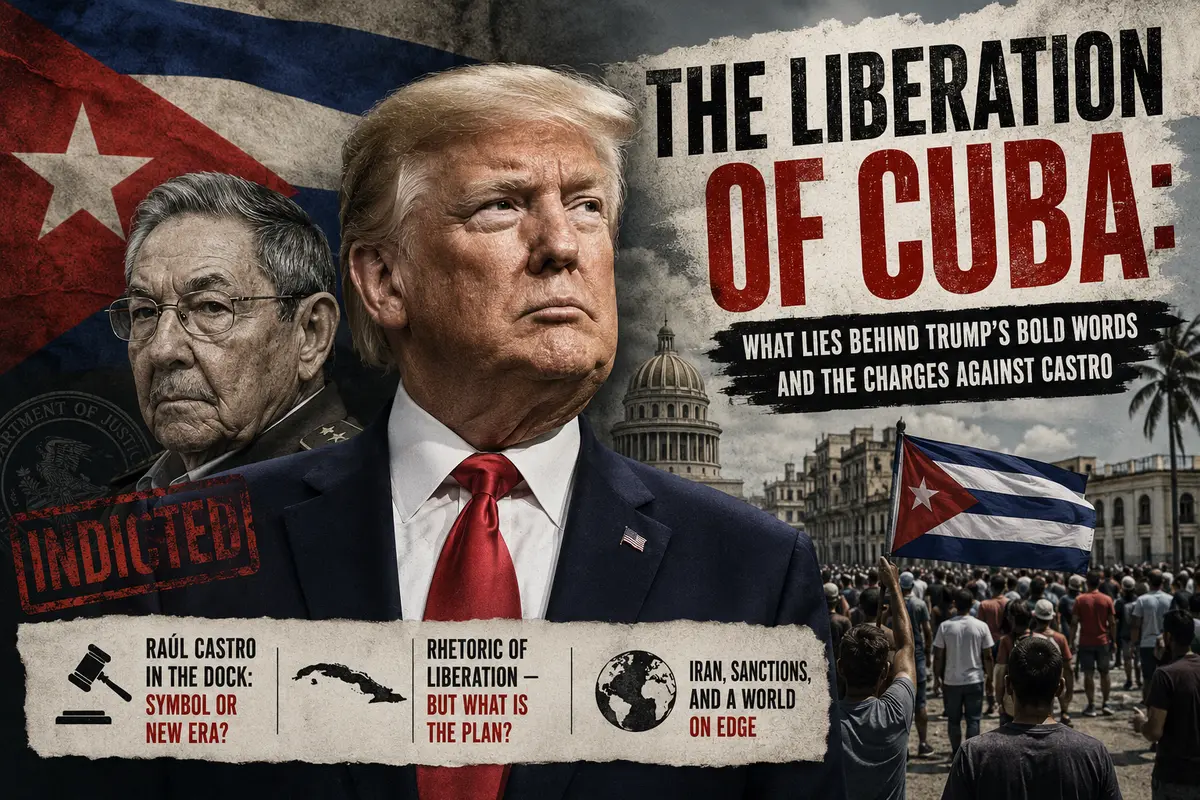
The White House once again reminded the world on Wednesday that under Donald Trump, foreign policy is, above all, theater. When the president says, “we are liberating Cuba,” the world pauses, trying to understand whether this is the prelude to a military operation, a diplomatic bluff, or another act of political drama aimed at a domestic audience. The statement came only hours after the U.S. Department of Justice announced charges against Raúl Castro — the man who stood at the helm of Cuban power for nearly half a century and who has long symbolized, for successive American administrations, the indestructible enemy just off America’s shores. Yet between the grand rhetoric of liberation and the reality of the Cuban issue lies a vast gap filled with decades of failed attempts, economic embargoes, and geopolitical calculations.
Raúl Castro in the Dock: A Symbolic Gesture or the Beginning of a New Era?
The charges brought against Raúl Castro are difficult both to overstate in importance and to interpret unambiguously. For the American justice system, this is an unprecedented step. Never before has a former Cuban leader of such stature become the subject of a criminal case in the United States. The mere fact that the Department of Justice decided to take this step suggests a tectonic shift in Washington’s approach to the Cuban question. For decades, U.S. policy toward Cuba oscillated between isolation and cautious rapprochement, between embargoes and secret diplomacy. The current administration, however, appears determined to abandon all shades of gray.
Trump called the indictment “a very important moment.” For him, it undoubtedly is. The timing is perfect. Raúl Castro has long stepped away from formal power, handing the reins to a new generation, yet his name still carries enormous symbolic weight. For the Cuban diaspora in Miami — whose votes are critically important in the swing state of Florida — the arrest or even indictment of Castro is something many have awaited for decades. For the conservative wing of the American electorate, it serves as proof that Trump follows through where his predecessors stopped at rhetoric.
Yet the actual legal force of these charges raises questions. Raúl Castro remains in Cuba, and extradition to the United States is not foreseeable. Any international arrest warrant, if issued, would collide with political reality: Cuba has allies unwilling to comply with Washington’s demands. From a practical standpoint, the charges against Castro are more symbolic than judicial — a declaration of intent rather than a functioning instrument of justice. But in a world where politics is increasingly conducted through symbols, that may matter more than any court verdict.
“The Liberation of Cuba”: Rhetoric Without a Roadmap
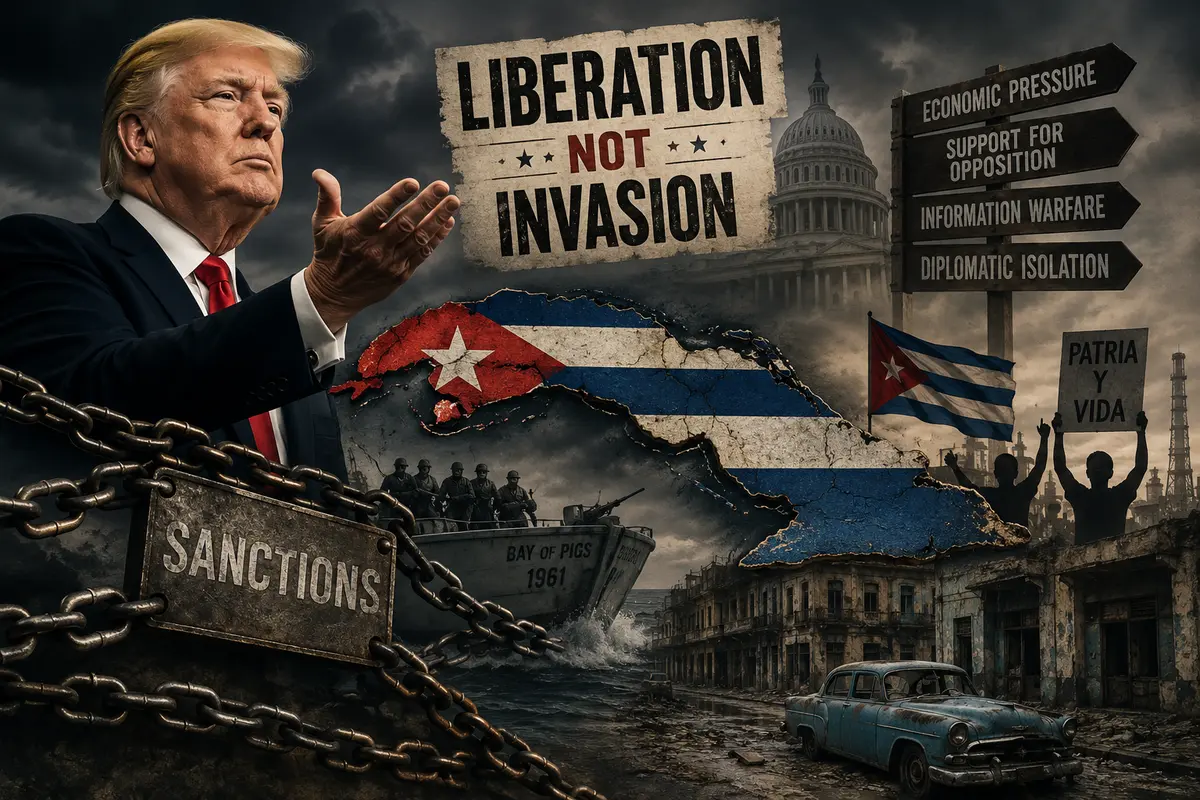
The most intriguing part of Trump’s remarks is what he did not say. “We are liberating Cuba” is a phrase capable of evoking some of the darkest chapters of American history in Latin America, from the Bay of Pigs invasion to support for military juntas. Yet Trump immediately softened the possible interpretation, emphasizing that there would be no escalation against Cuba. According to him, the administration intends to help the Cuban people, not launch another military adventure.
That clarification is important. Despite his reputation for unpredictability, Trump understands the risks of direct military intervention in Cuba. First, such a move would almost certainly provoke a sharp reaction from China and Russia, both of which have interests on the island. Second, it would further divide an already fragmented international community. Third, it would strain relations with American allies in the region, many of whom have only recently begun rebuilding ties with Havana after years of tension. Finally, a military operation in Cuba would be a logistical nightmare, potentially comparable in scale to Iraq — but much closer to American shores.
So what does “liberation” actually mean? Most likely, it refers to a combination of measures: intensified economic pressure, support for opposition groups inside Cuba, information warfare, and diplomatic isolation of the regime. This is a strategy of suffocation rather than blitzkrieg. Trump described the island as a “degrading” state, and in that context, his apparent plan is to accelerate that decline to the point where the regime collapses on its own, without direct military intervention. Whether this would truly help the Cuban people remains an open question. The history of sanctions regimes suggests that economic isolation tends to hurt ordinary citizens far more than ruling elites.
The Iranian Pause: Trump Waits for an Answer
It is revealing that Trump made his statement on Cuba while answering a question about Iran. His remark that he would “wait a few days for a response” from Tehran links the two crises into a single foreign policy narrative. Trump is demonstrating that his administration is capable of operating on multiple fronts simultaneously. Cuba gets charges against Castro, Iran gets an ultimatum with a limited deadline, and the American voter gets the image of a decisive leader unafraid to confront America’s enemies.
But this parallelism carries risks. If the administration overloads its foreign policy agenda with too many crises at once, it risks failing to manage any of them effectively. The conflict with Iran — which has already led to disruptions in the Strait of Hormuz and surging oil prices — demands constant attention. Adding the Cuban dossier to the list of priorities could stretch diplomatic and military resources to a dangerous limit. Trump, however, is known for his ability to juggle crises, often using one to divert attention from another. Cuba may prove to be exactly such a distraction.
The Cuban People Between a Rock and a Hard Place
Amid the loud declarations and legal battles, it is easy to forget the most important factor — the Cuban people themselves. Trump speaks of helping the Cuban population. Yet the history of U.S.-Cuba relations is full of examples where good intentions translated into decades of hardship for ordinary citizens. The embargo imposed during the Cold War was meant to undermine Castro’s regime. Instead, it became a convenient excuse for the government to blame all economic difficulties on an external enemy, consolidating society around those in power.
Today’s Cuba is indeed a country in deep crisis. An economy suffocating under inefficiency and sanctions cannot provide even basic necessities for its citizens. The energy sector is collapsing, food lines have become routine, and young people are leaving the island en masse. In this context, the charges against Castro and the rhetoric of liberation may be interpreted by part of Cuban society as a long-awaited signal of coming change. But another part will see it as yet another act of imperialist aggression, rallying around the regime in the face of an external threat. Which side the majority will choose is a question to which Trump appears to have no answer.
Trump’s statements on Cuba should be viewed within the broader framework of his foreign policy strategy, which prioritizes displays of strength and rejects the diplomatic caution of previous administrations. It is a policy of maximum pressure adapted to each specific country. For Iran, it means threats of military action; for Cuba, legal prosecution of former leaders and rhetoric of liberation. Yet in both cases, Trump leaves himself room to maneuver. There will be no escalation, but neither does he intend to retreat. This is classic Trump: keeping opponents under pressure without binding himself to concrete commitments.
The “very important moment” Trump described in reference to the charges against Castro may indeed go down in history. But whether it will be remembered as the beginning of Cuba’s real liberation or merely another episode in the endless drama of U.S.-Cuban relations depends on many factors, most of which lie beyond the White House’s control. The Cuban regime has demonstrated remarkable resilience for decades, surviving the collapse of the Soviet Union, the thaw under Obama, and even the tightening policies under Trump himself. Charges against one man — even a former leader — are unlikely to deliver the decisive blow that destroys it. But as part of a broader strategy, as a symbol that times are changing and the old rules no longer apply, this declaration may prove more important than it seems today. For now, as Trump waits for Iran’s response and prepares his next moves on Cuba, the world is left wondering: is liberation a metaphor, or a plan?

Comments
No comments yet. Be the first to share your thoughts!
Authentication Required
You must be logged in to post a comment.