

The Global Commodity Market: The Bedrock of the World Economy
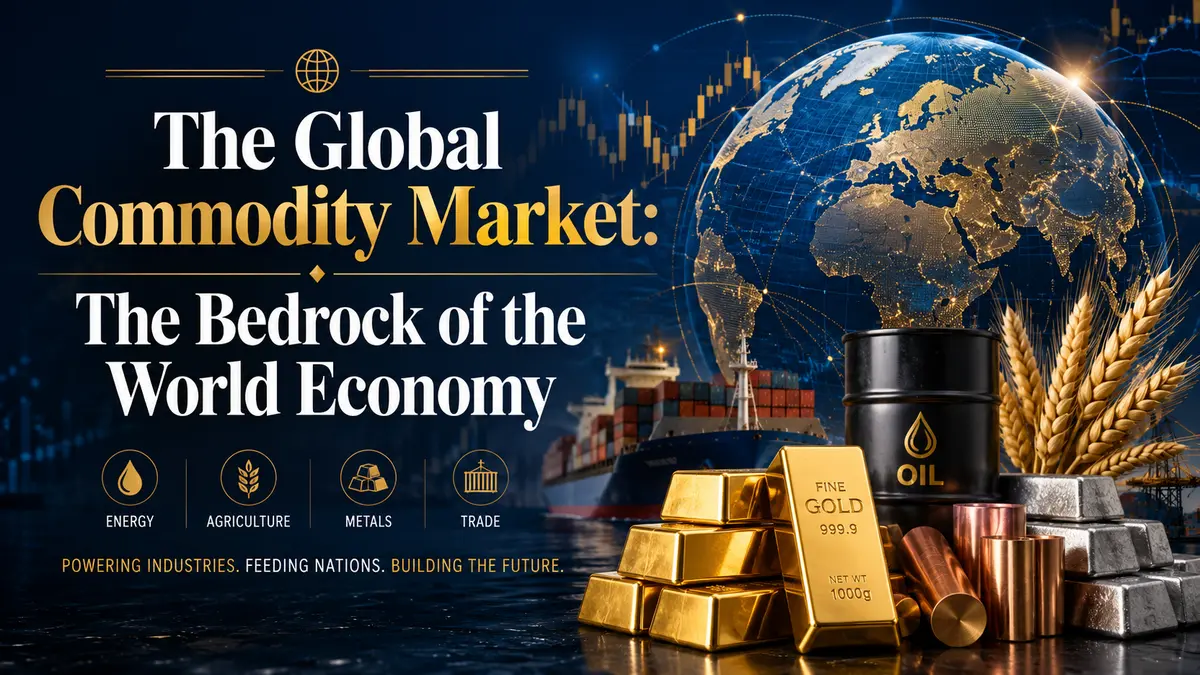
The commodity market is a vital and dynamic segment of the global financial system dedicated to the trading of physical raw materials and primary agricultural products. Long before the invention of corporate stocks or government bonds, early civilizations were trading grain, spices, and precious metals. Today, this market plays an absolutely indispensable role in the modern global economy. It encompasses a vast spectrum of physical assets — from the crude oil that fuels global logistics to the gold stored in central banks, and the agricultural products that feed billions of people.
Understanding the commodity market requires looking beyond simple financial speculation. It is the fundamental arena where the raw building blocks of the modern world are priced, bought, and sold, setting the baseline costs for virtually every manufactured good and consumer product on the planet.
The Mechanisms of Trade: Spot Markets and Derivatives
Trading on the commodity market occurs through two primary financial mechanisms, catering to both physical consumers of raw materials and financial speculators.
-
The Spot Market: This is the arena for immediate, physical delivery. In the spot market, commodities are bought and sold for cash and delivered immediately (or within a few days) at the current, prevailing market price. For instance, an industrial manufacturer might purchase copper on the spot market because they need the physical metal to maintain factory operations that week.
-
Futures and Options Markets: The vast majority of commodity trading happens via derivative contracts on major global exchanges, such as the Chicago Mercantile Exchange (CME) or the London Metal Exchange (LME). A futures contract is a standardized legal agreement to buy or sell a specific commodity at a predetermined price at a specified time in the future. This allows massive corporations to hedge against price volatility. For example, a major European airline like Lufthansa might buy jet fuel futures to lock in their energy costs for the upcoming year, protecting their profit margins from sudden spikes in global oil prices.
Key Sectors of the Commodity Market
The commodity market is incredibly diverse, but it is generally categorized into three major sectors, known as “hard” and “soft” commodities.
Energy Commodities: Powering the Globe
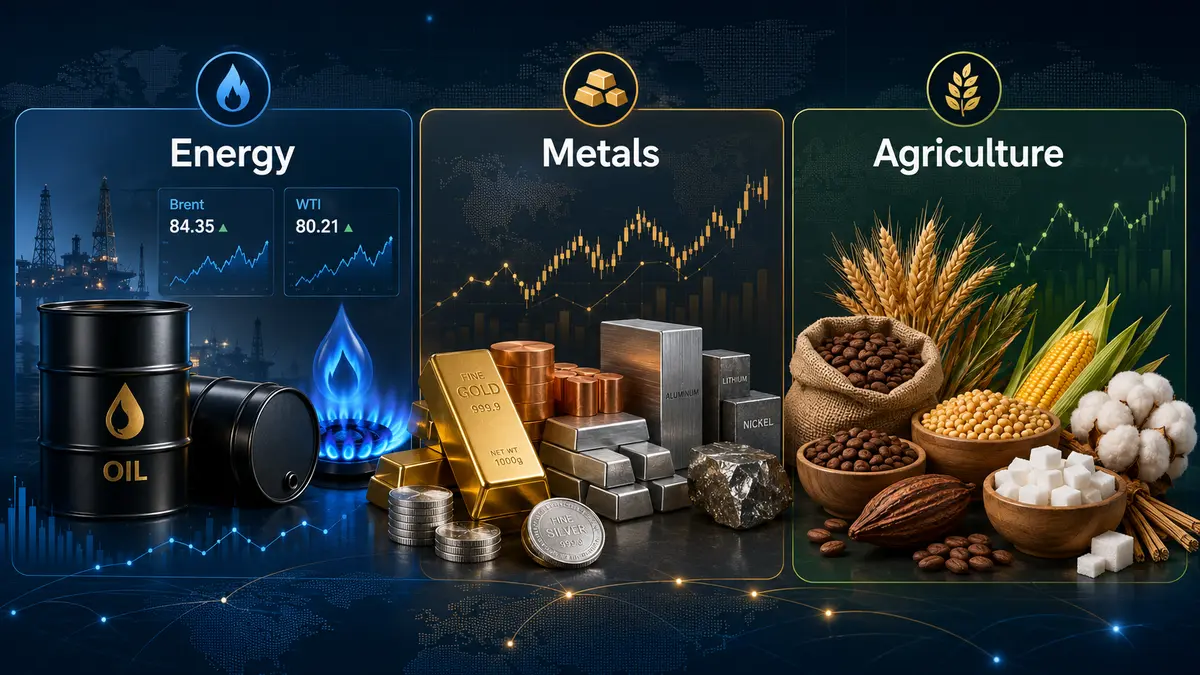
Energy is the most actively traded sector in the commodity space, heavily influencing global inflation and economic growth. The undisputed king of this sector is crude oil. Prices are typically benchmarked against Brent Crude (which dictates the price for roughly two-thirds of the world’s internationally traded oil) and West Texas Intermediate (WTI) (the benchmark for US oil). Beyond crude oil, this sector includes natural gas, heating oil, and refined gasoline. The pricing of energy commodities dictates the cost of global transportation, manufacturing, and even the heating of homes across Europe and North America.
Metals: From Safe Havens to Green Technology
The metals sector is broadly divided into two sub-categories: precious metals and base (or industrial) metals.
-
Precious Metals: Assets like gold, silver, and platinum are traditionally viewed as stores of value and safe-haven assets during times of economic turbulence or high inflation.
-
Industrial Metals: This includes copper, aluminum, zinc, and increasingly, battery metals like lithium and nickel. Copper is so heavily tied to infrastructure and manufacturing that financial analysts often refer to it as “Dr. Copper,” as its price movements can effectively diagnose the overall health of the global economy. Furthermore, the massive push toward electric vehicles (EVs) and renewable energy infrastructure in the US and the European Union is creating unprecedented long-term demand for these industrial and rare-earth metals.
Agricultural Products (Softs and Grains)
Agricultural commodities — often referred to as “soft commodities” — are products that are grown rather than mined or extracted. This massive sector includes grains like wheat, corn, and soybeans, which are essential for both human consumption and livestock feed. It also includes luxury agricultural goods like coffee, sugar, cocoa, and cotton. The prices of these goods directly impact the global food supply chain and the grocery bills of consumers worldwide.
Macroeconomic and Geopolitical Drivers of Commodity Prices
Unlike stocks, whose value is heavily determined by corporate earnings and management decisions, commodity prices are primarily driven by sweeping macroeconomic trends, global supply chains, and the raw forces of nature.
The Immutable Law of Supply and Demand
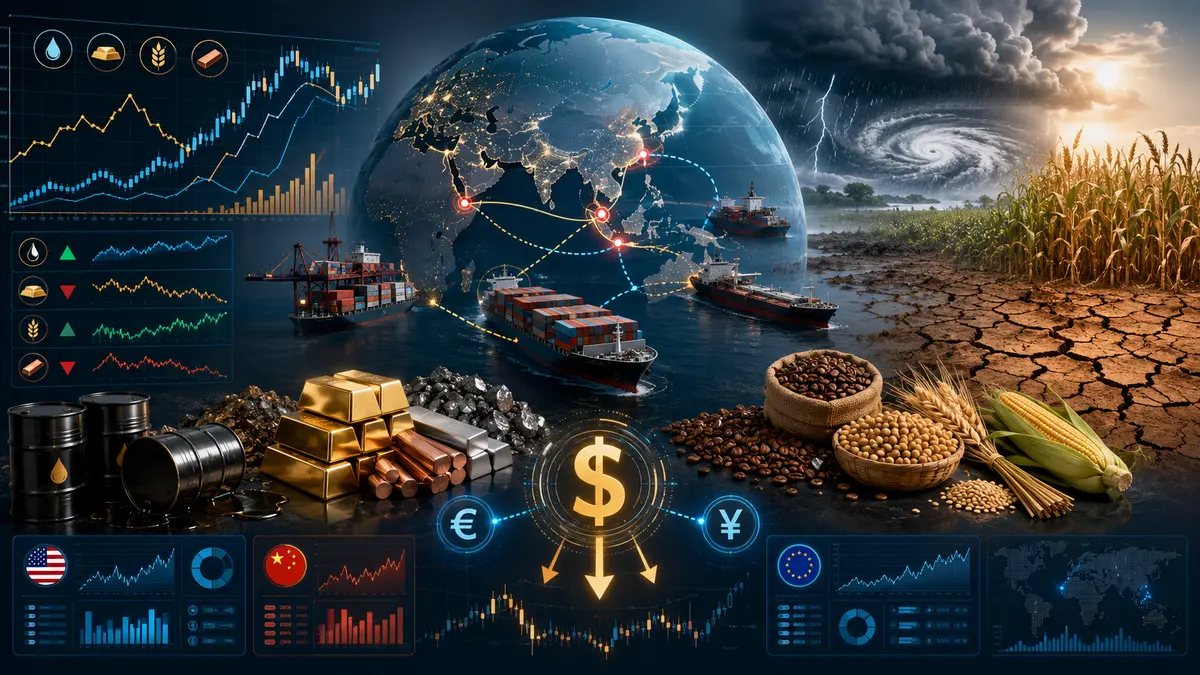
The most fundamental driver of the commodity market is the balance between global supply and demand. When major economies experience rapid industrial expansion, their demand for raw materials surges. If the mining or agricultural sectors cannot increase their output fast enough to meet this new demand, prices skyrocket. Conversely, during a global recession, demand for energy and industrial metals collapses, leading to sharp price declines.
Geopolitical Tensions and Supply Chain Disruptions
Geopolitics play a massive role in commodity pricing, as the geographical distribution of natural resources is highly uneven. Political instability, trade tariffs, or outright conflicts in resource-rich regions can cause immediate panic in the markets. For example, if political tensions threaten maritime chokepoints like the Strait of Hormuz in the Middle East or the Panama Canal, the risk of oil and gas shipments being delayed causes energy futures to surge.
Climate, Weather, and Natural Disasters
For agricultural commodities, weather is the single most critical factor. Changes in global weather patterns, such as the El Niño and La Niña phenomena, can drastically alter crop yields. A severe drought in the American Midwest could decimate the corn and soybean harvests, while an unexpected frost in Brazil could destroy vast swathes of Arabica coffee plantations, sending global coffee prices soaring overnight. Even non-agricultural commodities are vulnerable; massive hurricanes in the Gulf of Mexico can force offshore oil rigs to shut down, restricting energy supplies.
Global Economic Health and Currency Fluctuations
The overall health of major global economies — specifically the United States, China, and the European Union — dictates commodity demand. Because China is the world’s manufacturing hub, its economic data heavily influences the price of base metals. Additionally, because the vast majority of global commodities are priced in US Dollars, currency exchange rates are a major factor. Generally, there is an inverse relationship between the US dollar and commodity prices. If the US dollar strengthens, commodities become more expensive for buyers using other currencies (like the Euro or the Yen), which can suppress global demand and push commodity prices downward.
Why Investors Are Drawn to the Commodity Market
The commodity market is not just for farmers and industrial giants; it attracts a massive influx of capital from retail investors, hedge funds, and institutional asset managers for several compelling reasons.
Portfolio Diversification and Risk Mitigation
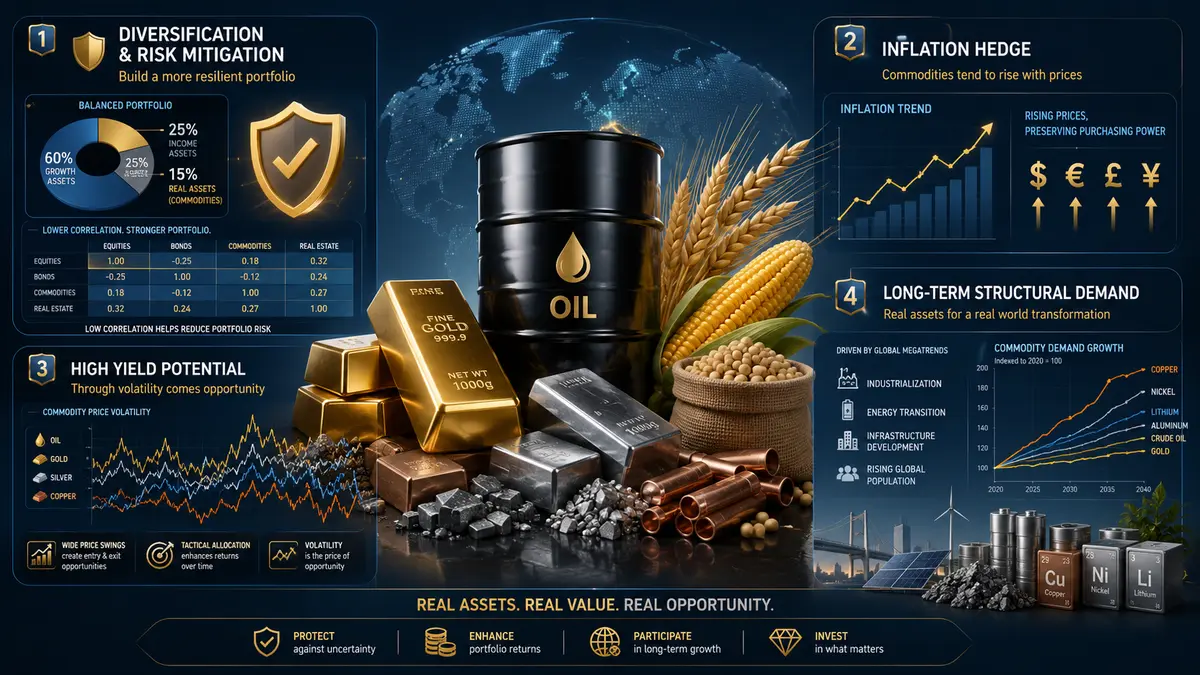
One of the primary reasons investors allocate capital to commodities is for portfolio diversification. Commodities historically have a low, or sometimes negative, correlation with traditional asset classes like equities and corporate bonds. When stock markets crash due to systemic economic fears, investors often flock to precious metals like gold to protect their wealth, helping to smooth out the overall volatility of a well-balanced investment portfolio.
A Natural Hedge Against Inflation
Commodities are arguably the most effective natural hedge against inflation. Inflation is defined as a general increase in the prices of goods and services. Since commodities are the raw materials used to create those goods and services, their prices naturally rise during inflationary periods. By owning physical commodities or commodity futures, an investor’s purchasing power grows in tandem with the rising cost of living.
High Yield Potential Through Volatility
The commodity market is famous for its high volatility, which translates to the potential for massive profits for skilled traders. Because commodities are often traded using highly leveraged futures contracts, investors can control a large amount of a commodity with a relatively small upfront capital requirement. While this leverage significantly amplifies potential returns for those who correctly analyze market trends, it also heavily amplifies the risk of loss.
Long-Term Structural Demand
The demand for raw materials is fundamentally tied to human survival and technological progress. The global population continues to grow, ensuring a constant, rising demand for agricultural food products. Simultaneously, the rapid urbanization of developing nations and the massive transition toward green energy infrastructure in the Western world guarantee robust, decades-long demand for industrial metals and rare earth elements. This creates compelling, long-term macroeconomic trends for forward-looking investors.
Navigating Risks and Opportunities
The commodity market offers investors incredible opportunities for portfolio diversification, inflation protection, and high yields driven by robust global demand. However, it is a complex arena that is unforgiving to the unprepared.
Investments in this market carry significant risks associated with extreme price volatility, unpredictable weather events, and sudden geopolitical shocks.
Successful participation in the commodity market — whether through direct futures trading, commodity-focused ETFs, or shares in mining and agricultural companies — requires a deep understanding of global supply chains and rigorous fundamental analysis. Investors must continuously monitor the macroeconomic health of the world’s leading economies to navigate this foundational pillar of global finance effectively.

Comments
No comments yet. Be the first to share your thoughts!
Authentication Required
You must be logged in to post a comment.