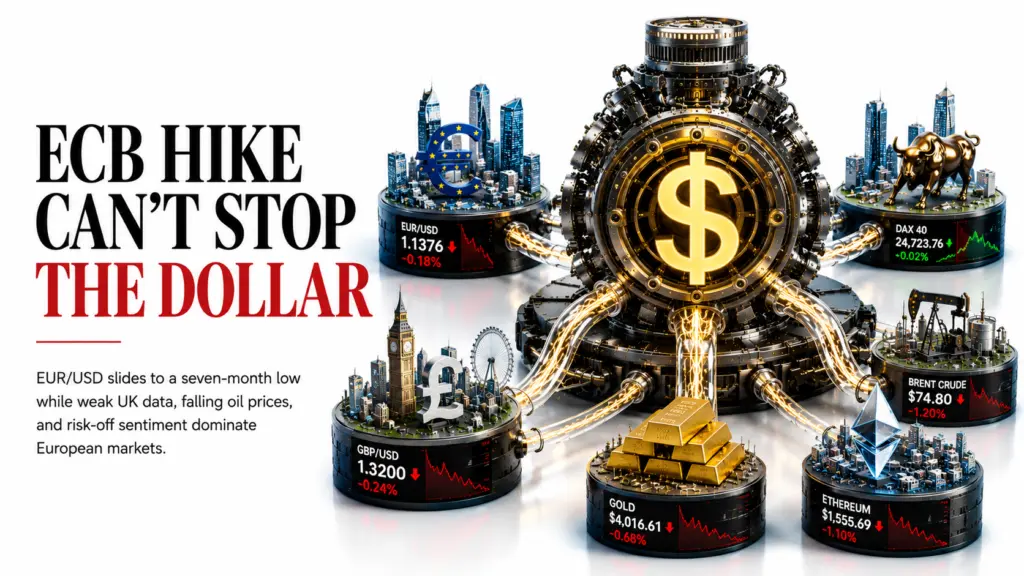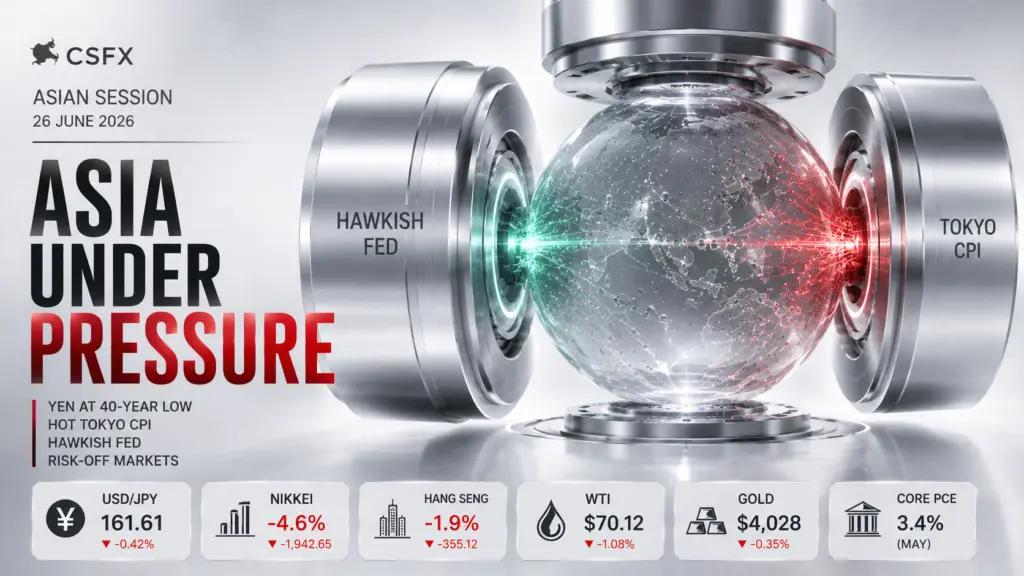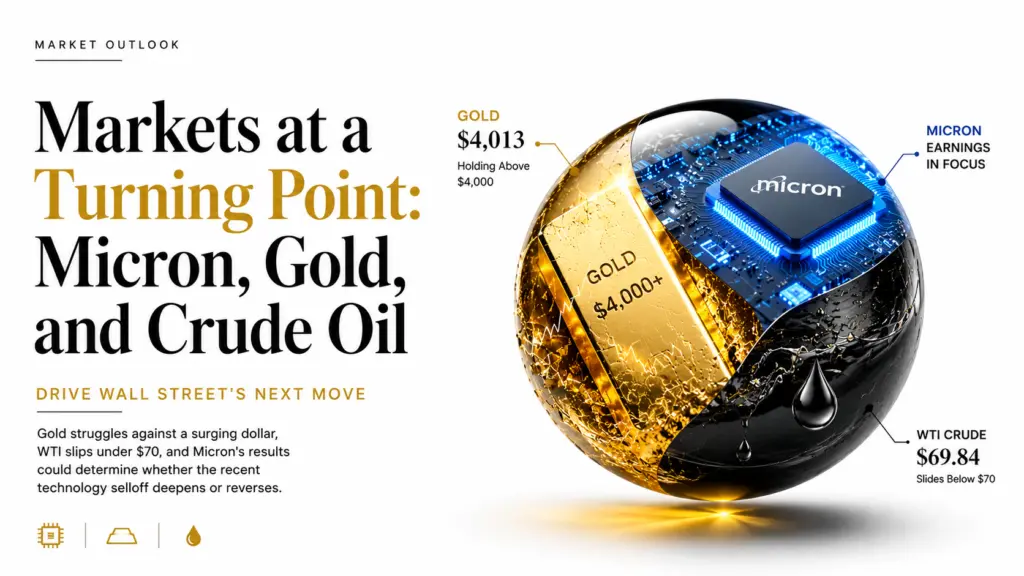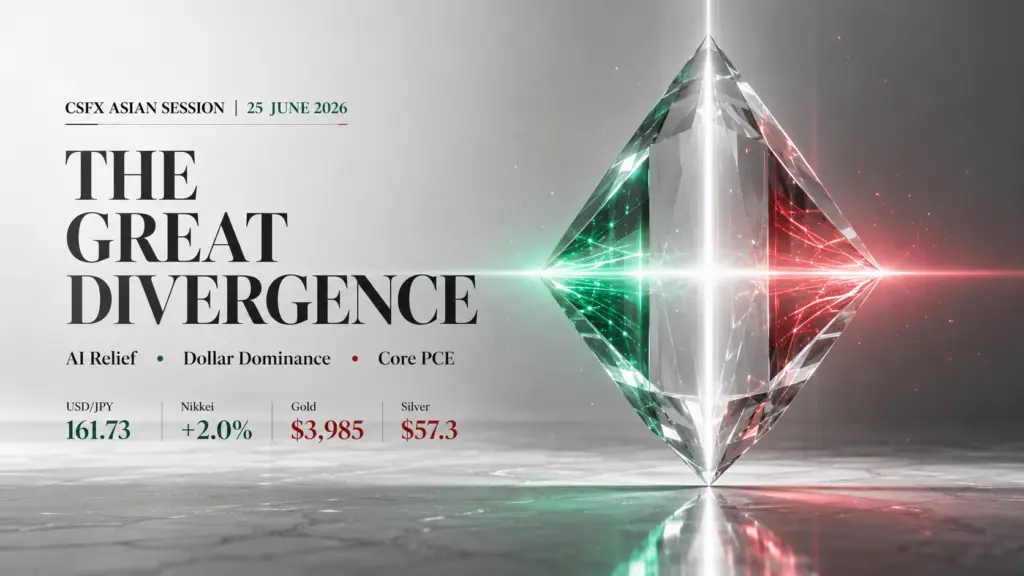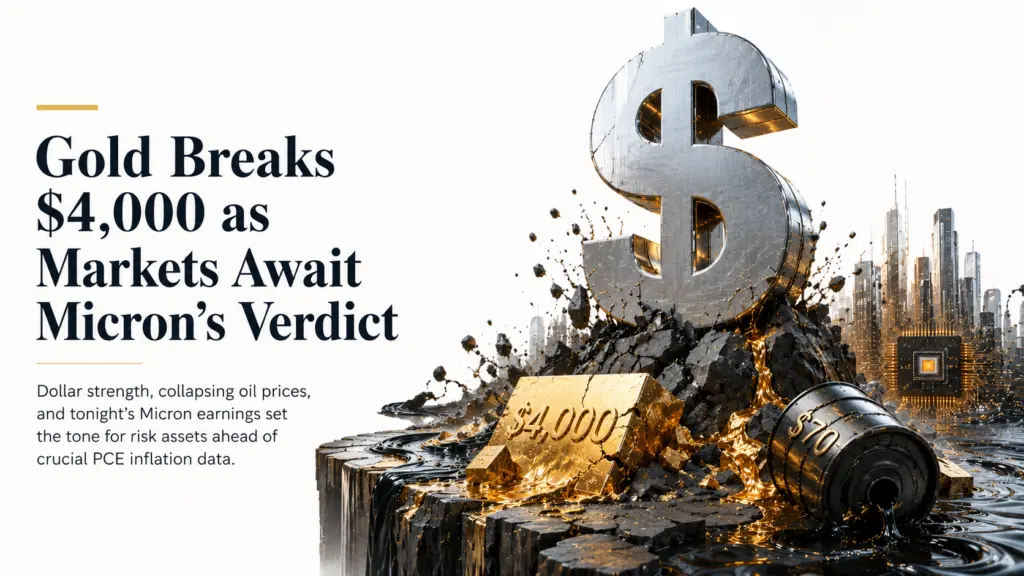
XAUUSD Forecast for May 5, 2026
Gold (XAUUSD) trading this week will be shaped by a complex interplay of geopolitical risks, the Fed’s hawkish monetary policy, and key technical levels. Below is a concise overview of the key factors, the expected price range, and practical take-profit recommendations.
Fundamental Background: Oil Shock and a Hawkish FedThe main fundamental driver for gold in May 2026 is the fallout from the geopolitical crisis in the Middle East. The blockade of the Strait of Hormuz and the rise of Brent crude to $118 per barrel have triggered a supply shock and a sharp acceleration in global inflation. Instead of enhancing gold’s appeal as a safe-haven asset, this shock has backfired: inflation is forcing the Fed and other central banks to keep rates higher for longer, increasing the opportunity cost of holding non-yielding bullion. Expectations for a rate cut in 2026 have all but disappeared, and the futures market is already pricing in a 24% probability of a rate hike by April 2027. The upcoming inauguration of new Fed Chair Kevin Warsh (May 15) only reinforces the market’s hawkish sentiment.
Adding to the downward pressure on prices is the fragile, yet still present, hope for a diplomatic détente between the US and Iran. A 14-point peace plan submitted by Tehran through Pakistani mediation, along with an extension of the ceasefire regime, is temporarily reducing the "chaos premium" built into gold prices. Meanwhile, fundamental support from central banks remains: they bought 244 tonnes in Q1 2026, and total demand rose 2% to 1,231 tonnes. The World Bank forecasts an average gold price of around $4,700 in 2026 but acknowledges that growth drivers are facing growing macroeconomic headwinds.
Technical Picture: Bearish Trend and Battle for Key LevelsThe technical configuration of XAUUSD as of May 4 is distinctly bearish. On the daily...
Continue reading...
Gold Market on April 29, 2026: In-Depth Fundamental Analysis and Technical Forecast
Today, April 29, 2026, the gold market (XAUUSD) remains under pressure from sellers. Traders' primary focus is on the US Federal Reserve's interest rate decision, as well as the geopolitical situation in the Middle East. Trading is taking place around the $4,600–$4,620 per troy ounce level following a sharp decline the day before. Let’s examine the key factors that will determine the precious metal's dynamics in the short term.
Fundamental Analysis: Geopolitics and Monetary Policy
The main fundamental factor weighing on gold remains the geopolitical crisis in the Middle East. Negotiations between the US and Iran on ending the conflict and unblocking the Strait of Hormuz have reached an impasse. According to sources, President Donald Trump is not satisfied with Iran's new proposal, which excludes discussion of its nuclear program. This is keeping energy prices elevated: Brent crude is firmly entrenched above $100 per barrel, and the rising cost of energy, in turn, is fueling global inflation expectations—a key negative factor for gold as a non-interest-bearing asset.
It is precisely the fear of accelerating inflation that is shifting central banks' rhetoric. Although the market is almost 100% certain that the Fed will keep rates unchanged today in the 5.25–5.50% range, the main intrigue lies in the commentary from Fed Chair Jerome Powell and the updated economic projections. Rising oil prices are forcing the regulator to abandon ultra-dovish rhetoric. Market participants are hastily revising their expectations: anticipated Fed rate cuts in 2026 are now priced at just 5 basis points, virtually ruling out any monetary policy easing this year. Such a "hawkish" reassessment reduces gold's appeal while simultaneously strengthening the US currency.
Demand statistics are creating additional pressure. According to data, investment demand for gold dropped sharply in the first quarter of 2026. Inflows into gold ETFs fell by 73% compared...
Continue reading...
Gold Under Pressure: Why XAU/USD Is Falling and What’s Next
On the morning of April 28, 2026, Forex investors are witnessing another round of decline in gold prices (XAU/USD). The precious metal, which just recently was storming the psychological $5,000 per ounce mark amid an acute geopolitical crisis, has now retreated below $4,650, hitting two-week lows. Traders’ attention is focused on several powerful factors, ranging from the nuclear standoff in the Strait of Hormuz to the verdict from the U.S. Federal Reserve.
Fundamental Analysis: Geopolitics and Central BanksThe main driver of gold's current dynamics is the unstable situation surrounding U.S.-Iran negotiations. Yesterday, reports emerged that Tehran proposed to Washington that shipping through the Strait of Hormuz be resumed, but attached a counter-condition — to postpone the resolution of the nuclear issue until the end of hostilities. Expectations of de-escalation triggered a temporary rise in risk appetite and weakened demand for safe-haven assets. However, by Tuesday morning, it became clear: U.S. President Donald Trump is unhappy with the Iranian initiative, and direct dialogue in Pakistan has collapsed.
While politicians exchange ultimatums, the U.S. dollar is strengthening its role as the primary safe haven, putting pressure on gold, which is denominated in it. Additional nervousness stems from central bank meetings: the Bank of Japan today and the Federal Reserve on Wednesday will announce their monetary policy decisions. The U.S. regulator is expected to keep its key interest rate unchanged, but the tone of the statements from outgoing Chairman Jerome Powell will be crucial for the medium-term trend. Markets are also pricing in a 35% probability of at least one monetary policy easing in the U.S. by the end of the year, which theoretically limits the dollar’s upside potential and supports gold.
The factor of oil prices should not be dismissed. Escalation in the Middle East has pushed the price of a...
Continue reading...
How to Become a Liquidity Provider for Deep Liquidity (DPLQ)
Investing in cryptocurrency is not just about buying tokens and waiting for the price to rise. Modern technology allows you to become an active market participant and earn income comparable to running your own exchange office. In this article, we will break down how to achieve this using the Deep Liquidity (DPLQ) token. Official DPLQ Contract Address: 0xa8aBE5A7413d76128Da234621969485347Cc4975 Official Corporate Wallet (BNB BEP20): 0x32E84d9aa32eDD4F7E5084500875ec8cfe96108d What is Liquidity and Your Role in It Liquidity is the "fuel" for trading. Imagine walking into a traditional currency exchange to buy dollars, but the clerk says, "We don't have any dollars; wait until someone comes in to sell them to us." At that moment, the exchange office has no liquidity. In the digital world, things work differently. For users to instantly buy and sell DPLQ, the system must have a reserve of tokens. This reserve is stored in what is known as Liquidity Pools — shared "digital vaults" where two assets are kept together (for example, DPLQ tokens and BNB coins). Your Role: When you deposit your assets into such a pool, you become a Liquidity Provider. You help the exchange operate without delays. You become a virtual "co-owner" of the trading pair. In exchange, the system rewards you with a portion of the transaction fees paid by every person who makes a trade. The DPLQ Philosophy: We encourage you to move from being a passive holder (waiting for the price to move) to an active market participant. By providing liquidity, you not only earn rewards but also make the token stronger and more stable for everyone. Why Add Tokens to a Pool? You might ask, "Why not just keep my tokens in my wallet?" Here are three main reasons to become a liquidity provider: Passive Income from Fees...
Continue reading...
Gold Trading on FOREX, April 27, 2026: A New Logic for the Defensive Asset
Monday morning, April 27, 2026, found gold in an extremely unstable position. The Asian session began with a collapse — XAU/USD tested the $4,672 level — after attempts to restart peace talks between the US and Iran reached an impasse, and energy flows through the Strait of Hormuz remained blocked for two months already. By midday, however, the situation changed. Information emerged that Iran, via Pakistani intermediaries, had sent the US a new proposal on denuclearization, the opening of the strait and an end to the war with a deferral of nuclear talks. This stirred markets, the dollar weakened, and gold recovered most of its morning losses, consolidating near $4,720 per ounce. At stake is far more than just another speculative wave. The gold market finds itself in a new, paradoxical reality: the war in the Middle East, which by classical standards ought to push prices higher, is today, on the contrary, suppressing the asset — because it pushes oil higher and fuels inflation, forcing the Fed to keep monetary policy tight. As Nikki Shiels, Head of Research and Metals at MKS Pamp, succinctly put it: gold is in “technical no man’s land — conviction is minimal, large volumes of capital remain on the sidelines, and the most honest word to describe the market right now is ‘lost’.” Technical Picture: Below the Moving Averages The technical picture is shaping up in the bears’ favor. On the daily chart, the price closed below the 50-day and 200-day moving averages, confirming a short-term bearish shift. On the 2-hour timeframe, the price is trading below the 50 EMA ($4,738) and the 200 EMA ($4,748). RSI and MACD are in neutral territory, pointing to consolidation rather than a well-defined trend. The key support zone today is $4,680–4,700. A break below this range will open...
Continue reading...
Investment Prospects in DEEP LIQUIDITY (DPLQ)
The cryptocurrency market has a promising new player — the Deep Liquidity (DPLQ) token. By combining a scarcity-driven emission model with professional market participation, DPLQ is demonstrating a strong start and ambitious plans for the future. Key Characteristics of DPLQ Symbol (Ticker): DPLQ Network: Binance Smart Chain (BEP-20) Contract Address: 0xa8aBE5A7413d76128Da234621969485347Cc4975 Total Supply: Exactly 1 000 000 DPLQ Listing: PancakeSwap DEX Successful Launch and Price Dynamics Immediately following its launch on PancakeSwap — the leading decentralized exchange (DEX) on the Binance Smart Chain, known for its high speeds and ultra-low fees — the DPLQ token showed immediate positive momentum. Within the first 24 hours, the asset's price rose by 2.66%. This growth is occurring alongside the formation of a core holder base, signaling organic interest in the project. Why Investing in DPLQ is a High-Potential Move The primary driver of DPLQ’s investment appeal is its Liquidity Strategy. Note: Liquidity is the ability of an asset to be quickly sold at a price close to the market rate. The higher the liquidity, the safer the asset is for the investor. DPLQ’s liquidity is maintained by three powerful forces: Market Makers: Large-scale investors who commit to maintaining constant buy and sell orders. They ensure that there is always a market for the token, minimizing price slippage. Liquidity Providers: Participants who lock their funds in pools to ensure seamless trading. Community: Active users who support the token's circulation. Growth Forecast and Ambitions Due to the active role of market makers and built-in deflationary mechanisms, the price of DPLQ is expected to demonstrate steady growth of 15-25% or more per month. The project’s roadmap includes expansion to the world’s largest trading platforms. By the time DPLQ is listed on top-tier exchanges such as Binance, OKX, and Bybit, the price...
Continue reading...
WHITE PAPER: DEEP LIQUIDITY (DPLQ)
A Deflationary Asset Driven by Hyper-Scarcity and Liquidity Provider Incentives. 1. EXECUTIVE SUMMARY In a market saturated with inflationary tokens, Deep Liquidity (DPLQ) introduces a "Healthy Economy" model based on a consistent reduction of supply. DPLQ is a decentralized ERC-20 token built with a smart contract that automatically burns 1% of every transaction. Our mission is to build a self-regulating ecosystem where long-term holding and liquidity provision are rewarded through mathematically programmed scarcity. 2. THE PROBLEM & THE SOLUTION The Problem: Most modern tokens suffer from value erosion due to infinite emission or a lack of utility mechanisms. This discourages investors and makes liquidity pools unstable. The Deep Liquidity Solution: Permanent Burn Mechanism: Every movement of the token makes it rarer. LP Incentives: We create an environment where early liquidity providers gain maximum market control and are shielded from inflationary pressure. Transparency: The Solidity 0.8.24 smart contract ensures security and unchangeable rules of the game. 3. TOKENOMICS & TECHNICAL SPECIFICATIONS The foundation of Deep Liquidity is built on a fixed-supply, hyper-deflationary model. The token operates under the name Deep Liquidity with the ticker DPLQ on EVM-compatible networks. At the moment of deployment, a strictly limited initial supply of 1,000,000 DPLQ is minted. To ensure maximum precision in financial operations, the token utilizes 18 decimals. The core of our economic engine is a 1% Transaction Burn Tax. During any transaction — whether it is a simple transfer between wallets or a trade on a decentralized exchange — the smart contract automatically splits the amount. While 99% of the transaction is delivered to the recipient, the remaining 1% is permanently removed from the total supply and sent to a "null address," ensuring it can never be recovered or sold again. 4. EARLY ADOPTER STRATEGY: WHY "NOW" IS BETTER THAN "LATER"...
Continue reading...