

USD/TWD – Semiconductor Foundry Dominance, Life Insurance Outflows, and Central Bank Range Management
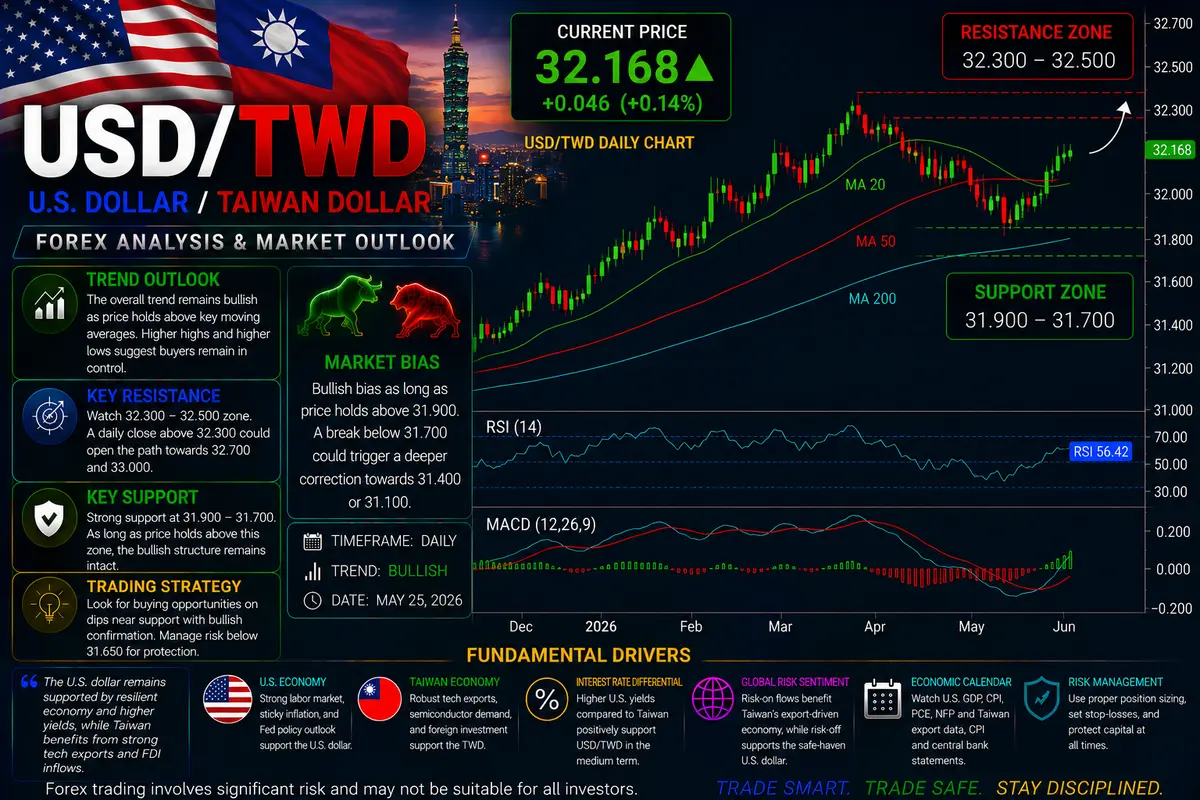
If you sit down with an Asian foreign exchange dealer in Taipei or Singapore and ask about trading the Taiwan Dollar, they will give you a straightforward reality: you are trading a proxy for the global technology hardware supply chain, bound tightly within a heavily managed central bank corridor.
Taiwan holds an extraordinarily dominant position in advanced microchip manufacturing. The island produces over 60 percent of the world’s total semiconductors and over 90 percent of its highest-grade microchips. Because modern technology infrastructure—ranging from smartphone hardware and consumer electronics to artificial intelligence data centers and automotive computing systems—requires Taiwanese silicon, USD/TWD (US Dollar vs. Taiwan Dollar) sits right at the center of global trade flows.
However, trading USD/TWD requires navigating a dual-market environment. On one side, massive portfolio inflows into Taiwanese tech equities push the local currency higher. On the other side, structural capital outflows from domestic institutional investors and direct intervention by the Central Bank of the Republic of China (Taiwan) prevent the currency from moving too far, too fast.
1. The Core Engine: Foundry Export Orders and TAIEX Equity Flows
To understand how USD/TWD moves over multi-week and multi-month horizons, you have to look past standard macroeconomic indicators and track global technology expenditure alongside foreign institutional equity flows.
Taiwan’s economic growth is heavily concentrated in its semiconductor ecosystem. Anchored by foundry giant TSMC alongside a dense supply chain of integrated circuit design houses, chemical suppliers, testing specialists, and server assemblers, Taiwan’s export performance moves in lockstep with global silicon demand.
This economic structure creates a direct mechanical relationship between technology earnings and spot foreign exchange order flow:
-
Expanding Global Tech Demand: When global tech companies ramp up hardware spending, orders flood into Taiwanese foundries. To participate in this hardware growth, offshore asset managers deploy capital into the Taiwanese stock market, known as the TAIEX. To purchase local shares, these international funds sell US Dollars and buy Taiwan Dollars on spot dealing desks. This commercial conversion creates a steady, persistent bid for TWD, pushing USD/TWD lower toward major technical support levels.
-
Contracting Hardware Demand: When global technology spending slows, consumer demand weakens, or supply chain inventory builds up, foundry capacity utilization rates fall. Foreign institutional investors respond by liquidating their TAIEX holdings. Converting those local proceeds back into US Dollars to repatriate capital generates sudden, heavy demand for Greenbacks, driving USD/TWD rapidly upward.
Taiwan Tech Capital Flow Transmission:
+---------------------------------------------------------------------+
| Expanding Global Tech Cycle / Server & AI Buildout
|  ---> High Foundry Capacity Utilization & Record Export Revenues
|  ---> Foreign Funds Buy TAIEX Equities (Spot Execution: Sell USD /   |      Buy TWD)
|  ---> Persistent Downward Pressure on USD/TWD
+---------------------------------------------------------------------+
| Contracting Tech Cycle / Hardware Inventory Accumulation
|  ---> Export Orders Fall & Foundry Revenue Estimates Trimmed
|  ---> Foreign Funds Liquidate TAIEX Stocks (Spot Execution: Buy USD /  |       Sell TWD)
|  ---> Upward Rallies in USD/TWD
+---------------------------------------------------------------------+
Because international portfolio managers rebalance their positions in large blocks, tracking daily Foreign Institutional Investor (FII) net buying and selling data on the TAIEX provides traders with a reliable real-time indicator for spot market momentum.
2. The Structural Counterweight: Life Insurance Overseas Outflows
While strong technology export cycles generate substantial foreign currency inflows, a unique structural feature of Taiwan’s domestic financial system creates a massive, ongoing counterweight: the domestic life insurance industry.
Taiwan’s life insurance companies manage immense pools of domestic household savings. However, because local interest rates in Taiwan remain relatively low, these life insurers cannot generate sufficient yield within the domestic bond market to meet their long-term guaranteed payout obligations to policyholders.
To solve this yield deficit, Taiwanese life insurers deploy hundreds of billions of dollars into overseas assets, primarily fixed-income instruments like US corporate bonds, foreign sovereign debt, and US Treasuries.
Market Counterbalance Mechanics:
+-------------------------------------------------------------------+
| Tech Export Boom  ---> Foreign funds buy TAIEX shares
|                      (Generates strong downward pressure on USD/TWD)|
+-------------------------------------------------------------------+
| Life Insurer Outflows ---> Local institutions buy US bonds
|                            (Generates steady upward demand for USD)
+-------------------------------------------------------------------+
| Net Market Result     ---> Inflows absorb outflows, anchoring USD/TWD
|                            within clean, range-bound channels.
+-------------------------------------------------------------------+
This structural outflow plays a critical role in daily spot market dynamics:
-
Absorbing Exporter Inflows: When a strong tech cycle drives massive Dollar conversions onto spot desks, local life insurance firms step in to purchase those discounted US Dollars to fund their overseas bond purchases.
-
Smoothing Trend Velocity: This institutional demand for foreign assets acts as an automatic shock absorber. By absorbing excess Dollar liquidity, life insurer purchases keep USD/TWD from appreciating as rapidly as Taiwan’s massive current account surplus would otherwise dictate.
3. Central Bank Policy: CBC Range Management and Smoothing Operations
The Central Bank of the Republic of China (Taiwan) (CBC) manages monetary policy with a firm focus on exchange rate stability, maintaining an active, hands-on presence across interbank dealing desks.
Because Taiwan’s economy relies so heavily on exports—with total exports accounting for the majority of national Gross Domestic Product (GDP)—the CBC pays

Comments
No comments yet. Be the first to share your thoughts!
Authentication Required
You must be logged in to post a comment.