

USD/THB – Tourism Capital Accounts, Gold Trade Anomalies, and Bank of Thailand Mechanics
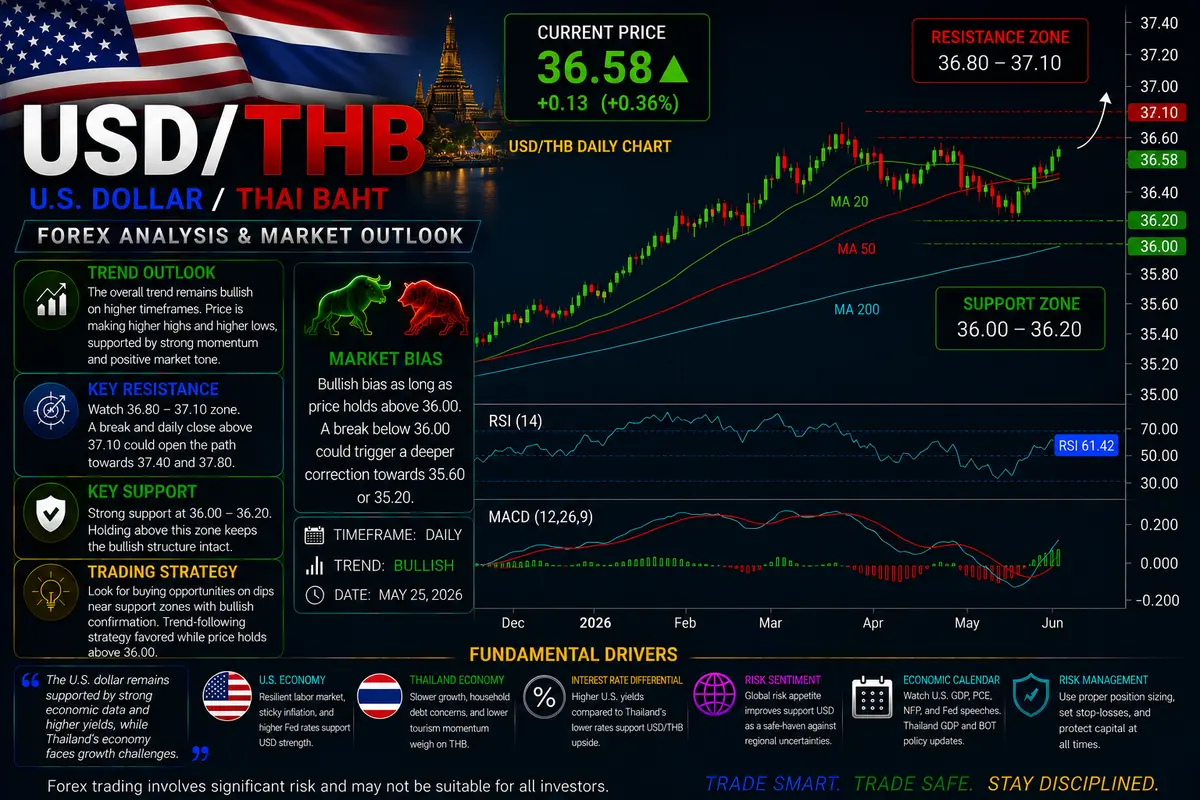
If you monitor emerging Asian currencies on institutional spot desks, USDTHB ... (US Dollar vs. Thai Baht) presents a structural profile that diverges sharply from its regional peers. While currencies like the Indonesian Rupiah (IDR) or Philippine Peso (PHP) move heavily on high-yield debt spreads and industrial commodity cycles, the Baht is anchored by a unique combination of tourism revenue inflows, physical gold trading dynamics, and aggressive central bank liquidity smoothing.
For macro traders, USD/THB is a highly liquid vehicle that offers clean directional trends when tourism flows align with global risk sentiment. However, navigating the order book requires understanding the specific microeconomic quirks that drive daily Baht conversions.
1. The Service Account Engine: Tourism Seasonality and Current Account Swings
Unlike heavily industrial Asian economies, Thailand’s current account balance is dominated by service exports—specifically international tourism.
Tourism accounts for a massive chunk of Thai Gross Domestic Product (GDP). This creates a distinct seasonal cycle on spot FX desks:
-
High Season (November – March): As millions of international visitors head to Thailand, foreign currency conversions surge. Tour operators, airlines, and hospitality networks dump foreign hard currency (USD and EUR) on local dealing desks to acquire Baht for domestic operational expenses. This sustained commercial demand creates a strong seasonal bid for the Baht, pushing USD/THB into multi-month downward trends.
-
Low Season (Monsoon Period / Q2–Q3): Tourism revenues contract significantly during the rainy season. At the same time, foreign corporate entities in Thailand remit annual dividends back to offshore parent companies. The net current account often flips into deficit, leaving USD/THB vulnerable to sharp upside rallies.
Seasonal Flow Transmission:
+---------------------------------------------------------------------+
| Q4-Q1 High Season  ---> Heavy Commercial USD Sales / Spot THB Demand
|                    ---> Current Account Surplus Expands
|                    ---> USD/THB Grinds Lower
+---------------------------------------------------------------------+
| Q2-Q3 Low Season  --> Tourism Inflows Drop + Corporate Dividend
|                        Outflows
|                    ---> Current Account Pressure
|                    ---> USD/THB Finds Fast Upside Bids
+---------------------------------------------------------------------+
2. The Gold Market Paradox: Why XAU/USD Moves the Baht
One of the most distinctive features of the Thai market is the country’s obsession with physical gold. Thailand ranks among the highest per-capita physical gold consumption markets in Asia, and local bullion trading creates an unusual inverse relationship between international gold prices and USD/THB.
In most global markets, gold is priced in US Dollars. When international spot gold (XAU/USD) rallies sharply, you might expect gold-exporting countries to see currency strength. In Thailand, local retail investors treat gold as a liquid savings vehicle, buying when prices dip and selling aggressively when prices surge.
This creates a mechanical FX order flow:
-
Spot Gold Rallies: As XAU/USD surges toward record highs, Thai investors bring physical gold and local holdings to Bangkok bullion dealers to lock in profits.
-
Bullion Exporters Convert: Local gold traders export the physical bullion abroad to international refineries, receiving US Dollars in return.
-
Spot FX Conversion: Bullion dealers immediately sell those US Dollars on local spot markets to convert back into Baht to pay local retail sellers.
-
Impact on USD/THB: This surge in spot USD selling causes USD/THB to drop rapidly. A massive spike in gold prices frequently triggers an immediate, localized rally in the Thai Baht.
3. The Bank of Thailand (BOT) and Capital Flow Controls
Monetary policy set by the Bank of Thailand (BOT) focuses heavily on maintaining exchange rate stability to protect the nation’s export-driven economy.
Because a rapidly appreciating Baht hurts Thai agricultural and manufacturing competitiveness abroad, the BOT actively monitors capital flows. When foreign hot money pours into Thai sovereign bonds to play yield differentials, the central bank frequently steps into the spot market to buy US Dollars and accumulate foreign reserves.
To keep a handle on over-speculation, the BOT utilizes targeted administrative measures:
-
Non-Resident Baht Accounts (NRBA): Strict limits are placed on the outstanding daily balances held by offshore financial institutions in local Baht accounts to curb hot-money positioning.
-
Reporting Thresholds: Large-scale commercial conversions and cross-border gold-related FX transactions require strict documentation, preventing offshore funds from easily squeezing local order books.
When the BOT signals that the Baht is appreciating too rapidly relative to regional trade competitors (like the Vietnamese Dong or Malaysian Ringgit), traders watch for direct central bank intervention that caps downward momentum on USD/THB.
Practical Execution Guidelines for Desk Traders
-
Focus on the Asian Trading Window (02:00 – 09:00 UTC): Liquidity is at its peak during Bangkok and Singapore banking hours. Spreads widen during European and US sessions, though US morning economic data can still trigger momentum moves.
-
Cross-Reference XAU/USD Momentum: Always keep a real-time spot gold chart open when trading USD/THB. Sudden break-outs in XAU/USD often lead spot USD/THB price action by several minutes.
-
Factor in the Current Account Releases: The Thai Ministry of Commerce and Bank of Thailand release monthly trade and current account figures. Positive surprises in tourism receipts or trade balances provide reliable fundamental backing for short USD/THB swing positions.

Comments
No comments yet. Be the first to share your thoughts!
Authentication Required
You must be logged in to post a comment.