

EUR/GBP – The Border Crosser, Range Trading, and Central Bank Relative Strength
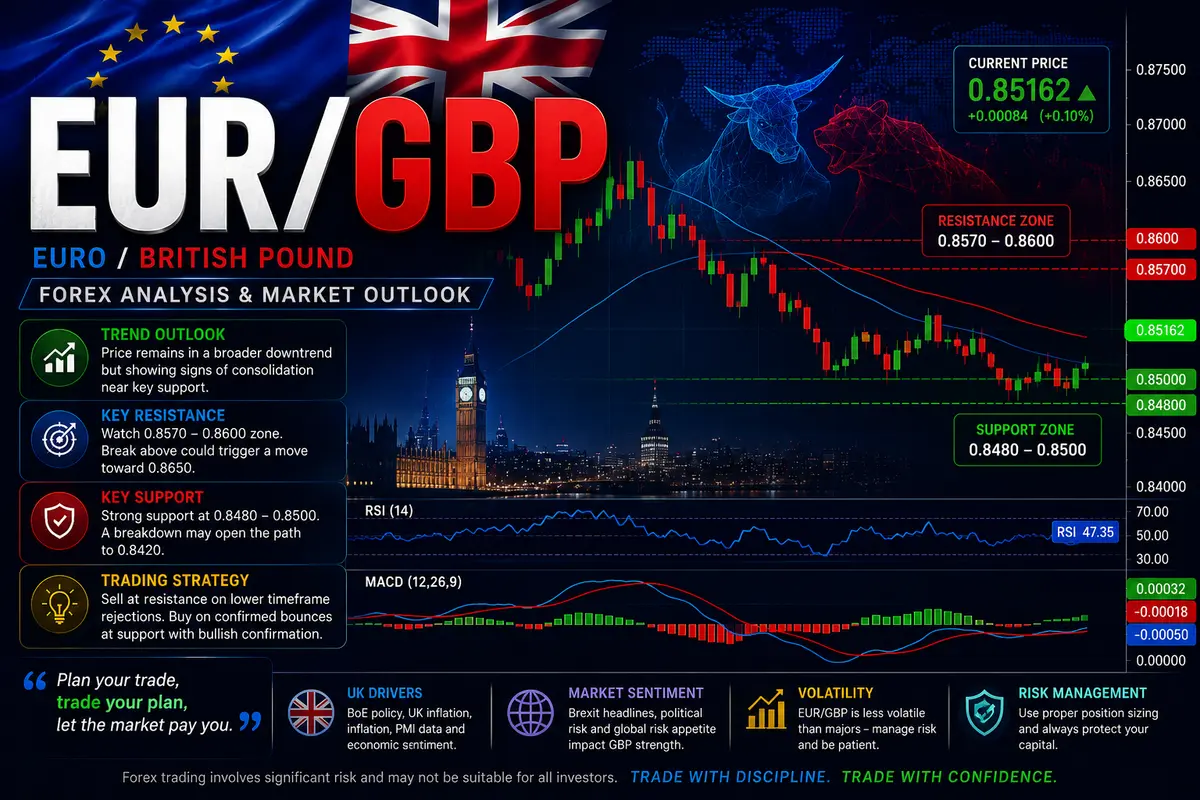
EUR/GBP is known across institutional trading desks as one of the most stubborn, low-volatility cross pairs on the planet. Unlike explosive pairs like GBP/JPY or news-driven majors like EUR/USD, EUR/GBP spends the vast majority of its existence locked in tight, highly structured horizontal ranges.
When traders move from fast-moving trend assets to EUR/GBP without adjusting their expectations, they usually end up frustrated. They get chopped up buying breakouts that immediately fail, or they close trades out of boredom right before a subtle 30-pip expansion completes.
However, for traders who understand range mechanics, institutional order matching, and relative strength between the European Central Bank (ECB) and the Bank of England (BoE), EUR/G
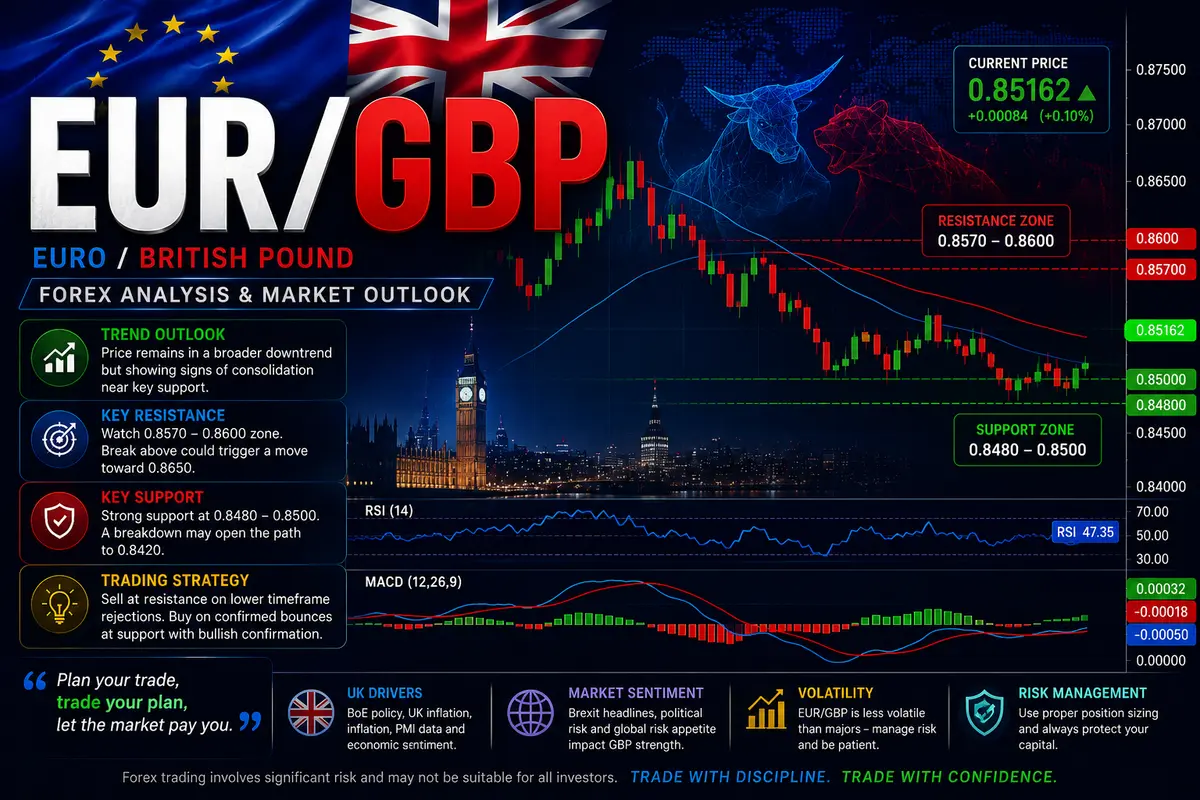
P is one of the most reliable mean-reversion assets in forex.
Why EUR/GBP Trades So Differently
To understand why EUR/GBP rarely produces 200-pip trend days, you have to look at the massive economic and geographic integration between Great Britain and the European Union.
1. The Geographic and Commercial Tether
The UK and Eurozone are primary trading partners. Millions of Euros and Pounds move between London, Frankfurt, Paris, and Amsterdam every single day to settle real-world corporate transactions. Because cross-border supply chains are so tightly linked, long-term valuation divergences between the two currencies create economic drag on both sides.
When EUR/GBP moves too high, European goods become expensive for British buyers; when it drops too low, UK exports get penalized. Commercial order flow naturally pulls this pair back toward a fair-value median over time.
2. The Shared US Dollar Factor
Because both the Euro and Sterling are priced heavily against the US Dollar in the spot market, global USD momentum hits both currencies at the exact same time.
If the US Dollar Index (DXY) surges or crashes, EUR/USD and GBP/USD usually move in the same direction. Because both leg-pairs are moving together, the net difference between them—which is EUR/GBP—remains relatively stable.
Relative Strength: The Engine Behind the Range Breaks
While EUR/GBP spends 80% of its time ranging, that remaining 20% brings clean, sustained directional trends. These trends don’t come from technical breakouts; they come from clear policy divergence between two central banks sitting right next door to each other.
-
ECB Hawkish vs. BoE Dovish: If inflation prints hot in Germany and France while the ECB signals aggressive rate hikes, but the UK economy shows signs of recession forcing the BoE to pause, money flees London for Frankfurt. EUR/GBP will grind steadily higher day after day.
-
BoE Hawkish vs. ECB Dovish: Conversely, if the Bank of England stays aggressive on inflation while European growth stagnates, Sterling gains the upper hand, dragging EUR/GBP into long-term downward slides.
To catch these rare macro trends early, don’t look at chart patterns first. Compare the forward guidance from the ECB’s Monetary Policy Statements against the BoE’s Monetary Policy Committee (MPC) minutes. Whichever central bank is forced to stay higher-for-longer will drive the underlying cross direction.
Session Mechanics: The European Double-Dip
Because both component currencies belong to the same European time zone, EUR/GBP experiences a very specific intraday volume schedule.
1. The London/Frankfurt Open (02:00 – 05:00 EST)
This is the main event. Unlike USD pairs that wait for New York morning data, EUR/GBP sees its primary daily liquidity injected right when European and UK dealing desks open simultaneously.
-
The Morning Sweep: Between 02:00 and 03:30 EST, algorithms will often throw a quick spike past the previous day’s high or low to clear out retail stop orders.
-
The Mean Reversion: Because genuine trend volume on this pair is rare, these early morning breakouts frequently fail, turning into prime fade/mean-reversion trades back toward the weekly open or daily mid-point.
2. The New York Lull (08:00 – 12:00 EST)
When Wall Street opens, global volume concentrates on US Dollar assets and equity markets. EUR/GBP volume dries up significantly, and the pair usually settles back into a slow, 10-to-15 pip drift for the remainder of the session.
The Practical Trading Rules for EUR/GBP
-
Ditch the Breakout Strategy: Never buy a bullish breakout or sell a bearish breakdown on EUR/GBP expecting a massive runaway trend. Assume the boundary of the range will hold until proven otherwise by a major central bank rate announcement.
-
Embrace the Fade: Look for price to sweep key liquidity pools above daily swing highs or below daily swing lows into unmitigated 1-Hour order blocks. When you see a clear lower-timeframe rejection wick, fade the move back toward the center of the range.
-
Target Modest Ratios: Accept that an average day on EUR/GBP might only cover 30 to 45 pips top-to-bottom. Set tight 8-to-12 pip stop losses, take profits at logical internal structure levels, and don’t hold out for 100-pip windfalls.

Comments
No comments yet. Be the first to share your thoughts!
Authentication Required
You must be logged in to post a comment.