

EUR/JPY – Cross-Rate Arbitrage, Rate Divergence, and Session Breakdown Patterns
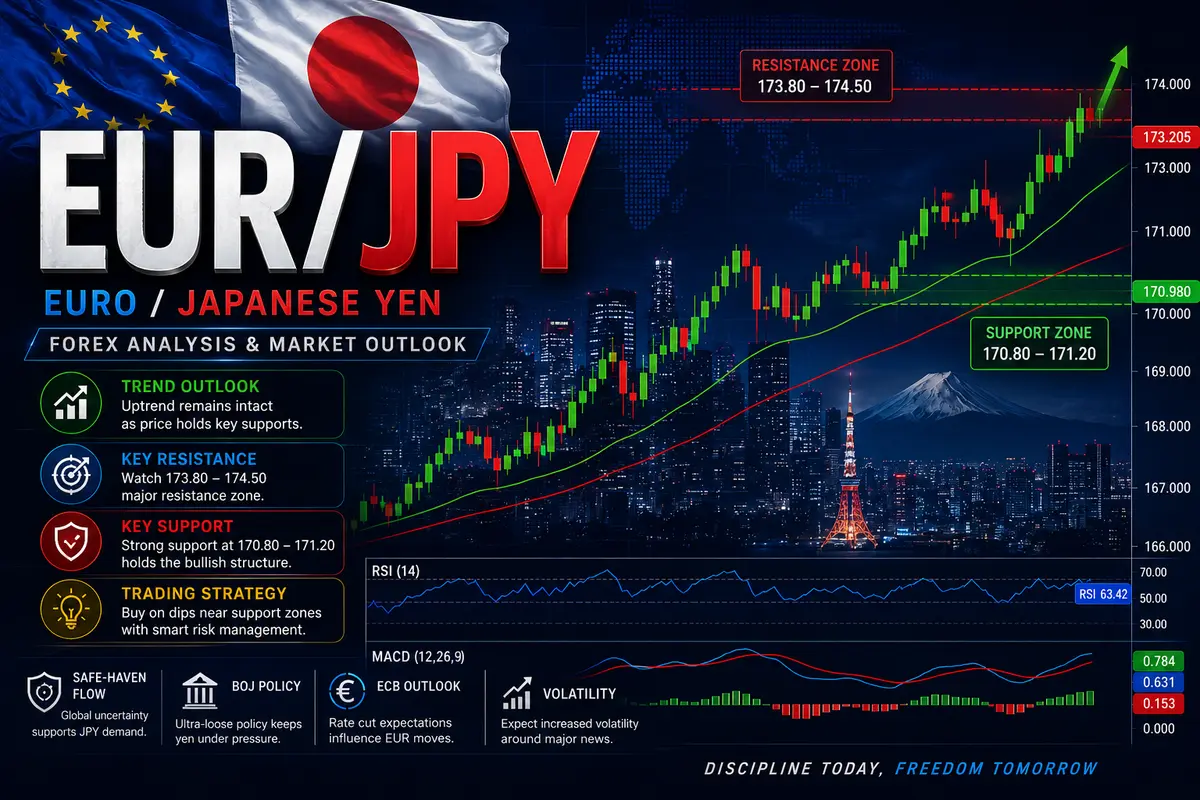
If GBP/JPY is the erratic, high-octane rocket of the cross-rates, EUR/JPY is its more methodical, structural cousin. Known simply as “The Europy” across global trading desks, this pair blends the massive institutional trade volume of the European Union with the yield-sensitive capital flows of Japan.
It is a favorite among institutional trend-followers because it tends to respect technical levels with cleaner discipline than GBP/JPY, while still offering double the daily pip movement of EUR/USD. However, trading EUR/JPY successfully requires understanding how European Central Bank (ECB) policy directly collides with Bank of Japan (BoJ) operations, and how to spot when cross-rate arbitrage is driving the market.
The Anatomy of the EUR/JPY Engine
Just like any cross-rate, EUR/JPY does not have its own isolated order book running independent of the rest of the market. Its price is mathematically tied to two core pairs: EUR/USD and USD/JPY.
-
The Formula: EUR/JPY=EUR/USD×USD/JPY
When you look at a EUR/JPY chart, you are seeing the net result of that equation playing out in real time.
Understanding the Three Dynamics
-
The Double Engine (Clean Trend): When EUR/USD is pushing higher and USD/JPY is also expanding to the upside, EUR/JPY experiences explosive, clean bullish runs. The two leg-pairs are working together to flood the market with buying pressure.
-
The Drag Effect (Choppy Range): If EUR/USD is rallying strongly, but USD/JPY is tumbling because bond yields are dropping, EUR/JPY gets caught in a tug-of-war. Price action becomes messy, wicks get long, and standard breakout trades fail.
-
The Divergence Opportunity: If EUR/USD is sitting flat in a quiet consolidation, but USD/JPY breaks out on bond market volume, EUR/JPY will follow USD/JPY almost pip-for-pip.
Before placing an order on EUR/JPY, always check both EUR/USD and USD/JPY. If you don’t know what the underlying legs are doing, you’re trading with a blindfold on.
Policy Divergence: ECB vs. BoJ
The big macro trends on EUR/JPY—the ones that move the pair 500 to 1,000 pips over a few months—are driven by monetary policy alignment between Frankfurt and Tokyo.
-
European Central Bank (ECB): The ECB manages monetary policy for 20 European nations. When Eurozone inflation runs hot, the ECB hikes interest rates to cool the economy. Higher European yields draw global capital into Euro-denominated bonds, putting upward pressure on the Euro.
-
Bank of Japan (BoJ): The BoJ has spent decades managing an economy sensitive to deflation and massive public debt. When the BoJ keeps interest rates pinned near zero while the ECB hikes, the yield gap widens drastically.
Institutional asset managers execute massive carry trades under these conditions: they borrow cheap Japanese Yen to buy higher-yielding Euro assets. This creates long, steady upward trends on EUR/JPY that can last f
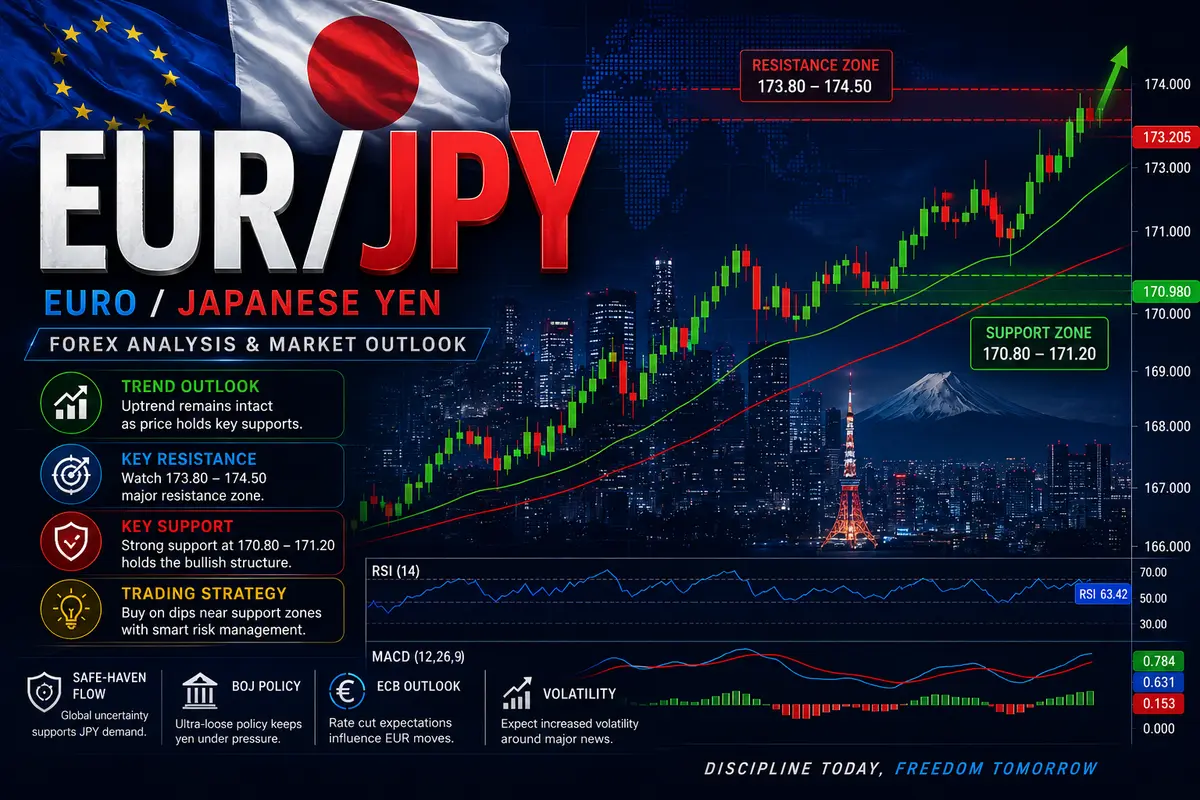
or months with only minor pullbacks along the way.
Intraday Session Mechanics: Spotting the Breakdown Patterns
EUR/JPY has a distinct 24-hour rhythm because its two component currencies belong to different sides of the globe.
1. The Tokyo Opening Phase (20:00 – 02:00 EST)
During the Asian trading window, the Japanese Yen side of the equation dominates.
-
Japanese corporate accounts, exporters, and local institutional funds adjust their positions.
-
Look for EUR/JPY to construct its Asian consolidation range during this window. Unlike EUR/USD, which can be completely dead at night, EUR/JPY will often build clear liquidity pools above and below its Asian high and low.
2. The European Awakening (02:00 – 05:00 EST)
This is where the real daily structure gets forged. As Frankfurt and London dealing desks come online, volume pours into the Euro.
-
The Liquidity Sweep: Algorithms will frequently push EUR/JPY past the Asian High or Low by 10 to 20 pips to trap breakout traders and sweep stops.
-
The Shift: Once that Asian liquidity is absorbed, look for a 5-minute Market Structure Shift (a sharp displacement candle breaking local structure) back into the range.
3. The New York Bond Market Open (08:00 – 11:00 EST)
When Wall Street opens, attention shifts back to the US Dollar and US Treasury yields.
-
Even though the US Dollar isn’t in the ticker symbol for EUR/JPY, the US bond market dictates USD/JPY direction, which instantly ripples through to EUR/JPY.
-
If US yields spike hard at 08:30 EST, expect EUR/JPY to launch into its primary afternoon expansion move.
A Grounded Execution Blueprint for EUR/JPY
-
Map the Correlation: Open EUR/USD, USD/JPY, and EUR/JPY on a split screen. Confirm that at least one leg-pair has clear directional momentum aligning with your trade bias.
-
Mark Key Daily Imbalances: Look for unmitigated 1-Hour or 4-Hour Fair Value Gaps left behind from previous session expansions. EUR/JPY loves returning to rebalance these gaps before continuing its trend.
-
Wait for the London Sweep: Allow the 02:00 EST European open to sweep Asian range liquidity into a higher-timeframe point of interest.
-
Manage Risk Realistically: While EUR/JPY doesn’t throw the wild 40-pip wicks that GBP/JPY does, it still moves faster than EUR/USD. Use an average stop size of 15 to 25 pips on intraday plays, and target the opposing session liquidity or major round numbers (.00 or .50 handles).

Comments
No comments yet. Be the first to share your thoughts!
Authentication Required
You must be logged in to post a comment.