

Canola Loses Ground: Farmers and Speculators Hit the Sell Button in Unison
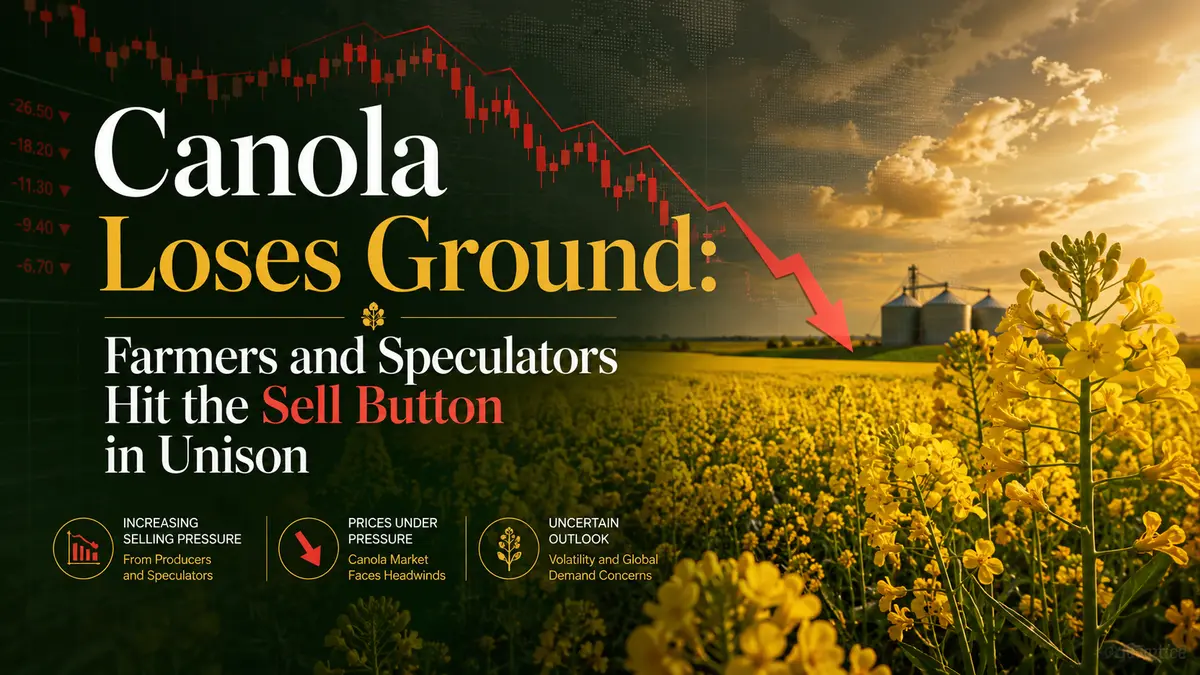
When Prices Touch the Sky, Hands Naturally Reach for the “Sell” Button
Tuesday 22.07.2026 brought a sobering turn to the canola market, which had been surging nervously higher over the past several weeks. Canola futures traded on the ICE exchange plunged, and the decline was neither a technical glitch nor a random accident. It was deliberate, calculated, and even ruthless. November contracts lost C$7 in a single session, falling to C$803.20 per metric ton. For those who do not follow this market closely, let us put it plainly: this was a serious blow.
Why did it happen? The answer is obvious: the market simply grew tired of rising. That may sound simplistic, but this seemingly ordinary explanation contains a profound piece of market wisdom. Canola prices had recently been setting one record after another, reaching contract highs that few had expected only a couple of months ago. Whenever an asset soars toward the sky, there eventually comes a moment when even the most committed bulls begin to wonder: “Have we climbed too high?”
That was when two powerful forces entered the market and began putting simultaneous pressure on prices. On one side, professional speculators and hedge funds that had been holding long positions and profiting from the rally decided it was time to lock in their gains. On the other side, farmers—the same people in overalls and muddy boots who actually grew the crop—also woke up and realized that a price of C$800 per ton was an excellent opportunity to sell their production rather than continue guessing what tomorrow might bring.
This double blow from both speculators and producers is a rare situation in which the interests of two completely different groups of market participants align. Usually, they regard one another with suspicion. Farmers dislike traders for creating volatility, while traders often view farmers as conservative traditionalists who fail to appreciate the beauty of exchange-based speculation. On Tuesday, however, they found themselves on the same side of the barricades—the sellers’ side.
Saskatchewan Fields: Beauty and Disease
To understand the full depth of the situation, we need to move directly into the heart of the action—to central Saskatchewan, Canada, where the annual agricultural exhibition is currently taking place. There, among tractors, seed displays, and endless rows of wheat and canola, farmers are exchanging news and concerns. What they are telling journalists deserves close attention.
On the one hand, the crop looks magnificent. The fields are green and lush, the plants are reaching toward the sun, and it appears as though nature has decided to give Canadian farmers a perfect growing season. The warm weather that has prevailed since the beginning of summer, combined with abundant rainfall, has created ideal conditions for canola. Such conditions promise record yields, which would normally be a source of optimism for market participants.
However, there is another side to the story. The same high humidity that encourages plant growth also creates ideal conditions for disease. Farmers are increasingly concerned about fungal infections attacking their crops. Gray mold, alternaria, and sclerotinia—these alarming words are being heard at the exhibition more frequently than discussions about gasoline prices. High moisture levels have created a perfect incubator for pathogens, and farmers are now inspecting their fields anxiously, trying to determine how severe the losses may become.
This introduces another layer of unpredictability. The crop may look healthy today, but disease can quickly destroy a significant portion of it unless action is taken. Fungicides are expensive and are not always effective, particularly when the weather remains persistently wet. As a result, some farmers prefer to play it safe despite the promising harvest outlook: they would rather sell now while prices are high than wait until autumn and risk ending up with diseased seed that nobody wants to buy.
This dilemma—sell now or wait—is troubling every producer. When the price reaches C$800, many begin leaning toward the first option. After all, a bird in the hand is worth two in the bush, especially when the first signs of fungus have already appeared in your fields.
The Oil Factor: The Middle East Pulls Everything Along
What does oil have to do with any of this? The canola market is about vegetable oil, biofuel, and food. Yet in today’s globalized world, every market is connected by invisible threads, and oil is one of the thickest of them. On Tuesday, Brent crude gained approximately 2.5%, and that development could not help but influence canola.
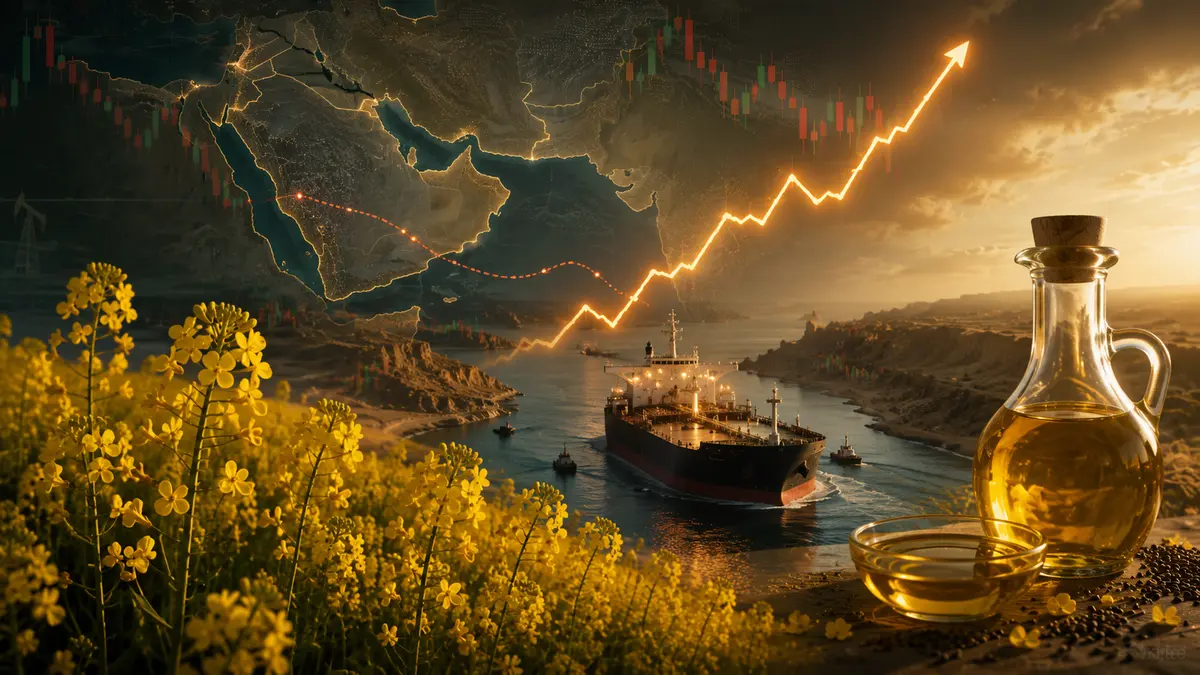
Why did oil rise? Once again, the answer lies in the Middle East. The war in the Persian Gulf, which we have discussed previously, continues to intensify. Now another threat has emerged: the possible disruption of shipping in the Red Sea. Yemen’s Iran-backed Houthis are no longer merely issuing threats—they have already begun to act. Attacks on commercial vessels traveling through the Suez Canal are becoming increasingly frequent and increasingly bold.
Now imagine the consequences: oil prices rise because key supply routes are being disrupted. This automatically makes alternative energy sources, including canola-based biofuel, more attractive. Vegetable oil becomes a more valuable commodity because it can be used not only for frying food but also for producing diesel fuel.
At first glance, if oil becomes more expensive, canola should rise alongside it, since alternative energy sources become more competitive. Until recently, this was one of the factors supporting high canola prices. On Tuesday, however, another mechanism took control: profit-taking outweighed the positive signal from oil. Traders decided that the increase in crude prices had already been fully priced into the market and that it was time to take money off the table before the game turned against them.
This reflects an old market saying: “Buy the rumor, sell the fact.” Rumors about a possible Red Sea blockade had already been priced in, and the actual rise in oil had also been absorbed by the market. The next stage was therefore a correction. Investors are looking ahead and seeing risks on the horizon that could bring prices crashing down. They would rather exit now while they are still profitable.
Soybeans and Soybean Oil: Falling Together Like Identical Twins
The canola market does not exist in a vacuum. It is part of the broader oilseed complex, where soybeans are the dominant player. Tuesday was also an unsettled session on the Chicago exchange. Soybean oil declined by 0.69%, while soybean futures fell by 0.29%. The losses were not dramatic, but they were highly indicative.
Why does this matter? Canola and soybeans compete in the same vegetable-oil market. When soy prices fall, canola frequently follows because consumers and processors compare their relative costs. If soybean oil becomes cheaper, demand for canola may weaken. Why pay more when a less expensive alternative is available?
There is, however, an important nuance. Canola usually trades at a premium to soy because of its higher quality, particularly for food applications. That premium can disappear quickly, however, when the price gap becomes too wide. On Tuesday, the market was adjusting precisely these relative valuations.
The decline in soybeans was driven by many of the same factors that pushed canola lower: profit-taking and favorable weather conditions in the United States, where the soybean crop also appears to be developing well. There is one difference, however. Soybeans are more sensitive to Chinese demand, and the situation in China remains uncertain. The economy is slowing, and the world’s largest soybean buyer may reduce its purchases. This is weighing on Chicago futures.
Nevertheless, the connection between these markets remains strong, and the decline in soybeans became an additional trigger for selling in canola. It was like a row of dominoes: one tile fell, then another, and soon the entire agricultural commodity sector was flashing red.
The Fundamental View: What Comes Next?
Canola fell by C$7. Is that a large move or a small one? On the one hand, C$7 represents less than 1% of a price that remains above C$800. On the other hand, it is a signal that the market may have reached its ceiling, at least for now.
Let us examine the fundamental factors.
Supply: Canada’s crop is expected to be strong this year, although disease could reduce the final result. Current production estimates remain high, but if wet conditions persist, fungal problems may become more severe. This remains an area of uncertainty, but traders are already incorporating the risk into prices.
Demand: Demand remains stable, particularly against the backdrop of rising oil prices and growing interest in biofuels. Canada is actively promoting renewable-energy programs, and canola plays a central role in these initiatives. Global demand for edible oils also remains steady, particularly in Asia, where populations are expanding and per-capita oil consumption is increasing.
Balance: For now, the market remains relatively balanced. However, if the autumn harvest exceeds expectations, excess supply could cause prices to collapse. If disease destroys a significant portion of the crop, we could see another surge. Everything will depend on the weather over the coming weeks and on how the fungal outbreaks develop.
Then, of course, there is geopolitics. If the conflict in the Middle East escalates and the Red Sea is genuinely blocked, oil could climb to new highs, pulling biofuels and canola higher with it. But if there is even the slightest sign of a ceasefire, the market could correct downward very quickly.
Market Psychology: Fear and Greed in Their Purest Form
What we witnessed on Tuesday was a classic example of market psychology. First comes greed: prices rise, everyone buys, and everyone expects new highs. Then comes fear: “Have we pushed the price too far?” Profit-taking begins immediately afterward.
Farmers selling their crops are not merely abstract market participants. They are real people who see prices on their smartphone screens and make decisions in real time. Many of them remember years when canola traded at C$400 or C$500. To them, a price of C$800 is extraordinary, and they do not want to risk waiting for it to rise even further. They take the money and head to the bank to deposit it while the gains are still real.
Traders, hedge funds, and speculators think differently. To them, C$7 is simply a price movement that can be traded in either direction. They lock in profits so they can re-enter at a lower level or move their capital into other assets. They are not concerned about diseases in the fields. They care about the numbers on their screens and the actions of other funds.
Interestingly, Tuesday’s trading volumes were above average. This indicates that many market participants were actively entering positions. Some were selling, while others were buying the decline in anticipation of a rebound. In the end, however, the sellers proved stronger, and the price moved lower.
Conclusion: A Correction or the Beginning of a New Trend?
The main question now being asked by analysts, farmers, and traders is whether this is merely a correction within a bullish trend or the beginning of a full reversal. The answer is not simple.
Those who believe it is only a correction argue that the fundamental factors remain strong. Demand for canola and vegetable oils is not declining. On the contrary, it is being supported by biofuel programs. Oil prices are rising, which means canola should remain an attractive feedstock for biodiesel production. Weather risks in Canada and other producing regions have also not disappeared. If fungal disease spreads more aggressively, the crop could be smaller than expected, pushing prices higher.
The opposing camp argues that the market is overheated. A price above C$800 is already too high for this stage of the season. They note that Canadian canola production has increased in recent years and that newer varieties are more resistant to disease. Although wet conditions and crop problems are real, they may be overcome through modern agricultural practices. If the harvest genuinely reaches record levels, supply could exceed demand and prices could collapse.
Most likely, the market is currently experiencing a correction that could continue for several weeks. However, if the Middle East continues to burn and oil prices keep rising, canola may establish a new floor and launch another assault on its highs.
In any case, the oilseed market remains one of the most volatile and fascinating segments of the commodity exchange. Tuesday confirmed that once again. What happens on Wednesday remains to be seen.
One thing is certain: nobody is going to be bored.

Comments
No comments yet. Be the first to share your thoughts!
Authentication Required
You must be logged in to post a comment.