

Dometic in the Storm: How Falling RV Demand Hit the Swedish Giant
Introduction: When Leisure Is No Longer a Priority
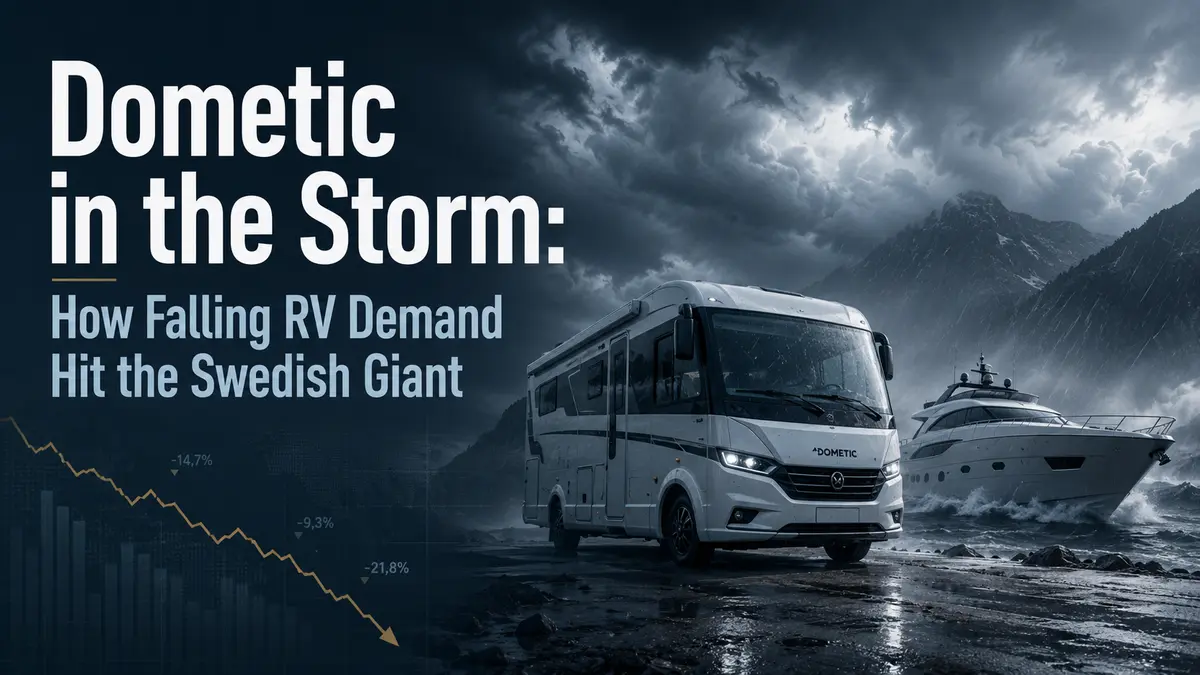
Swedish outdoor technology manufacturer DTCGF ... faced a harsh reality in the second quarter of 2026. Sales declined by 5%, falling short of analysts’ forecasts. Operating profit amounted to SEK 513 million, compared with the expected SEK 637.75 million. The main reason was weak demand in the recreational vehicle and marine markets.
For a company that had grown for decades on the back of increasing interest in outdoor recreation and travel, this represented a serious blow. Faced with inflation, high interest rates, and geopolitical uncertainty, consumers began cutting their spending on leisure products. Recreational vehicles, yachts, and related accessories were no longer considered priorities.
However, the situation is not entirely negative. Growth in the service and aftermarket channel, which generates higher margins, helped support the company’s gross margin. Dometic also launched a restructuring program expected to deliver annual savings of SEK 150 million by mid-2027. In this article, we will examine every aspect of the current situation, assess the company’s prospects, and try to understand where Dometic is heading.
Financial Performance: Disappointing Figures
Revenue Below Expectations
Dometic’s revenue for the second quarter amounted to SEK 5.97 billion, below the SEK 6.004 billion expected by four analysts. A 5% decline in sales represents a serious setback for a company accustomed to growth.
The decline was caused by weak demand in the recreational vehicle and marine sectors. Consumers are postponing purchases and choosing to save money on leisure-related products.
Operating Profit Disappoints
Operating profit amounted to SEK 513 million, compared with the forecast of SEK 637.75 million. This significant shortfall was caused not only by declining sales but also by additional expenses.
Profitability was negatively affected by SEK 52 million in doubtful debt expenses related to West Marine’s Chapter 11 bankruptcy filing. Although this was a one-time event, it placed additional pressure on earnings.
Net Profit and Earnings per Share
Net profit reached SEK 240 million. Adjusted earnings per share amounted to SEK 1.27, while reported earnings per share were SEK 0.75. The difference between these figures was caused by one-time expenses and restructuring costs.
Investors are likely to focus more closely on adjusted earnings per share, as this figure provides a clearer picture of the company’s underlying operating performance.
Weakness in Key Markets
Recreational Vehicles: A Crisis in the Leisure Industry
The recreational vehicle market, which had long been a growth driver for Dometic, is currently experiencing a downturn. Consumers, concerned about inflation and high interest rates, are postponing purchases of expensive leisure products.
Recreational vehicle manufacturers are also reducing production, which is leading to lower demand for Dometic components. This creates a vicious cycle: the lower the production volume, the lower the demand for components.
Marine Sector: Calm in the Yacht Market
The marine sector is also facing difficulties. Yachts and boats are premium products, and purchases of such items tend to decline during periods of economic uncertainty.
Lower demand for yachts and boats is affecting equipment manufacturers, including Dometic. The company supplies air-conditioning systems, refrigerators, toilets, and other equipment for marine vessels.
West Marine: The Impact of a Customer Bankruptcy
The bankruptcy of West Marine, a major marine products retailer, dealt a particular blow to Dometic. The company filed for Chapter 11 bankruptcy protection, prompting Dometic to record SEK 52 million in doubtful debt expenses.
Although this was a one-time event, it negatively affected the company’s financial results and demonstrated the risks associated with dependence on large customers.
Negative Factors: Rising Costs and Restructuring Expenses
Higher Material and Freight Costs
Margins came under pressure during the quarter due to higher direct material and freight costs. Inflation and supply chain disruptions continue to create difficulties for manufacturers.
The increase in material costs was linked to rising prices for raw materials, including metals and plastics. Freight costs are also increasing because of higher fuel prices and instability along maritime shipping routes.
Restructuring Expenses
Dometic expanded its global restructuring program and incurred related expenses of SEK 101 million during the quarter. The company expects the program to generate annual savings of SEK 150 million by mid-2027.
Restructuring is a painful but necessary step. The company is optimizing its costs to remain competitive in an environment of declining demand.
Possible Additional Measures
The company stated that it may implement additional restructuring measures depending on how market conditions develop. This means that management is prepared to carry out further optimization if the situation does not improve.
Additional measures could include workforce reductions, factory closures, or the sale of non-core assets.
Positive Factors: Service and Aftermarket Operations
Growth in the High-Margin Channel
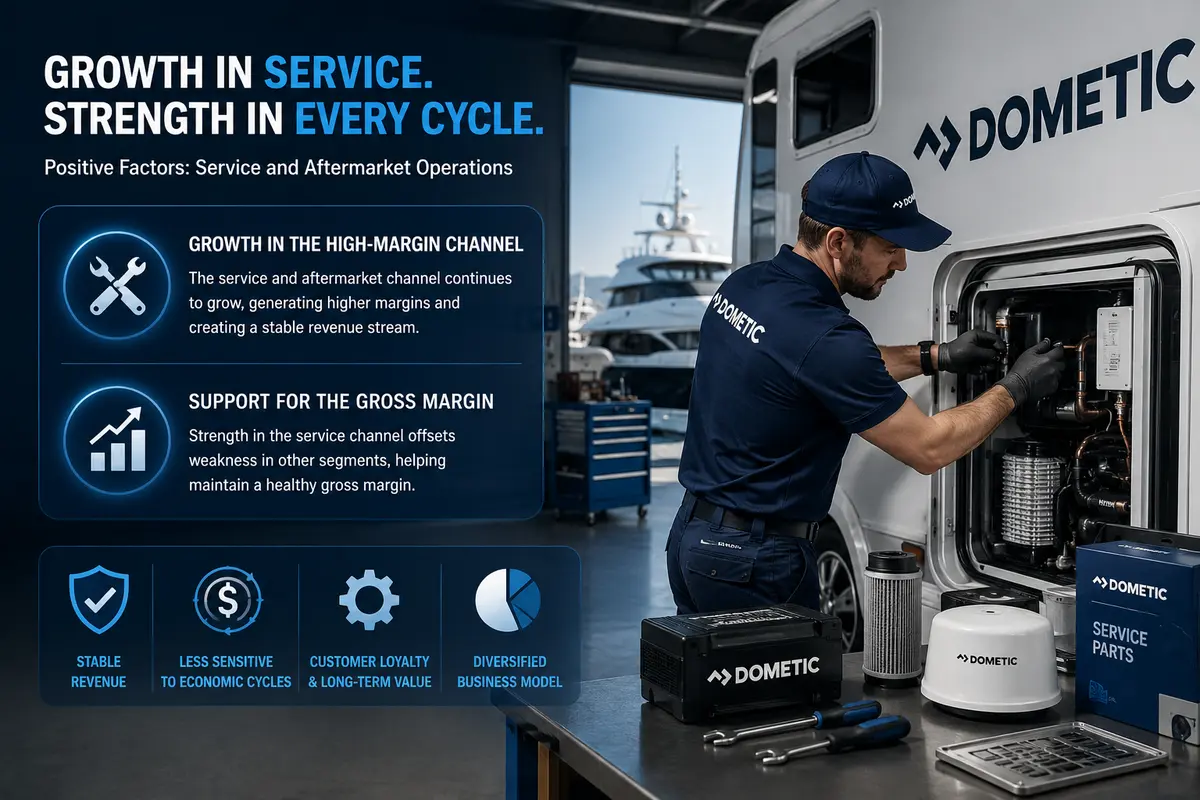
Despite the decline in overall sales, Dometic is recording growth in its service and aftermarket channel. This channel generates higher margins, helping the company maintain its gross margin.
Consumers who already own recreational vehicles or yachts continue to spend money on maintenance and repairs. This creates a stable revenue stream that is less sensitive to economic cycles.
Support for the Gross Margin
Growth in the service channel is helping offset weakness in other business segments. Dometic’s gross margin remained under control largely because of this factor.
This demonstrates the importance of business diversification. A company that relies exclusively on sales of new products is more vulnerable to economic cycles.
Restructuring Program: The Path to Greater Efficiency
Scale and Objectives
Dometic expanded its global restructuring program with the goal of achieving annual savings of SEK 150 million by mid-2027. This is an ambitious target that will require significant changes to the company’s operating model.
The program may include optimizing production capacity, reducing administrative expenses, and reviewing supply chains.
Initial Results
The company has already incurred SEK 101 million in restructuring expenses, demonstrating the seriousness of its intentions. Investors will closely monitor how quickly the program begins to produce results.
Annual savings of SEK 150 million could significantly improve the company’s profitability once the market begins to recover.
Forecasts and Expectations
Continued Weak Demand
Dometic expects weak demand and heightened uncertainty to persist in the recreational vehicle and marine markets. This means that the company is preparing for continued difficulties over the next several quarters.
Management has no illusions about the current situation and is preparing the business for an extended period of low demand.
Dependence on Macroeconomic Conditions
A recovery in demand will depend on macroeconomic factors, including interest rates, inflation, and consumer confidence. Should the economy begin to recover, Dometic would be well positioned to benefit.
However, predicting the timing of such a recovery is difficult. The company is therefore preparing for a range of possible scenarios.
What This Means for Investors
Short-Term Pressure
Dometic’s second-quarter results disappointed investors. Declining sales, lower operating profit, and weaker net income are placing pressure on the company’s shares.
Short-term traders may look for opportunities to open short positions in anticipation of further declines.
Long-Term Potential
Over the long term, Dometic remains a strong player in the outdoor technology market. The company has well-established brands, a broad product portfolio, and a loyal customer base.
The restructuring program and growth in the service channel are creating a foundation for recovery once the market returns to growth.
Conclusion: A Storm That Must Be Weathered
The second quarter of 2026 was a period of serious challenges for Dometic. A 5% decline in sales, operating profit below expectations, restructuring expenses, and write-offs related to a customer bankruptcy all contributed to a negative overall picture.
However, the company is not giving up. It is expanding its restructuring program to reduce costs and improve efficiency. Its service channel is growing, helping to support margins. The company is also prepared to introduce additional measures if conditions deteriorate.
The recreational vehicle and marine markets remain weak, but Dometic is making plans for the future. A recovery will depend on macroeconomic factors, but the company is doing everything possible to weather the storm and emerge from it stronger.
For investors, this is a time of difficult decisions. Short-term pressure is likely to persist, but the company’s long-term potential remains considerable. Investors who believe in a market recovery and Dometic’s ability to adapt may view the company’s currently weak performance as a potential entry opportunity.
For now, the company continues to focus on improving efficiency, reducing costs, and maintaining margins. Should the market begin to recover, Dometic will be ready to take advantage of it.


Comments
No comments yet. Be the first to share your thoughts!
Authentication Required
You must be logged in to post a comment.