

ITV Sells Its Media Division to Sky for £1.6 Billion: The British Media Market Rewrites the Rules of the Game
Introduction: The Monday That Changed British Television
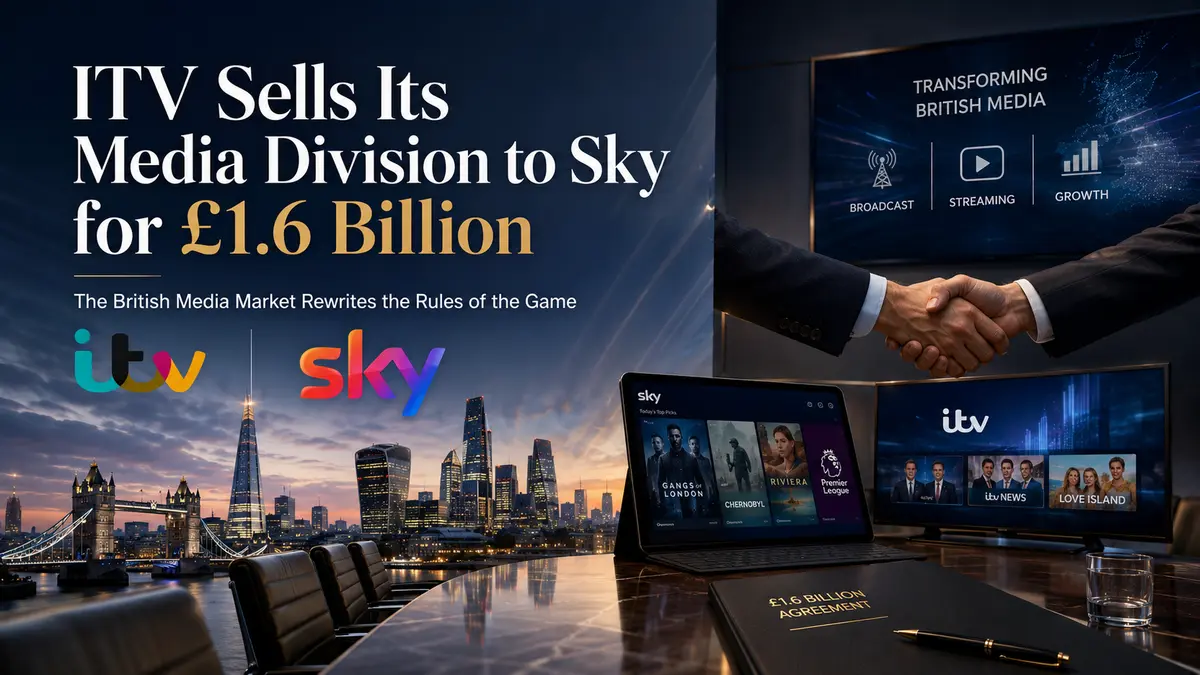
Monday morning. London, ITV headquarters. Sky CEO Dana Strong is preparing for a press conference that will become one of the most significant moments in the history of British media. ITV, the UK’s largest commercial free-to-air broadcaster, announces the sale of its media and entertainment division to Sky. The value of the deal is £1.6 billion. And this is not merely the sale of an asset — it is a tectonic shift in the British media market.
For £1.6 billion (£1.2 billion in cash plus a potential additional payment of up to £200 million), Sky is getting far more than just television channels. It is gaining access to a vast free-to-air television audience and to brands that every Briton knows. As part of the deal, ITV receives Love Productions, the producer of The Great British Bake Off, which will become part of ITV Studios.
What lies behind this deal? Why has ITV, one of the oldest and most recognizable media brands in the UK, decided to sell its media and entertainment division? And why has Sky, which already dominates the pay-TV market, decided to expand through free-to-air content?
The answer lies in the same force that has transformed virtually every part of the media industry over the past decade: streaming. The rise of YouTube, Netflix, Amazon, and Disney is forcing traditional broadcasters to look for new paths to growth. The combination of free-to-air television with pay-TV and streaming is a response to the challenges of a new era. Let’s examine what really happened and what it means for the future of British media.
Deal Details: Figures, Structure, and Consequences
£1.6 Billion and Another £200 Million on Top
The figures announced on Monday are impressive. The £1.2 billion in cash forms the basis of the transaction and gives ITV a significant inflow of liquidity. An additional £200 million will be paid by Sky depending on advertising revenue performance in the 2027 financial year. This means that part of the deal is tied to the future effectiveness of the business.
In addition, ITV receives Love Productions, the producer of the popular show The Great British Bake Off. This company will become part of ITV Studios, strengthening ITV’s production base. ITV is not simply selling a media division — it is structuring the deal in a way that allows it to retain control over key production assets.
The sale of the media and entertainment division to Sky is not just a transaction involving television channels. It is the transfer of brands that have been part of British culture for decades. In essence, ITV is giving up part of its identity in order to focus on production and other strategic areas.
What Sky Gets
For Sky, this deal is a “defining moment,” according to CEO Dana Strong. The combination of Sky and ITV’s media and entertainment division brings together the best of free-to-air television, pay-TV, and streaming.
Sky, already the dominant player in the UK pay-TV market, gains access to a massive free-to-air audience. This allows it to offer more comprehensive advertising packages, reaching viewers regardless of how they watch television — through an antenna, cable, or the internet.
The deal also strengthens Sky’s position in the fight against global streaming giants. Netflix, Disney+, and Amazon Prime Video all spend billions on content, and traditional broadcasters must respond to this challenge. Combining Sky and ITV’s resources creates a more powerful player capable of competing for advertising budgets and viewer attention.
Why ITV Is Selling Its Media Division
A Strategic Pivot
For ITV, this deal is not simply a way to make money. It is a strategic pivot that will allow the company to focus on what it does best: producing content. ITV Studios, the company’s production division, is already one of the largest producers of television programming in the world. The acquisition of Love Productions only strengthens this position.
Selling the media and entertainment division frees ITV from the need to manage television channels that require enormous investment and face declining advertising revenues. Instead, ITV can focus on creating content for other platforms, including Sky and global streaming services.
This pivot reflects a broader trend in the media industry: the distinction between content creators and distributors is becoming increasingly clear. ITV is choosing the role of creator rather than distributor, and the sale of its media division is a step in that direction.
Pressure from Streaming Giants
ITV, like other traditional broadcasters, has faced unprecedented pressure from streaming services. YouTube, Netflix, Amazon, and Disney are drawing away advertising budgets and viewer attention. Traditional television channels are losing audiences, while advertising revenues are declining.
In this context, selling the media division to Sky looks like a pragmatic decision. Rather than fighting a downward trend, ITV has decided to exit this business and focus on the growing segment: content production.
The deal also gives ITV significant cash resources that can be invested in developing new formats and expanding production capacity. This could give ITV a competitive advantage in the future as the industry continues to transform.
The Future of British Media: What This Deal Changes
The Combination of Free-to-Air and Pay Television
The deal between Sky and ITV is an example of the convergence taking place in the media industry. The boundaries between free-to-air television, paid cable television, and streaming are disappearing. Companies that previously operated in separate segments are now joining forces to offer viewers more comprehensive services.
For viewers, this means more choice and more flexible ways to access content. For advertisers, it means the ability to reach audiences across multiple platforms at once. For media companies, it means the need to adapt to a new reality in which success depends on the ability to offer content in any format and on any platform.
By combining with ITV, Sky gains a unique position in the British media market. It can offer advertisers access to both pay-TV audiences and free-to-air audiences. This is a serious advantage in the competition for advertising budgets.

Competition with Streaming Services
The combination of ITV and Sky also strengthens the position of British broadcasters in their competition with global streaming giants. Netflix, Disney+, and Amazon Prime Video have enormous budgets and a global presence. Traditional British broadcasters must join forces to withstand this pressure.
Creating a larger combined company makes it possible to achieve economies of scale, share production and marketing costs, and offer more competitive subscription packages. This does not guarantee victory against global giants, but it provides a chance to preserve market share.
British broadcasters also have an advantage that global services do not: knowledge of the local market and the loyalty of local audiences. British viewers value programming created in the UK and reflecting British culture. By joining forces, Sky and ITV can offer content that global giants cannot easily replicate.
ITV’s Role as a Public Service Broadcaster
Despite selling its media division, ITV will retain its status as a public service broadcaster. This is an important commitment, emphasizing that the company will continue to fulfill its obligations to viewers. Public service broadcasting is not just a business — it is part of British culture and democracy.
ITV will remain a producer of content that reflects life in the UK, informs viewers about important events, and entertains them. This is a mission the company is not prepared to hand over to other players.
Retaining public service broadcaster status also gives ITV certain advantages, such as access to important advertising slots and regulatory privileges. This makes the company more attractive to strategic partners.
What Happens to ITV After the Deal
A Focus on Production
After selling its media division, ITV will become a more focused company. ITV Studios, its production division, will be the main driver of growth. The company will be able to focus on creating content for Sky and other platforms, including global streaming services.
The acquisition of Love Productions strengthens ITV’s production base. The Great British Bake Off is one of the most popular formats in the UK, and its inclusion in the ITV Studios portfolio creates new opportunities for international sales.
ITV will also be able to use the proceeds from the deal to invest in new technologies and formats. Artificial intelligence, virtual reality, and new forms of content could all become areas for future development.
Financial Prospects
The £1.2 billion in cash received from Sky gives ITV significant flexibility. The company can use these funds to repay debt, pay dividends, or invest in growth.
The potential additional payment of up to £200 million, depending on advertising revenue in the 2027 financial year, also creates an incentive for ITV to continue operating effectively during the transition period.
ITV is likely to look for new growth opportunities outside the UK. ITV Studios is already a global player, and the company may strengthen its international expansion using new resources and partnerships.
Conclusion: A New Era for British Media
ITV’s sale of its media and entertainment division to Sky for £1.6 billion is not just a deal between two companies. It is a sign that traditional media markets are undergoing a deep transformation.
The rise of streaming services, declining advertising revenues on traditional television, and changing consumer habits are forcing broadcasters to rethink their strategies. ITV has chosen the path of focusing on content production, while Sky has chosen to expand its audience base.
The combination of free-to-air television with pay-TV and streaming creates a new type of media company — one that can offer viewers more comprehensive services and advertisers more effective ways to reach audiences.
For viewers, this deal may mean more content, more flexible ways to access it, and the preservation of the British programming they love. For employees of both companies, it means uncertainty, but also new opportunities.
The British media market is entering a new era. An era in which traditional boundaries are disappearing and companies must constantly adapt in order to survive. And the deal between Sky and ITV is only the beginning of this process.

Comments
No comments yet. Be the first to share your thoughts!
Authentication Required
You must be logged in to post a comment.