

The Step the World Had Been Waiting Three Decades For
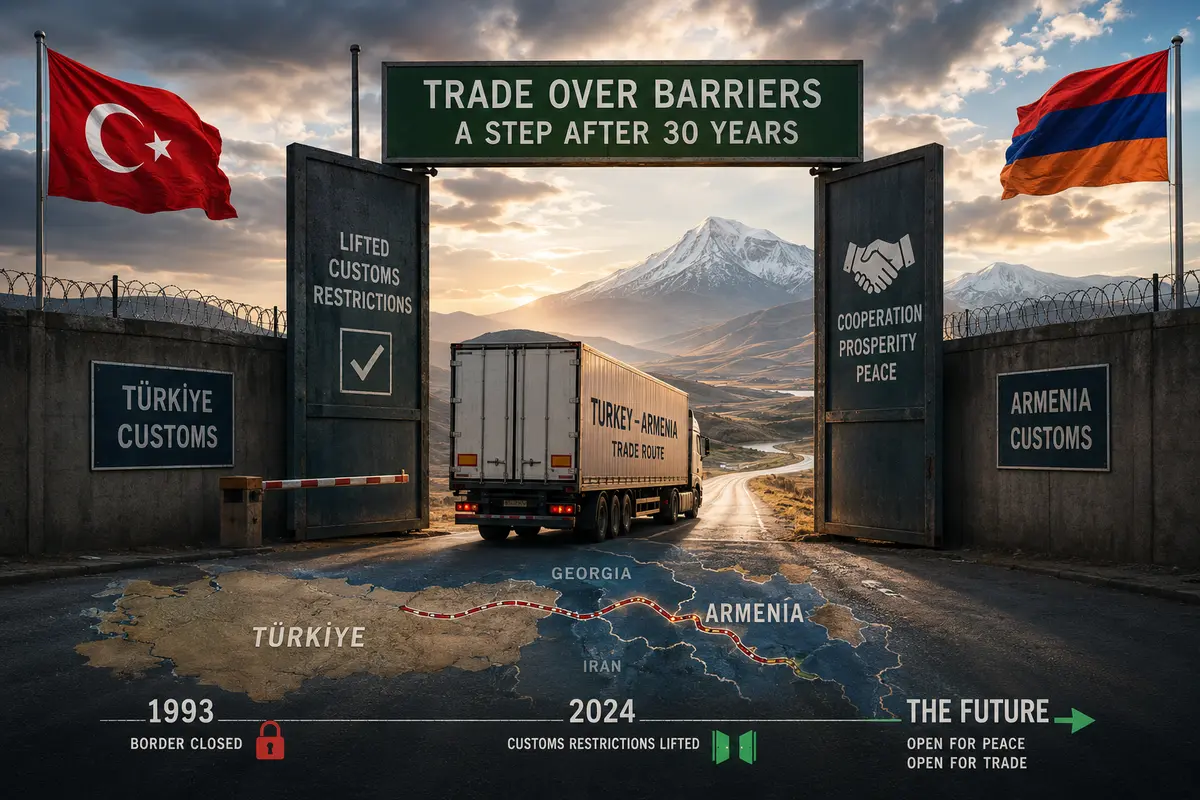
On Wednesday, Turkey did something that observers of the Caucasus region had long been waiting for, but that few had dared to believe would actually happen until the very last moment. Ankara lifted a series of customs restrictions on Armenia, thereby cracking open the door to direct trade between the two neighbors. To the average person, this sounds like a dull, technical piece of news from the world of foreign trade documentation. In reality, this event drags behind it a long trail of historical grievances, geopolitical calculations, and frozen conflicts that have resisted resolution for more than thirty years.
Reuters, which reported the decision, did not casually describe it as a new sign of normalization in relations. The phrasing is cautious but weighty. Behind it lies an understanding that the process set in motion several years ago — against the backdrop of Turkey rethinking its regional role — continues to gather pace. And while a full opening of the border and the establishment of diplomatic relations are still a long way off, these customs relaxations represent that very first practical step that shifts the rhetoric of reconciliation into the realm of concrete action.
How the Border Was Buried: A Brief History of the Rupture
To grasp the scale of what is happening, you have to rewind the tape more than three decades. In 1991, as the Soviet Union crumbled into pieces and its former republics were declaring their independence, Turkey was among the first countries to recognize Armenia as a sovereign state. It was a gesture that, under different circumstances, could have become the beginning of good-neighborly relations. But circumstances took a different turn.
Just two years later, in 1993, Ankara unilaterally sealed its border with Armenia and halted all direct trade. The reason was simple and brutal: the first Nagorno-Karabakh war had broken out, and Turkey sided with its closest ally and Turkic kin — Azerbaijan. The border closure was an act of solidarity with Baku and a way of applying pressure on Yerevan at the height of the conflict. Ever since, any goods traveling between the two countries have been forced to take roundabout routes through third countries — Georgia, Iran, Russia, anywhere but directly.
But beneath the economic blockade lay a far deeper layer. Turkey and Armenia have no official diplomatic relations, and the root cause reaches back not to the 1990s but to the start of the twentieth century — to the tragic events of the First World War, when Ottoman forces carried out mass killings of the Armenian population. Armenia and many other countries recognize these events as genocide; Turkey categorically rejects that characterization, and this dispute has poisoned any attempt at normalization for decades.
What Exactly Changed on Wednesday
The wording published by the Turkish Ministry of Foreign Affairs sounds dry and technical, but behind it stands a real change in the rules of the game. Previously, if a Turkish exporter wanted to send goods to Armenia, or an Armenian producer wanted to send goods to Turkey, the documents could not list Armenia or Turkey as the final destination or country of origin. Third countries had to be named instead — the shipment would be documented as if it was going to Georgia or Iran, and only from there forwarded to its actual address. This created a mountain of bureaucratic obstacles, drove up logistics costs, and effectively put an end to any serious trade relationship.
Now, the Turkish Foreign Ministry states it plainly: for goods sent from Turkey to a third country and then on to Armenia, or vice versa, the final destination or country of origin can now be listed directly as Armenia or Turkey. This sounds like a bureaucratic trifle, but in practice it removes the very barrier that for decades made direct trade impossible. Goods will still travel through third countries, because the border remains physically closed. But at least the paperwork will no longer lie about where the goods are coming from and where they are going.
The Armenian Reaction: Cautious Optimism
Yerevan responded to the news immediately and with clear approval. Foreign Ministry spokesperson Ani Badalyan, whose words were carried by the state news agency Armenpress, described the decision as important for expanding trade and business ties between the two countries. Her statement included phrases about promoting economic interconnectedness in the region and — crucially — about securing peace and prosperity.
This is not merely a routine diplomatic courtesy. The Armenian economy is many times smaller than Turkey’s and is heavily dependent on energy supplies from Russia and Iran. Opening even limited trade channels with Turkey is not a matter of abstract neighborliness but of very concrete economic interest. The Turkish market is vast and close; Turkish goods are cheap and varied; and the ability to obtain them — even if in transit, but without bureaucratic trickery — means a great deal for Armenian business.
Beyond that, the Armenian side also sees a political signal in this decision. If Turkey is willing to take such steps now, then the normalization process that has been sputtering for years is not dead after all. It is alive, it is moving, even if more slowly than optimists would like.
The Turkish Calculus: Why Ankara Is Doing This Now
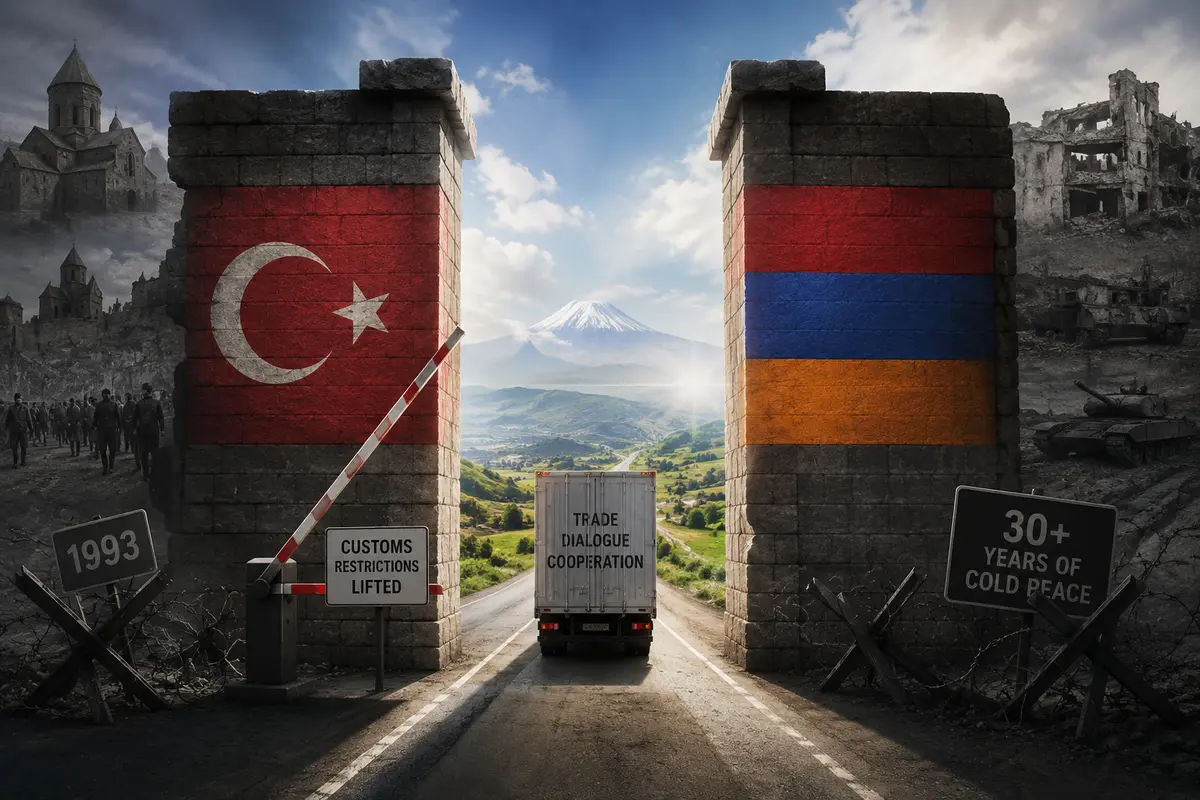
The question inevitably arises: why now? Turkey does nothing without a reason, least of all in a matter as sensitive as relations with Armenia, where any step forward instantly generates tension in Baku. The answer most likely lies in the broad regional strategy that Ankara has been constructing over the past few years.
Turkey is trying to strengthen its position in the South Caucasus, where the balance of power shifted significantly in Azerbaijan’s favor after the Second Karabakh War of 2020. But at the same time, Ankara has an interest in ensuring that the region does not remain a permanent flashpoint. It needs stable borders, predictable neighbors, and, not least, transit routes. The project of the so-called Zangezur Corridor, which would link mainland Azerbaijan with its exclave of Nakhchivan through Armenian territory, remains blocked due to Yerevan’s position. But trade relaxations could be a way of signaling that the door to cooperation is open, while simultaneously testing the ground for more substantial agreements.
There is also an internal economic logic at play. Turkish businesses have long been working with Armenia — they have simply been doing so through Georgian or Iranian intermediaries. Legalizing and simplifying these arrangements benefits Turkish exporters just as much as Armenian importers. After all, when goods travel through third countries, part of the profit sticks to the middlemen rather than the producer.
The Historical Shadow and What to Do About It
One cannot discuss Turkish-Armenian relations without touching on the issue that both nations regard as an unhealed wound. The events of 1915, when Ottoman forces carried out the mass deportation and killing of the Armenian population, remain the central point of the historical rift. For Armenians and many countries around the world, this was genocide. For Turkey, these were tragic wartime events that cannot be characterized as such. This dispute is not settled, not closed, and is unlikely to be resolved anytime soon.
Yet Wednesday’s customs decision suggests that the two sides may be beginning to learn how to separate historical trauma from present-day pragmatic interests. It is a difficult and painful process, but it appears to be the only possible one. No one is saying that Turkey and Armenia will open embassies tomorrow and start dancing in circles of friendship. But if goods can travel with proper documentation, if businesses get predictable rules of the game, and if people on both sides see that cooperation brings tangible benefits — that is already no small thing.
What Comes Next: The Border, Diplomacy, and Regional Dynamics
The customs relaxations do not mean the border is open. It remains physically closed, and for that to change, negotiations of an entirely different order will be required — likely involving Azerbaijan as well. But a journey of a thousand miles, as the saying goes, begins with a single step. Wednesday’s decision is exactly that step.
The ball is now largely in Armenia’s court. Yerevan could take this gesture as an invitation to more active dialogue, or it could adopt a wait-and-see stance. Much will depend on how Baku reacts: Azerbaijan is extremely sensitive to any Turkish-Armenian rapprochement, and Ankara will have to balance its alliance commitments against its own strategic interests.
For the region as a whole, this event is yet another signal that frozen conflicts are not eternal. They can thaw slowly, over decades, but sometimes the ice does begin to crack. Thirty years ago, Turkey closed its border with Armenia in solidarity with Azerbaijan. Today, it has eased open the customs gate. This is not a peace treaty, but it is movement. And in the Caucasus, where any movement can turn into another war, peaceful movement is worth more than gold.

Comments
No comments yet. Be the first to share your thoughts!
Comments only for logged-in users.